
Dacus triater
Dacus triater
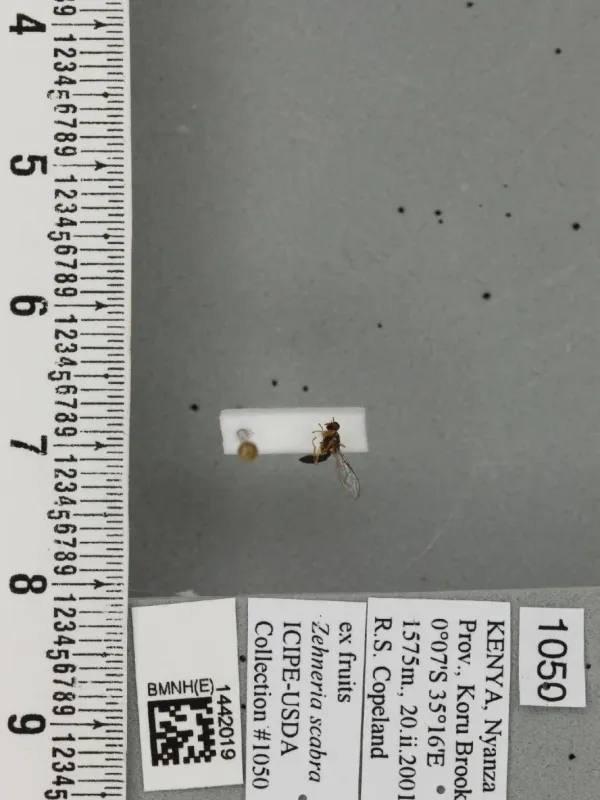
Description
How to identify
Dacus triater is a species of fruit fly belonging to the family Tephritidae. This pest exhibits a classic appearance for the Dacus genus, often featuring a dark body and a distinct wing pattern that helps distinguish it from other members of the group in field conditions.
Adult insects are small but highly mobile, making them difficult to spot without specialized tools. Identification typically involves the use of pheromone traps or food-based attractants, which allow growers to monitor the presence of the pest before it causes widespread damage.
The biology of this species is centered around development within the host fruit. Females possess a robust ovipositor, which they use to pierce the skin of the fruit and deposit eggs directly into the pulp, providing the larvae with an immediate and protected food source.
Larvae of Dacus triater progress through several developmental stages inside the fruit, consuming the fleshy tissues. Upon reaching maturity, the larvae exit the fruit and pupate in the soil beneath the plant, a strategy that offers them protection against environmental stress.
The lifecycle is highly dependent on ambient temperature and humidity. In regions with favorable climates, the species can complete multiple generations within a single growing season, which poses a significant challenge for ongoing pest management programs.
What it damages
Dacus triater primarily affects a variety of fruit-bearing crops. The pest is particularly destructive to tropical and subtropical plants, where the fruits provide the ideal conditions for larval survival and growth.
The most severe damage occurs as the larvae feed on developing fruit, leading to premature fruit drop. This feeding activity ruins the internal structure of the fruit, rendering the harvest completely unusable for both fresh consumption and industrial processing.
Secondary infections often follow the initial damage. As larvae create tunnels within the fruit, they facilitate the entry of pathogenic fungi and bacteria, which cause the fruit to rot rapidly while still hanging on the tree.
Yield losses can be catastrophic without proper intervention. In severe infestation scenarios, losses may exceed 80–90% of the total fruit yield in an orchard or a specific plantation area.
Beyond direct damage, the presence of this pest imposes strict trade barriers. Many countries enforce rigorous quarantine regulations, banning the import of fruits from regions where Dacus triater is known to be established.
Signs of infestation
The primary symptom of infestation is the presence of small puncture marks on the fruit surface, created by the female fly when laying eggs. These sites may show slight discoloration or indentations as the tissues begin to react to the presence of the eggs.
Early yellowing and premature fruit drop are common indicators that larvae are feeding inside. When cut open, such fruits often reveal galleries or tunnels filled with damaged and decaying pulp.
In advanced stages of infestation, the fruit becomes soft, watery, and emits a foul odor due to the combination of larval feeding and the accelerated development of secondary soft-rot pathogens.
The exit of larvae for pupation is another observable sign. Growers may notice small, round holes on the surface of the fruit, indicating that the mature larvae have left to seek the soil.
Monitoring using pheromone traps is the most reliable method for detecting adult flies. Early detection is crucial, as it allows growers to implement protective measures before the flies successfully reproduce and start an infestation cycle.
Control measures
A core cultural control method involves the regular collection and disposal of fallen or damaged fruit. To be effective, this waste must be destroyed by deep burial or burning, preventing the larvae from completing their lifecycle in the soil.
Chemical control usually focuses on targeting adult flies before they have the chance to lay eggs. Insecticides with contact or stomach action are typically applied to the foliage of host trees during the peak activity period.
The «bait spray» technique is a widely recognized global practice. It involves applying a mixture of an attractant, such as protein hydrolysate, and an insecticide to localized patches of the tree canopy, which significantly reduces the overall pesticide residue on the crop.
Quarantine measures are essential for preventing the spread of the pest to new areas. Strict restrictions on the movement of fruit from infested zones are a standard requirement to contain the population of Dacus triater.
Biological control includes the use of natural enemies, such as parasitic wasps of the Braconidae family. These insects parasitize the fly larvae, providing a natural regulatory mechanism that helps keep pest population levels under control.
Taxonomy
- Latin name
- Dacus triater
- Order
- Diptera (flies)
- Family
- Tephritidae
- EPPO code
- DACUTT
Discussion
No discussions yet — be the first.