
Dacus transitorius fruit fly
Dacus transitorius
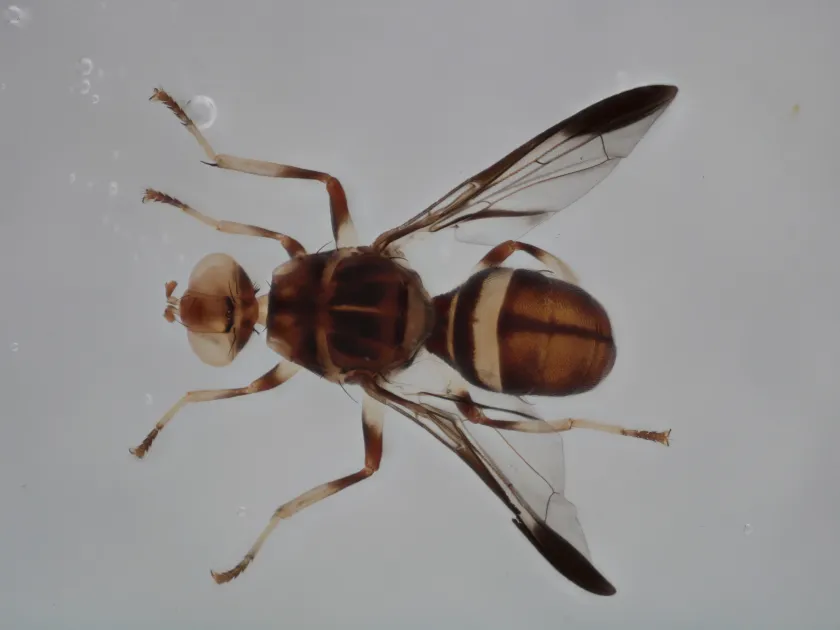
Description
How to identify
The Dacus transitorius belongs to the order Diptera and the family Tephritidae, commonly known as fruit flies. It is a specialized pest adapted to living and breeding within the tissues of various fruits.
The adult insects are characterized by their specific wing patterns and body structure, typical for the Tephritidae family. Precise identification often requires laboratory examination of morphological features.
The larvae are typically legless, cylindrical, and white or yellowish, designed for efficient movement through the fleshy parts of host fruits where they feed and develop.
The species relies on specific environmental conditions, including humidity and temperature, to complete its life cycle successfully within the host tissue.
Monitoring for adults is usually conducted using specialized lures and traps designed for members of the Dacus genus to determine population levels in the field.
What it damages
This fly primarily attacks various fruit and vegetable crops, inserting its eggs directly into the fruit pulp, which initiates the damage process.
As larvae hatch, they begin to tunnel through the fruit, creating internal chambers that compromise the structure and nutritional value of the host plant.
The feeding activity of the larvae encourages the invasion of secondary pathogens like bacteria and molds, which accelerate the rotting process significantly.
Marketability is severely impacted, as infested fruits lose their integrity, color, and taste, making them unsuitable for commercial sale or long-term storage.
In cases of heavy infestation, farmers can experience significant crop loss, as the fruit often drops prematurely before it can be harvested for human consumption.
When it appears
The activity of Dacus transitorius is highly dependent on the fruiting phenology of its host plants, with the highest risk occurring during the maturation phase.
Warm weather conditions, typically between 20°C and 30°C, are ideal for the rapid development of generations, leading to potential outbreaks during the summer.
Multiple generations can occur throughout the growing season if environmental conditions remain favorable, posing a persistent threat to late-harvest crops.
During colder months, the pest typically overwinters in the soil as pupae, awaiting the return of suitable temperatures to emerge and restart the cycle.
Seasonal management plans must account for these periods of emergence to ensure that control measures are applied at the most vulnerable stage of the fly's life cycle.
Signs of infestation
The initial sign of infestation is the presence of small puncture marks on the fruit skin, which are the sites where the female fly has deposited her eggs.
Over time, the affected areas may show signs of soft rot, discoloration, or depressions on the surface, indicating the internal activity of the larvae.
A common sign of a serious infestation is the premature drop of fruit that appears healthy from the outside but is internally compromised by larval tunnels.
In some cases, the fruit may become deformed or exude sap from the puncture sites, which attracts other secondary pests to the wounded area.
Cutting open a suspect fruit will reveal characteristic tunnels filled with frass and decaying tissue, confirming the presence of Dacus transitorius.
Control measures
Sanitation is a primary management tool: all fallen and infested fruit must be collected and disposed of correctly to interrupt the pest's life cycle.
Chemical control can be effective when timed correctly, targeting adults before they lay eggs, while adhering to strict pre-harvest interval regulations.
Physical barriers, such as bagging individual fruits or covering trees with fine netting, can be highly effective in small-scale orchard or garden settings.
Biological control methods, including the release of beneficial parasitoids, can help manage populations in an environmentally friendly and sustainable manner.
- Implement strict field sanitation.
- Use pheromone-based traps.
- Employ biological pest control.
- Practice proper crop rotation.
Taxonomy
- Latin name
- Dacus transitorius
- Order
- Diptera (flies)
- Family
- Tephritidae
- EPPO code
- DACUTU
Discussion
No discussions yet — be the first.