
Dacus theophrastus
Dacus theophrastus
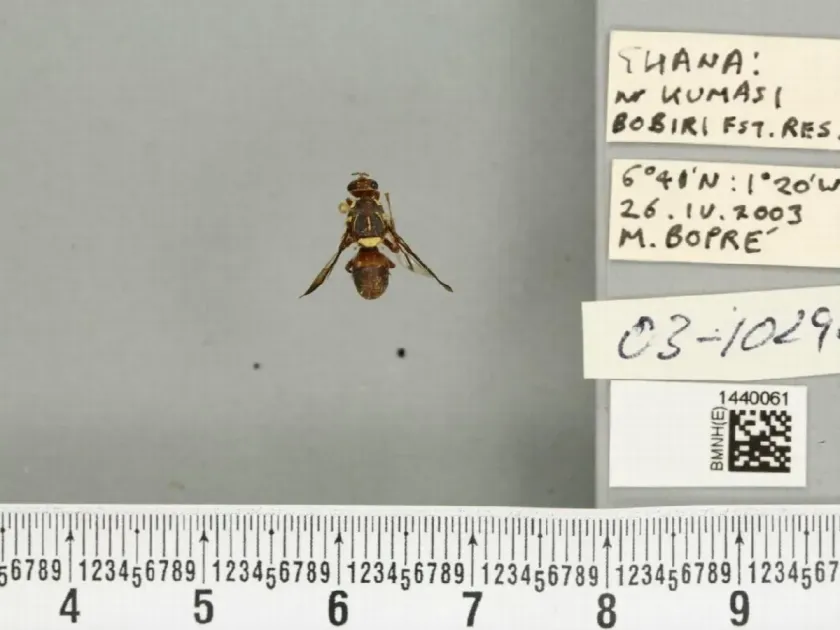
Description
How to identify
Dacus theophrastus is a member of the Tephritidae family, also known as fruit flies. It is recognized as a significant agricultural pest that primarily affects the productivity of specific fruit-bearing crops through its reproductive cycle.
Adult insects are small, typically with a distinct patterned wing structure that assists in camouflage. Their bodies vary in color but are often brownish or yellowish, blending into the background of host plants, which makes detection challenging.
The larvae are white or cream-colored, legless maggots that are well-adapted for burrowing into plant tissue. Their development is characterized by rapid growth, supported by the nutrients extracted directly from the interior of the host fruit.
The lifecycle typically involves the adult female laying eggs beneath the skin of the fruit. After hatching, the larvae consume the pulp, creating galleries that eventually lead to the decay of the fruit. Pupation often occurs within the soil or the infested fruit.
Environmental factors, particularly temperature and humidity, play a crucial role in the survival and multiplication of this species. Understanding these climatic requirements is essential for predicting outbreak periods during the growing season.
What it damages
The primary damage is caused by the larvae, which feed on the internal tissues of the fruit. This feeding activity results in the breakdown of cell walls, rendering the fruit susceptible to further infection by rot-inducing microorganisms.
Visible damage on the exterior often starts as small puncture marks, which are the sites where eggs were deposited. As the larvae grow, the fruit becomes deformed and may develop soft spots that signify significant internal damage.
Economic losses can be substantial, as infested crops often lose their marketability. In some cases, the entire harvest of susceptible plants can be ruined, forcing farmers to take drastic protective measures to save the remaining crop.
Secondary infections, such as bacterial or fungal soft rot, are a common complication of the damage. Once the larva has compromised the integrity of the fruit's skin, these pathogens thrive, leading to rapid liquefaction of the fruit.
Plants infested at a young developmental stage, such as during the flowering or early fruit set phase, are particularly vulnerable. The loss of these early fruits significantly reduces the total yield of the plantation.
Signs of infestation
Identifying the pest at an early stage is vital. Look for tiny dark spots on the skin of young fruits, which indicate successful egg deposition. If you notice these signs, immediate action is required to prevent further spread.
A yellowing or softening area on the fruit surface, often around the puncture point, is a common indicator of internal larval activity. When opened, the fruit pulp will often show clear evidence of tunneling and larval excrement.
Premature fruit drop is another sign of an infestation. Healthy plants should not shed their fruits unless under extreme stress, making this a reliable visual cue that pests are likely feeding inside the fruits.
Adult flies can be monitored using yellow sticky traps or pheromone lures placed in the field. Observing the flight activity of the adults is a standard practice for timing protective treatments effectively.
If you observe flies buzzing around the plants and notice subsequent fruit lesions, it is highly likely that Dacus theophrastus has established a population in your field, requiring immediate monitoring and intervention.
Control measures
Effective management begins with strict sanitation practices. Collecting and disposing of all infested fruits, especially those that have dropped to the ground, is crucial to break the pest's reproductive cycle.
Soil management, such as deep tilling after harvest, helps to disturb or bury the pupae, reducing the number of adults that will emerge in the following season. This cultural practice is fundamental for long-term population control.
Chemical control should be implemented based on monitoring results. Targeted insecticide applications are most effective when applied during the period of adult flight, before eggs are laid within the developing fruit.
Biological controls, including the use of entomopathogenic fungi or selective natural enemies, are becoming increasingly important in integrated pest management programs to reduce reliance on chemical sprays.
- Regular field scouting and monitoring with traps.
- Prompt removal and burial of damaged or fallen fruit.
- Crop rotation to minimize pest buildup over multiple seasons.
- Judicious use of insecticides aligned with the pest's lifecycle.
Taxonomy
- Latin name
- Dacus theophrastus
- Order
- Diptera (flies)
- Family
- Tephritidae
- EPPO code
- DACUTP
Discussion
No discussions yet — be the first.