
Fruit fly Dacus
Dacus siliqualactis
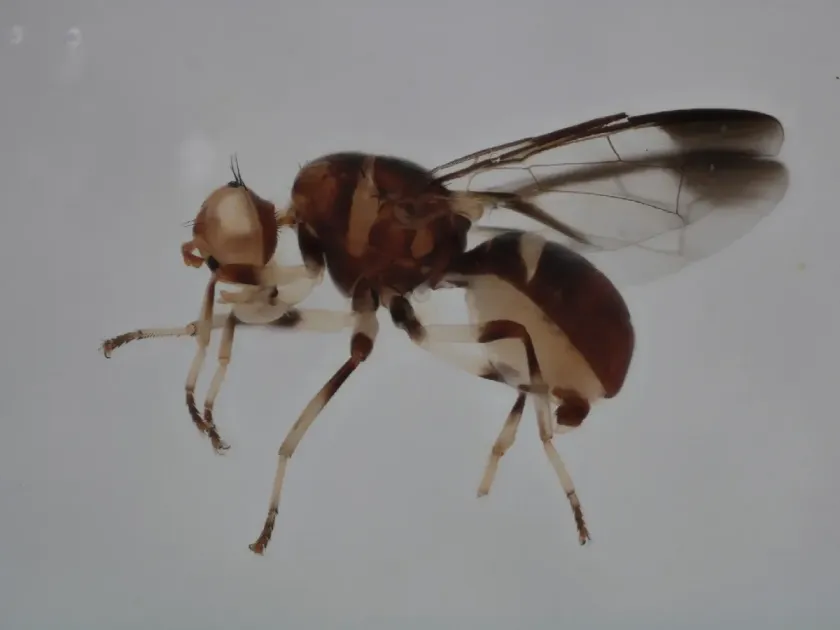
Description
How to identify
The fruit fly Dacus siliqualactis belongs to the order Diptera and the family Tephritidae. It is recognized by its distinct morphology and specific wing patterns typical for fruit flies of this group.
The life cycle involves four distinct stages: egg, larva, pupa, and adult. The female is equipped with a specialized ovipositor, which allows her to pierce the skin of fruits and deposit eggs directly into the tissue.
Larvae are legless, cylindrical, and usually creamy-white, adapted for feeding within the fleshy parts of host fruits where they are protected from environmental hazards.
Pupation typically occurs in the soil beneath the host plant, though it can sometimes happen within decaying fruit. Adults feed on nectar and honeydew to gain energy for reproduction.
The development rate is highly sensitive to ambient temperature and humidity, with warmer seasons typically leading to multiple generations per year and increased pest pressure.
What it damages
The primary hosts for Dacus siliqualactis are vegetables from the Cucurbitaceae family, including cucumbers, melons, and squash, though other soft fruits may occasionally be attacked.
Damage is caused by larvae that feed on the pulp of the fruit, creating tunnels that destroy the fruit structure and lead to total loss of quality.
As larvae feed, they introduce secondary pathogens including bacteria and fungi, which trigger rapid rotting and liquefaction of the fruit tissue from the inside out.
Infested fruits often show symptoms of premature ripening, discoloration, and softening, making them completely unsuitable for market or consumption.
Heavy infestations can result in significant economic damage to growers, sometimes destroying the entire yield of susceptible crops in untreated fields.
Signs of infestation
The initial sign of infestation is the presence of tiny, pin-prick marks on the fruit skin, which are the sites where the female has deposited her eggs.
These puncture sites often become discolored or show minor exudation of sap, which later develops into dark, decaying spots as the larvae begin feeding.
If an infested fruit is cut open, internal tunnels filled with larval excrement (frass) and decaying tissue will be clearly visible to the observer.
Another indicator is the premature drop of young fruits, which often fall to the ground before they have a chance to fully develop or ripen properly.
The presence of adult flies hovering around ripening fruits during the early morning or evening hours is a reliable indicator of active infestation in the area.
Control measures
Monitoring using pheromone-based traps is the cornerstone of an effective integrated pest management strategy, helping to time other control measures accurately.
Sanitation is critical: all infested fruits should be harvested promptly and disposed of by deep burial or destruction to break the life cycle of the fly.
Biological controls, such as using entomopathogenic fungi or beneficial nematodes, can be used to manage larvae in the soil before they complete their life cycle.
Cultural practices like crop rotation and maintaining clean field borders by removing alternative host weeds significantly reduce the local population of the pest.
Chemical control with systemic insecticides may be necessary in extreme cases, provided that application guidelines and pre-harvest intervals are strictly followed.
Taxonomy
- Latin name
- Dacus siliqualactis
- Order
- Diptera (flies)
- Family
- Tephritidae
- EPPO code
- DACUSI
Discussion
No discussions yet — be the first.