
Fruit fly Dacus setilatens
Dacus setilatens
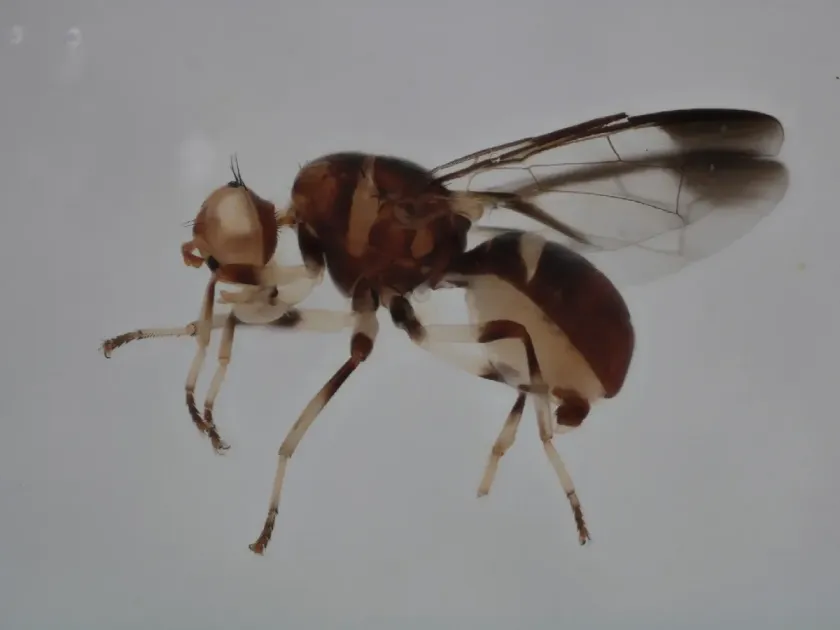
Description
How to identify
The fruit fly Dacus setilatens belongs to the family Tephritidae (fruit flies), a group of dipterous insects known for causing significant damage in horticulture.
These flies are relatively small, characterized by a specific wing pattern and body structure common to the Dacus genus, which aids in their survival and camouflage.
Females are equipped with a specialized ovipositor, which they use to pierce the skin of ripening fruits to deposit eggs directly into the pulp.
The larval stage consists of small, legless maggots that are specifically adapted to thrive within the nutritional environment of a developing fruit.
Accurate identification of the species often requires examining the wing venation patterns and other minute morphological traits under a microscope.
What it damages
Dacus setilatens acts as a primary pest for various fruit crops, directly impacting both the quantity and quality of the yield during the growing season.
The damage is primarily caused by the larvae, which tunnel through the fruit flesh, causing internal rot and rapid degradation of the fruit tissue.
As the larvae feed, they destroy the structure of the fruit, rendering it unsalable and unsuitable for human consumption or processing.
The puncture marks made by the female during oviposition serve as entry points for secondary pathogens like bacteria and fungi, exacerbating the total loss of the crop.
Heavy infestations usually result in premature fruit drop and significant yield reduction, leading to economic consequences for the growers.
When it appears
The life cycle of the fruit fly is tightly synchronized with the phenology of its host plants and the seasonal availability of fruits.
Adult flies emerge from their pupal stage in the soil when environmental temperatures reach a threshold suitable for their activity and reproduction.
The species may complete multiple generations within a single season, depending on the climatic conditions and the duration of the fruiting period.
During the winter months or unfavorable periods, the insect typically undergoes diapause in the pupal stage, hidden within the soil profile.
The most active period of the pest coincides with the peak ripening stages of fruit crops, making timing critical for management strategies.
Signs of infestation
Early warning signs include the appearance of small, pin-prick lesions on the surface of the fruit where eggs have been inserted.
Over time, these spots may develop into sunken, discolored patches, signaling that larvae are actively feeding inside the fruit.
If an affected fruit is opened, one can observe larval galleries—tunnels carved by the maggots throughout the affected area.
A sudden increase in fruit drop, where fruits appear intact but are soft to the touch, is a classic sign of internal infestation.
In some cases, liquid exudates or fermented scents emanating from the fruit may attract other insects, further indicating a breach in the fruit skin.
Control measures
Sanitation is a cornerstone of control; collecting and destroying fallen or infested fruit prevents the next generation of larvae from completing their life cycle.
Integrated pest management (IPM) often utilizes monitoring traps, such as pheromone or protein-based lures, to detect adult presence and determine spray timing.
Tilling the soil under the tree canopy in the post-harvest season can disrupt the pupation process and reduce the population for the following year.
Chemical control, when necessary, involves applying insecticides targeting adult flies before they reach the fruit-piercing stage.
- Use of netting to protect individual high-value fruit trees.
- Encouraging natural predators and parasitoids in the orchard ecosystem.
- Removing alternative host plants in the vicinity of the orchard.
Taxonomy
- Latin name
- Dacus setilatens
- Order
- Diptera (flies)
- Family
- Tephritidae
- EPPO code
- DACUSE
Discussion
No discussions yet — be the first.