
Dacus punctatifrons
Dacus punctatifrons
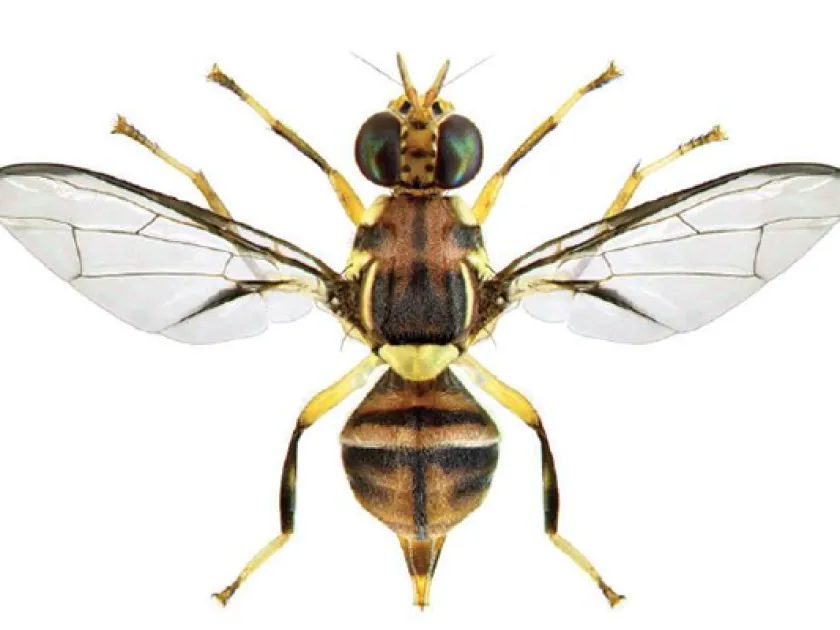
Description
How to identify
Dacus punctatifrons belongs to the Tephritidae family, also known as fruit flies, within the order Diptera.
The adult fly is characterized by specific morphological features, including distinct dark spots on the frontal region of the head, which distinguishes it from related species.
Like other members of the Tephritidae family, it possesses clear wings with a distinct venation pattern that is often used for taxonomic identification.
The larvae are typically cylindrical, legless, and creamy-white, equipped with specialized mouth hooks for burrowing into the tissues of host plants.
Accurate identification usually requires a professional examination of the adult's wing venation and thoracic bristle pattern, alongside larval morphological analysis.
What it damages
The primary economic damage is caused by the larval stage, which feeds internally on the fruits of various vegetable and horticultural crops.
Host plants are frequently members of the Solanaceae and Cucurbitaceae families, where female flies insert their ovipositors to lay eggs beneath the skin.
As larvae feed, they tunnel through the fruit pulp, breaking down internal structure and creating pathways for secondary bacterial and fungal infections.
Infested fruits typically lose their market value, become soft, and eventually rot, rendering them unsuitable for human consumption or processing.
This feeding behavior makes the fruit unfit for export, often leading to strict phytosanitary quarantine measures in affected agricultural regions.
When it appears
The life cycle of Dacus punctatifrons is closely synchronized with the phenology of its host plants and local climatic conditions, particularly temperature and humidity.
Adult activity typically begins when host fruits start to ripen, as these provide the necessary substrates for the female flies to oviposit.
In regions with mild climates, the pest can complete multiple generations within a single growing season, leading to exponential population growth.
The insect typically overwinters in the pupal stage within the soil, emerging as an adult once environmental temperatures become favorable in the spring.
Regular monitoring using pheromone traps or protein-based food lures is essential to track the emergence and population density of the flies throughout the season.
Signs of infestation
The earliest signs of infestation are small puncture marks on the surface of the fruit, created by the female's ovipositor during the egg-laying process.
Discoloration or slight necrotic spots around the entry points are common indicators that a larva has successfully penetrated the fruit tissue.
Upon cutting open an infested fruit, one can observe internal breakdown, larval tunnels, and the presence of frass left by the developing larvae.
Premature fruit drop is a frequent consequence of larval activity, often occurring long before the fruit would naturally reach maturity.
A foul, rotting odor emitting from the fruit, accompanied by localized soft spots, serves as a late-stage warning of extensive internal larval infestation.
Control measures
Management of this pest requires an integrated approach that focuses on reducing the current population while preventing further re-infestation.
Sanitation is a critical control measure, involving the frequent removal and destruction of fallen or infested fruits to break the insect's life cycle.
The use of mass-trapping techniques, including protein baits and adhesive lures, can effectively lower the adult population density in the field.
Targeted chemical applications should be timed to control the adult stage before they can deposit eggs, utilizing insecticides approved for integrated pest management.
Cultural practices, such as crop rotation and maintaining spatial isolation from wild host reservoirs, are fundamental to sustainable pest mitigation strategies.
Taxonomy
- Latin name
- Dacus punctatifrons
- Order
- Diptera (flies)
- Family
- Tephritidae
- EPPO code
- DACUPU
Discussion
No discussions yet — be the first.