
Fruit fly Dacus pulchralis
Dacus pulchralis
Description
How to identify
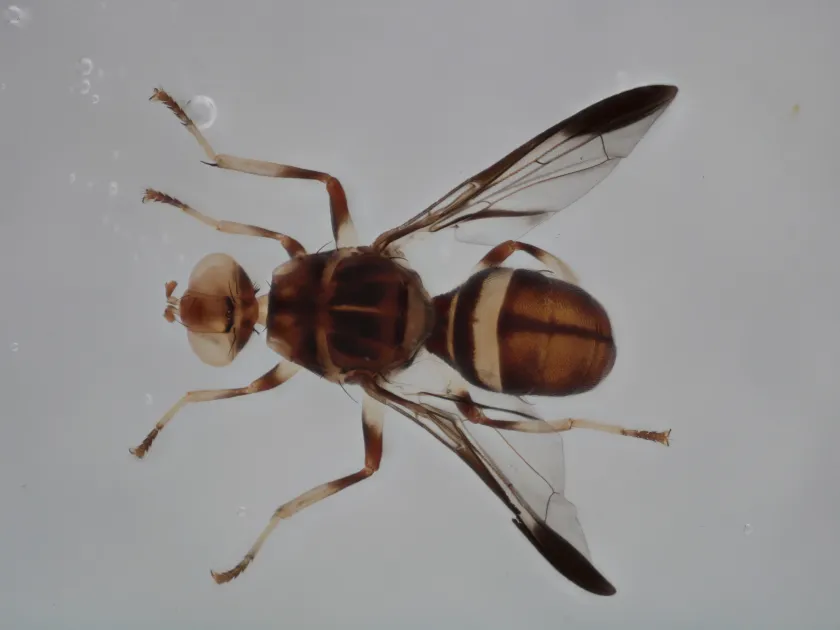
Dacus pulchralis is a species belonging to the order Diptera and the family Tephritidae (fruit flies). It is a small insect that exhibits the typical physiological characteristics of tephritid fruit flies.
The adult fly possesses distinctive wing patterns, which are essential for morphological identification. These patterns, along with body coloration, help distinguish it from other related species.
The larvae are typical legless maggots, usually creamy-white, adapted for feeding within the fleshy tissues of host fruits throughout their developmental cycle.
Because they are small and highly mobile, adult flies are often detected using specialized pheromone traps rather than direct visual scouting in large orchards.
Females are equipped with a sharp ovipositor, which enables them to pierce the fruit's epidermis and deposit eggs into the nutrient-rich interior.
What it damages
Dacus pulchralis primarily affects a range of fruit crops. It is particularly known for attacking various species of vegetables and fruits, often targeting those with soft skin.
Damage is caused by the larvae, which tunnel deep into the fruit flesh. Their feeding activity destroys the internal structure, rendering the produce completely unmarketable.
The feeding tunnels create entry points for opportunistic pathogens, including bacteria and fungi, which lead to rapid decay and fermentation of the affected fruit.
Premature fruit drop is a common consequence of an infestation. Once a fruit is infested, it often loses its structural integrity within a very short period.
In cases of high pest pressure, losses can be devastating, sometimes affecting a significant percentage of the total harvest if no intervention measures are implemented.
When it appears
The life cycle of Dacus pulchralis is heavily influenced by ambient temperatures. Warm and humid conditions provide the ideal environment for rapid development.
Pupation typically occurs in the soil beneath host plants or within fallen fruits, providing the insect with a protected stage to overwinter or survive adverse conditions.
Adult activity peaks when temperatures rise, usually coinciding with the maturation phase of the target host plants in the orchard or field.
Multiple generations can be produced within a single growing season in favorable climates, which makes constant monitoring essential for effective population control.
The availability of host fruits directly dictates the breeding intensity; as more fruits become ripe, the population of the fly tends to increase exponentially.
Signs of infestation
The first external sign of infestation is the presence of tiny, pinprick-sized punctures on the fruit surface, often accompanied by slight discoloration or bruising.
- Small, dark, or sunken spots on the peel where the female deposited eggs.
- Premature ripening and softening of the fruit tissues.
- Presence of exit holes where fully developed larvae have left the fruit.
- Distinctive fermentation odor emanating from damaged fruits on the tree or ground.
- Visible trails or tunnels inside the fruit when sliced open during inspection.
Observing a group of fallen fruits under a tree, especially during the peak season, is a strong indicator of an ongoing pest infestation that requires immediate attention.
Control measures
Integrated Pest Management (IPM) strategies are recommended. This starts with the deployment of pheromone traps to monitor adult flight patterns accurately.
Sanitation is a critical non-chemical control measure. Collecting and disposing of all fallen fruits prevents larvae from entering the soil and completing their life cycle.
Chemical control involving systemic insecticides is most effective when applied at the right timing, specifically to target adults before they can deposit eggs.
Biological control methods, such as introducing or encouraging natural predators and parasitoid wasps, can significantly reduce fly populations over time.
Physical protection, such as bagging individual fruits or covering plants with fine-mesh netting, provides an effective barrier against female oviposition in smaller crops.
Taxonomy
- Latin name
- Dacus pulchralis
- Order
- Diptera (flies)
- Family
- Tephritidae
- EPPO code
- DACUPC
Discussion
No discussions yet — be the first.