
Fruit fly Dacus pleuralis
Dacus pleuralis
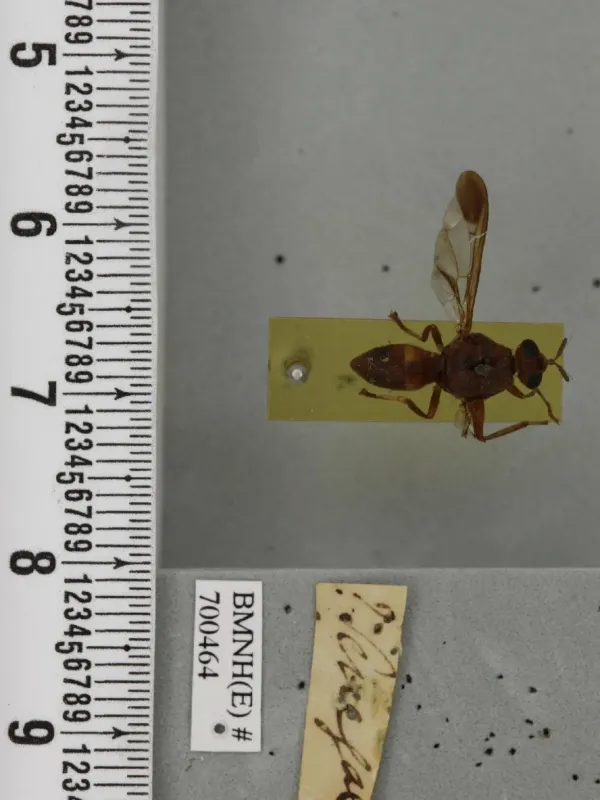
Description
How to identify
The fruit fly Dacus pleuralis belongs to the Tephritidae family, order Diptera. This insect possesses morphology typical for the genus, featuring a compact body, often with distinct coloration, and transparent wings with pronounced venation.
Identifying adults requires microscopic analysis because many species of the Dacus genus look similar. Key differences lie in the arrangement of cephalic bristles, the shape of the scutellum, and specific patterns on the abdominal tergites.
The larvae of this pest have a typical tephritid form: legless, cylindrical, and tapering towards the anterior end. Larval coloration ranges from whitish to creamy, allowing them to effectively camouflage within the host fruit tissues.
The life cycle includes four stages: egg, larva, pupa, and adult. Development involves complete metamorphosis, with the pupal stage typically occurring in the soil or in dry plant debris beneath the host plant.
Sexually mature adults are active during the warm season, feeding on flower nectar and aphid secretions. Mating occurs shortly after emergence, after which females seek suitable fruits to oviposit their eggs.
What it damages
Damage is primarily caused by larvae developing within the fruits of various tropical and subtropical crops. Dacus pleuralis is an obligate carpophage, preferring fleshy fruits with high sugar content.
Crops prone to attack by this pest include various members of the Cucurbitaceae and Solanaceae families. Wild species are also frequently reported as hosts, serving as reservoirs for the pest in natural environments.
The damage level of this species is classified as high, as infestation occurs during the fruit ripening stage. Skin punctures made by females during oviposition compromise the integrity of the fruit epidermis.
Damaged fruits lose their commercial value and quickly succumb to secondary infections. Larval development inside the pulp triggers decay, rendering the harvest unsuitable for consumption or processing.
During mass outbreaks, the fly population can destroy up to 80-90 percent of the harvest in a given field. This makes monitoring adult population levels a critical part of plant protection protocols.
Signs of infestation
The primary sign of infestation is small punctures on the fruit surface, often surrounded by a small patch of softened tissue. Darkening of the epidermis is frequently observed around oviposition sites.
Cutting the fruit reveals winding tunnels carved by larvae within the pulp. In later stages of damage, fruits become soft to the touch, lose firmness, and may fall prematurely from the branches.
The presence of larval exit holes is a final indicator of the completion of the pest's developmental cycle. These holes are often accompanied by sap oozing and the appearance of mold fungi on the site of damage.
A specific smell of fermenting fruit can also signal a hidden infestation. Damaged areas intensely attract secondary pests like drosophilids, which complicates primary diagnosis in the field.
With detailed inspection during evening or early morning hours, adults can be spotted on fruit or leaf surfaces. Using pheromone traps significantly facilitates the detection of the pest before mass infestation begins.
Control measures
The foundation of management is the agrotechnical approach: timely collection and deep burial of fallen fruit. Eliminating fallen fruit prevents larvae from completing their life cycle in the soil and breaks the reproductive chain.
The use of food attractants and pheromone traps allows for effective monitoring and mass trapping of adults. This enables targeted insecticide application only when the economic threshold of damage is reached.
The chemical method involves treatments with systemic insecticides during the peak flight period of the flies. It is vital to adhere to pre-harvest intervals to ensure no pesticides remain in the harvested crop.
Biological control involves the use of natural enemies, such as braconid wasps that parasitize Dacus larvae. Preparations based on fungal strains causing epizootics within the fly population are also effective.
Creating barriers using fine-mesh nets around trees or individual fruits is an environmentally safe protection method. This is most justified for small-scale gardens and organic farming operations.
Taxonomy
- Latin name
- Dacus pleuralis
- Order
- Diptera (flies)
- Family
- Tephritidae
- EPPO code
- DACUPL
Discussion
No discussions yet — be the first.