
Newman's fruit fly
Dacus newmani
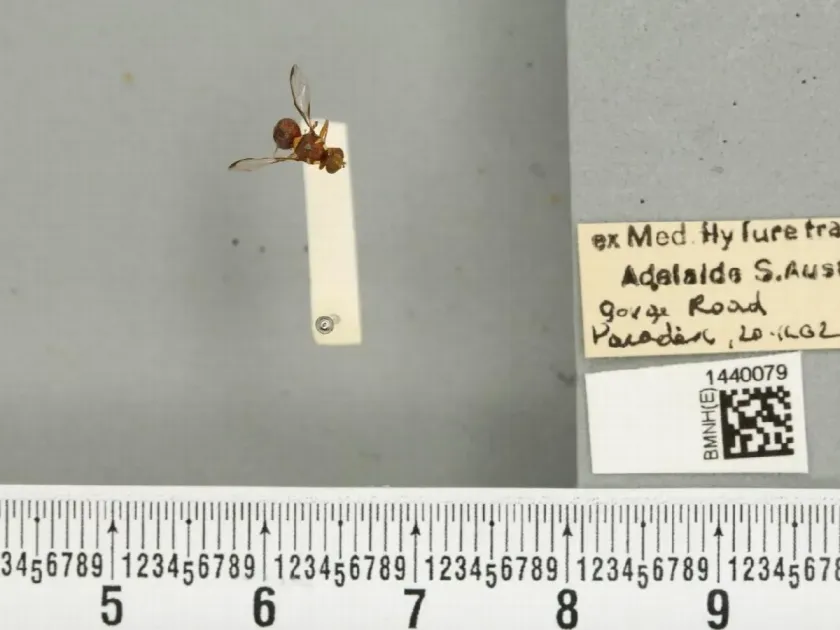
Description
How to identify
Newman's fruit fly (Dacus newmani) belongs to the Tephritidae family, a group of flies known for causing significant damage to horticultural crops. As a dipteran insect, it undergoes complete metamorphosis, including egg, larva, pupa, and adult stages.
The adult fly is characterized by a specific body structure and wing venation, which are essential for morphological identification. These flies are generally agile and possess sensory organs adapted to locate suitable hosts for oviposition.
The female fly uses a sharp, sclerotized ovipositor to deposit eggs beneath the skin of a fruit. This behavior is the primary point of contact between the pest and the crop, initiating the infestation process.
Larvae are typically legless and maggot-like, evolved to feed efficiently on fruit pulp. Their development is fast and highly dependent on ambient temperatures, allowing the pest to complete several generations during a single growing season.
This species is often subject to strict quarantine regulations in many countries to prevent its spread through international trade. Monitoring for its presence is a standard procedure in integrated pest management programs.
What it damages
The primary damage is caused by larvae consuming the interior of fruits. By tunneling through the pulp, they destroy the internal integrity of the produce, making it completely inedible and non-marketable.
This pest targets a wide array of fruits, especially those cultivated in tropical and subtropical regions. Its ability to infest various host species makes it a persistent threat to diverse agricultural systems.
Infestation often accelerates the decay process. The damage created by larvae provides easy access for secondary pathogens, such as bacteria and fungi, which quickly lead to complete rotting of the fruit.
Premature fruit drop is a common result of infestation. This reduces total yields significantly and complicates harvest management, as damaged fruits often remain on the ground to provide a breeding ground for future generations.
Economic losses arise from both direct crop destruction and the increased costs associated with surveillance, control measures, and restricted access to export markets due to quarantine mandates.
When it appears
The seasonal activity of Dacus newmani is closely tied to host plant phenology and climatic conditions. Adults are most active during warm, humid weather when fruits are in the susceptible stage of ripening.
In regions with mild winters, the life cycle may continue with minimal interruption. However, in cooler climates, the species may spend the winter in protected environments or as pupae in the soil.
Multiple generations per year are characteristic of this fly. Consequently, protection efforts must be maintained from the onset of fruit set until the final harvest to protect susceptible varieties.
Monitoring programs usually start early in the season, before the fruit matures. Using lure-baited traps allows farmers to track population spikes and time their intervention strategies effectively.
Late-season fruits are often at the highest risk, as the fly population has typically reached its peak density by the time these varieties are ready for harvesting.
Signs of infestation
The first external signs of infestation are small puncture marks or "stings" on the fruit surface. These are the entry points where the female laid its eggs during the oviposition process.
Softened areas on the fruit skin are indicative of internal larval activity. When pressed, these spots may yield easily, revealing that the inner pulp has been liquefied by the feeding larvae.
Cutting open a suspect fruit will reveal the presence of maggots and a network of decay-filled tunnels. The texture of the pulp becomes watery and discolored, often emitting a fermented or foul odor.
Premature ripening and the sudden dropping of healthy-looking fruits from the tree are strong indicators that larvae are feeding inside. This is often followed by the emergence of mature larvae from the fruit to pupate.
Visible insect activity in the canopy, especially during morning or evening hours, can also signify a high pest pressure on the orchard, necessitating immediate inspection of the fruit.
Control measures
Managing Newman's fruit fly requires a multi-faceted approach. Relying on a single method is rarely sufficient, so integrated pest management (IPM) is the recommended strategy for long-term control.
Sanitation is a vital component of control. Removing fallen fruit from the orchard floor prevents larvae from completing their development in the soil and reduces the source of infestation for subsequent generations.
Chemical control involves the application of insecticides targeting the adult fly. Timing is crucial; treatments must be applied before the larvae can penetrate the fruit skin, where they become protected from contact sprays.
Attract-and-kill stations or traps are effective for reducing local populations of adults. These tools utilize food-based attractants or pheromones to lure the flies, effectively lowering the overall infestation pressure.
- Maintain a clean orchard by daily removal and destruction of infested fruit.
- Use monitoring traps to determine the exact timing for spray applications.
- Implement biological controls such as specialized parasitic wasps or entomopathogenic fungi.
- Apply physical barriers like fruit bagging for high-value crops in small-scale gardens.
Taxonomy
- Latin name
- Dacus newmani
- Order
- Diptera (flies)
- Family
- Tephritidae
- EPPO code
- DACUNE
Discussion
No discussions yet — be the first.