
Dacus mediovittatus
Dacus mediovittatus
Description
How to identify
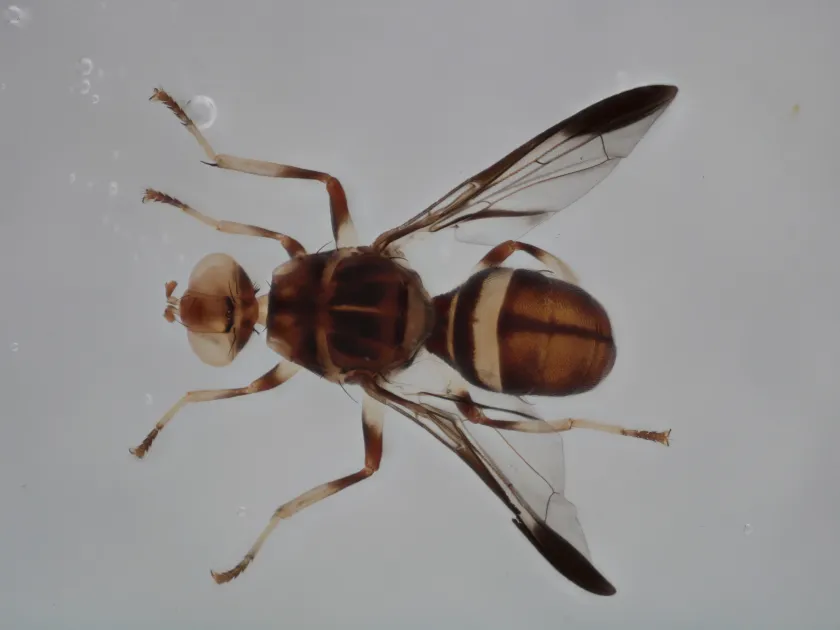
Dacus mediovittatus belongs to the family Tephritidae (fruit flies), order Diptera. This small insect resembles a common housefly, characterized by a specific color pattern and distinctive wing venation typical for the group.
Adult specimens are identified by the presence of stripes on the mesonotum, which is reflected in their scientific name. Identification in the field often requires a hand lens due to the small size of the adults.
The insect undergoes a complete metamorphosis: egg, larva, puparium (pupa), and adult. The larvae are typical of tephritid flies, being white in color and legless.
This species is a typical representative of fruit-infesting flies, preferring tropical and subtropical climates to complete their reproductive cycles.
Females possess a well-developed ovipositor designed to pierce the skin of host fruits and deposit eggs directly into the fruit pulp.
What it damages
This pest primarily attacks various species of the Cucurbitaceae family. Potential host plants include zucchini, pumpkins, melons, and cucumbers.
In regions where Dacus mediovittatus is prevalent, it causes significant crop yield losses, rendering fruits unsuitable for market or consumption.
The larvae develop inside the fruit, destroying the internal structure by feeding on the flesh, which leads to tissue decay and premature fruit drop.
Damage to the fruit surface provides entry points for secondary infections caused by bacteria and fungal pathogens, accelerating spoilage in the field.
The level of damage can reach critical thresholds during periods of high fly activity if systematic monitoring and timely control measures are not implemented.
Signs of infestation
The first sign of infestation is the appearance of tiny punctures on the surface of young or mature fruit, left by the female's ovipositor during egg laying.
Small depressed spots often appear around the puncture sites, which may darken and soften over time, indicating the onset of rot.
Upon cutting open an infested fruit, tunnels created by the larvae and the larvae themselves can be found feeding on the plant tissues.
Premature yellowing and shedding of fruit ovaries are also indirect indicators of pest activity within cucurbit plantings.
In cases of severe infestation, fruits lose their shape, become mushy, emit an unpleasant odor, and rapidly decompose under high-humidity conditions.
Control measures
The primary method of control involves the use of pheromone or food-based traps to capture adults and monitor population density.
Crop rotation and the destruction of crop residues that may harbor pupae in the soil are highly recommended as preventative practices.
The application of systemic insecticides is effective in early stages, but requires strict adherence to pre-harvest intervals to ensure safety.
- Regular collection and disposal (deep burial) of infested fruits.
- Use of protective nets to cover individual fruits in small-scale gardens.
- Soil tillage after harvest to destroy overwintering puparia.
Biological control methods include the use of natural enemies, such as parasitic wasps, which can help reduce larval populations.
Taxonomy
- Latin name
- Dacus mediovittatus
- Order
- Diptera (flies)
- Family
- Tephritidae
- EPPO code
- DACUME
Discussion
No discussions yet — be the first.