
Masai fruit fly
Dacus masaicus
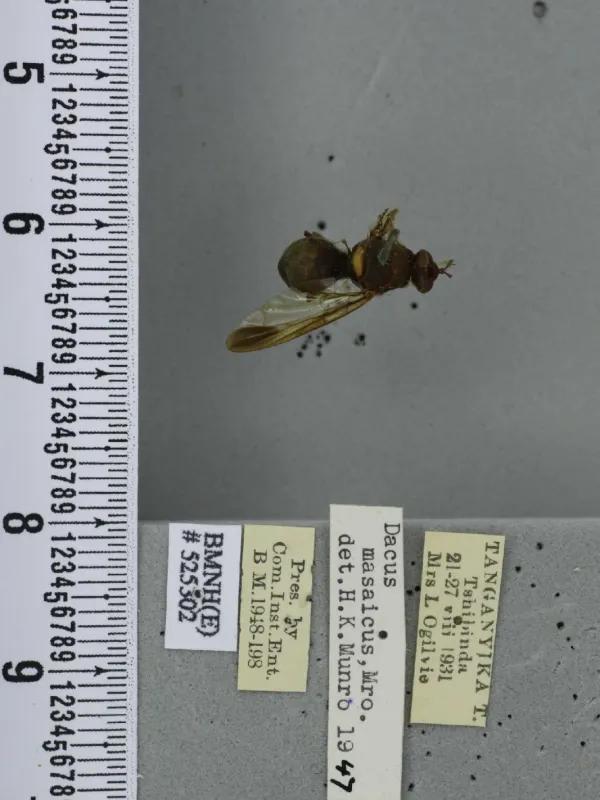
Description
How to identify
The Masai fruit fly (Dacus masaicus) belongs to the Tephritidae family, also known as fruit flies. It is a significant pest characterized by its distinct morphology, which allows it to thrive in its native habitats.
Adult flies exhibit a pattern of coloration that often blends with their environment. They possess specialized wings with distinct venation, which is a key diagnostic feature for entomologists.
The female is equipped with an elongated ovipositor, a specialized organ used to pierce the skin of ripening fruit and deposit eggs directly into the interior tissue.
Larvae are small, white, and legless, perfectly adapted to live inside the pulp of fruits. They pass through several larval stages, growing rapidly by feeding on the host tissue.
The pupal stage occurs in the soil beneath the host plant, making the soil condition an important factor in the population dynamics of the pest.
What it damages
The Masai fruit fly primarily infests plants in the Cucurbitaceae family. Common hosts include cucumbers, melons, pumpkins, and various squash varieties.
The damage is caused by the larvae, which create extensive tunnels through the fruit pulp. This feeding behavior destroys the structural integrity of the crop.
Secondary infections by bacteria and fungi quickly follow the larval damage, leading to rapid rotting of the fruit. This makes the produce unmarketable and often entirely inedible.
Infested fruits frequently show signs of stunted growth, premature yellowing, or abnormal shapes. Often, the fruits fall from the vine before they can be harvested.
The economic impact can be severe in regions where the fly is established, leading to total yield loss in neglected fields or non-protected crops.
When it appears
The activity of the Masai fruit fly is highly dependent on climate. They thrive in warm, humid conditions which are ideal for their rapid development cycles.
The seasonal appearance typically correlates with the fruiting stage of host plants. When temperatures are optimal, the flies remain active, seeking suitable fruits for oviposition.
Multiple generations can occur within a single growing season. This overlapping of generations makes continuous monitoring essential throughout the summer and early autumn.
During the cooler months or dry seasons, the population survives in the pupal stage within the soil, waiting for the return of favorable environmental conditions.
Agricultural irrigation practices can inadvertently extend the activity period of the fly by keeping the soil moist, which is beneficial for the survival of pupae.
Signs of infestation
The most visible sign of an infestation is the presence of tiny, pin-prick punctures on the skin of the fruit, which indicate where the female fly has laid her eggs.
As the larvae grow, the skin around the puncture site may begin to soften, and a dark spot or decay patch may develop, eventually spreading across the fruit surface.
- Pinhole marks on the outer rind of the fruit.
- Soft, sunken spots that signify internal rotting.
- Premature dropping of fruits from the stems.
- Visible larval tunnels inside the fruit pulp when cut open.
- A foul, decaying odor emanating from the damaged produce.
Control measures
Good sanitation is the first line of defense. All damaged and fallen fruits should be collected and destroyed immediately to break the lifecycle and prevent larvae from reaching the soil.
Tilling the soil under the canopy of host plants after the harvest helps expose pupae to predators or buries them too deep, effectively reducing the next generation's population.
Trapping with food-based lures or pheromones is crucial for monitoring. These traps provide early warning signals, allowing growers to time their intervention measures accurately.
Chemical control involving insecticides can be used during peak fly activity. It is essential to choose products compatible with the crop and to respect the pre-harvest interval.
Physical barriers, such as netting or fruit bags, provide the safest and most effective method for small-scale growers to ensure fruit remains uninfested throughout development.
Taxonomy
- Latin name
- Dacus masaicus
- Order
- Diptera (flies)
- Family
- Tephritidae
- EPPO code
- DACUMA
Discussion
No discussions yet — be the first.