
Dacus langi fruit fly
Dacus langi
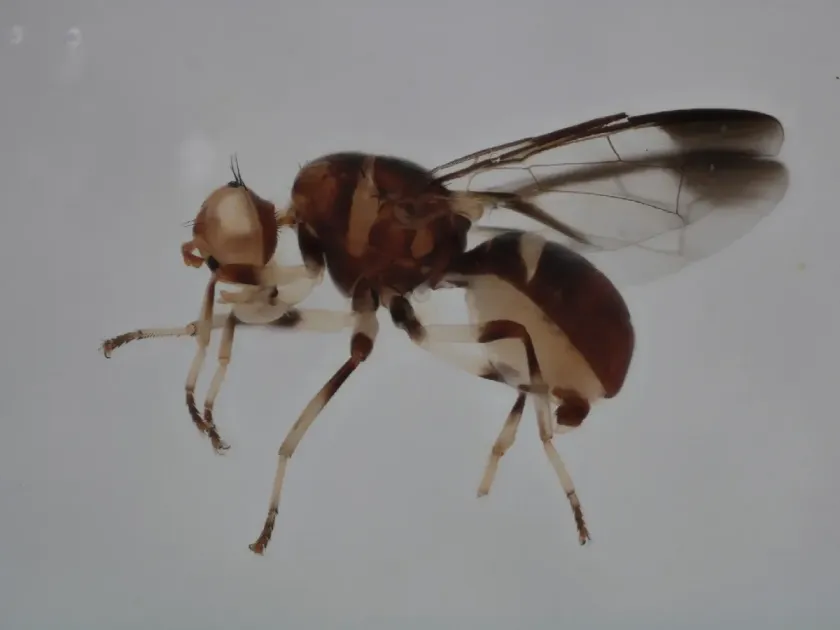
Description
How to identify
Dacus langi is a member of the Tephritidae family, also known as fruit flies. It is a highly specialized insect species with a morphology adapted for infesting host fruits.
Adult flies are characterized by distinctive wing patterns and a body structure that aids in camouflage. They are highly active during warm, humid conditions which are ideal for their reproduction.
Females possess a specialized ovipositor, which is used to penetrate the fruit skin and deposit eggs into the pulp or the area around the seeds.
The larvae are typically legless and creamy-white, passing through several instars while feeding inside the fruit. This developmental stage is purely internal.
Identification of the species often requires professional entomological expertise due to the presence of closely related species within the genus Dacus.
What it damages
This pest primarily attacks fleshy fruits of various trees. By laying eggs inside the fruit, the female creates an entry point for both larval feeding and secondary pathogens.
The larvae feed on the fruit pulp, which disrupts the fruit's structure and leads to rapid decay. This makes the affected produce unmarketable and inedible.
Fruits affected by Dacus langi often fall prematurely, causing significant yield losses for growers, especially in orchards without integrated pest management.
The internal damage caused by larval tunneling allows fungi and bacteria to enter the fruit, which often results in fermentation and rotting of the entire crop.
The pest is of economic importance as it can lead to total crop failure if left uncontrolled during periods of high fly activity and fruit ripening.
Signs of infestation
The most visible sign of infestation is the presence of small puncture marks (stings) on the fruit's epidermis, which are caused by the female's ovipositor.
As the larvae grow, the surrounding area may show signs of softening and slight discoloration, which signals the internal destruction caused by the developing larvae.
Examining the interior of a symptomatic fruit will reveal tunnels and larval waste (frass), which are clear evidence of Dacus langi activity.
Premature fruit drop is a strong indicator of an active infestation, as the plant reacts to the internal damage by shedding the infested fruit.
A foul, fermented odor from fruits still on the tree or freshly fallen is a late-stage symptom indicating severe infestation and secondary rot.
Control measures
Monitoring using pheromone traps is the most effective way to detect the presence of adults and determine the optimal timing for protective measures.
Sanitation practices are critical: all fallen fruit must be collected and disposed of by burial or destruction to break the insect's life cycle.
Chemical control involves the application of registered insecticides during the periods when the fruit is most susceptible to egg-laying.
Orchard management, such as thinning the canopy, helps reduce local humidity and light conditions, making the environment less favorable for the flies.
Biological control, including the release of specific parasitoids or the use of entomopathogenic fungi, serves as a sustainable way to manage population levels.
Taxonomy
- Latin name
- Dacus langi
- Order
- Diptera (flies)
- Family
- Tephritidae
- EPPO code
- DACULG
Discussion
No discussions yet — be the first.