
Dacus kariba
Dacus kariba
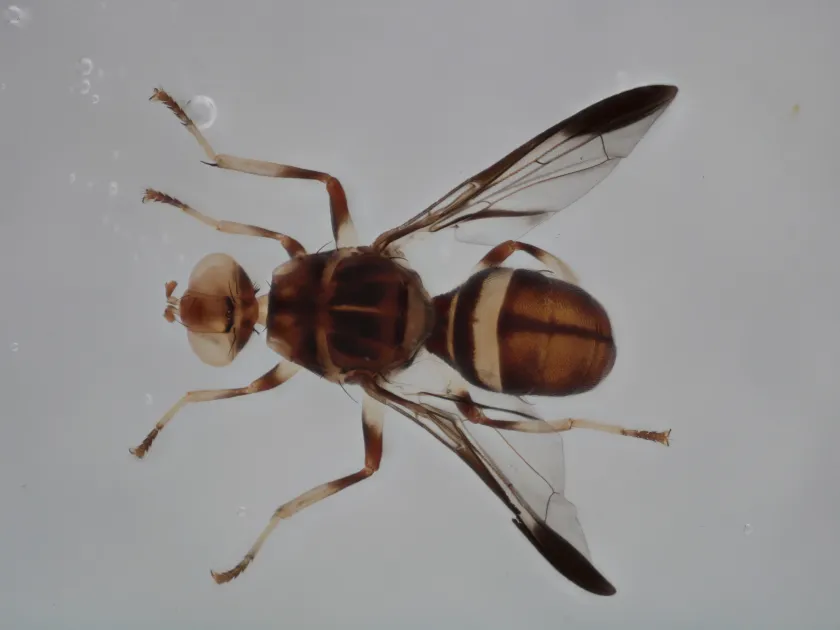
Description
How to identify
Dacus kariba is a species of fruit fly belonging to the family Tephritidae, order Diptera, known for its impact on fruit-bearing plants.
The adult fly possesses specific morphological characteristics, including patterned wings and a robust body structure adapted for flight and movement within dense foliage.
The larvae are typically maggot-like, creamy-white in color, and lack a distinct head, which is typical for Diptera larvae living inside plant tissues.
Their identification is often based on the specific structure of their wing veins and the shape of the ovipositor in females, used for piercing fruit skin.
The insect undergoes complete metamorphosis, including egg, larval stages, pupation, and adult stages, requiring precise environmental conditions for each phase.
What it damages
The primary hosts for Dacus kariba are plants within the Cucurbitaceae family, including various types of melons, gourds, and pumpkins.
Damage occurs when the female fly inserts her ovipositor into the fruit tissue, causing localized damage that serves as a site for potential secondary infection.
As larvae feed on the internal pulp, they create galleries that destroy the fruit structure, rendering it unfit for market or consumption.
In addition to structural destruction, the tunneling process introduces microorganisms that lead to rapid internal decay and fruit collapse.
High infestation rates can lead to total crop loss, causing significant economic setbacks for commercial vegetable growers.
When it appears
The activity of Dacus kariba is closely linked to the availability of host fruit and favorable climatic conditions, particularly temperature and humidity.
In tropical and subtropical climates, the life cycle may occur continuously throughout the year if suitable environmental conditions are maintained.
During colder or dry seasons, the insect may enter a state of diapause, often as a pupa within the soil, waiting for the return of favorable weather.
Adult flies typically emerge in large numbers at the start of the fruiting season, synchronizing their life cycle with the development of host crops.
The duration of the life cycle is temperature-dependent, with warmer conditions significantly accelerating the development from egg to adult.
Signs of infestation
Early infestation signs include minute puncture marks on the surface of the fruit, often surrounded by a small discolored or sunken area.
Fruit that appears to be ripening prematurely or shows irregular shape development may be an indicator of larval tunneling activity inside.
Soft spots on the fruit surface, often weeping a thin fluid, suggest that internal degradation has reached an advanced stage.
Upon splitting a suspicious fruit, the presence of white maggots or dark winding galleries filled with frass confirms the infestation.
A foul, fermented, or rotten odor emanating from apparently intact fruit is a strong signal of internal colony development.
Control measures
Agricultural sanitation is the first line of defense, requiring the immediate removal and destruction of all infested or fallen fruit.
The use of monitoring tools such as pheromone traps is essential to detect the arrival of adults and determine the best timing for interventions.
Soil tillage is highly effective in disrupting the life cycle, as it exposes the pupae to predators and adverse environmental conditions.
Chemical control focuses on protecting the crop during the vulnerable fruit-set phase, using targeted insecticide applications.
- Maintain crop rotation to break the pest's cycle.
- Clear weeds that act as alternative hosts for the flies.
- Implement physical barriers like fruit bagging to protect individual crops.
Taxonomy
- Latin name
- Dacus kariba
- Order
- Diptera (flies)
- Family
- Tephritidae
- EPPO code
- DACUKA
Discussion
No discussions yet — be the first.