
Fruit fly Dacus fuscinervis
Dacus fuscinervis
Description
How to identify
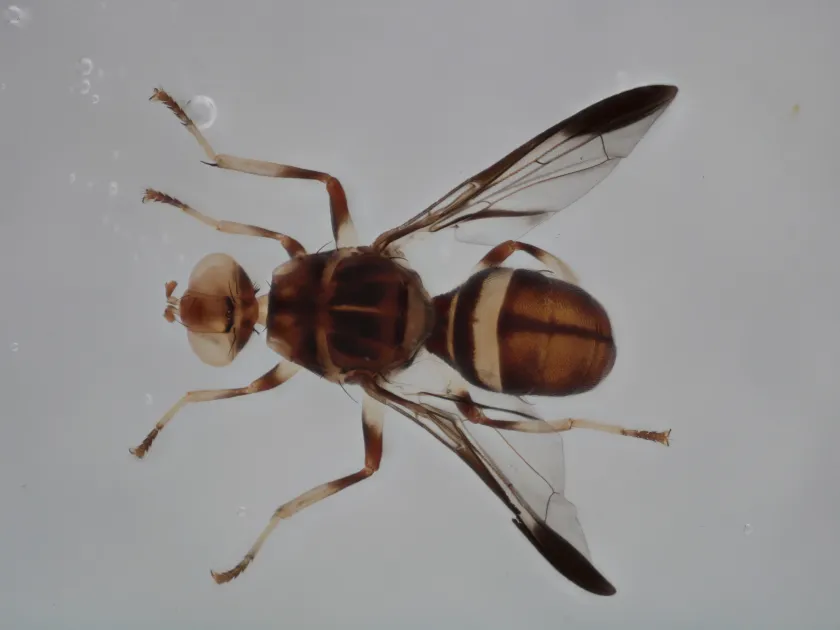
Dacus fuscinervis belongs to the Tephritidae family, also known as fruit flies, which are notorious for infesting various agricultural crops worldwide. Visually, the adults are small flies often distinguished by the complex, patterned pigmentation on their wings.
Species identification in the field is highly challenging due to the significant morphological similarity between Dacus fuscinervis and other closely related species within the Dacus genus. Accurate diagnosis usually requires professional entomological examination.
The larvae are typical of the Diptera order, lacking legs and possessing a robust, tapered body structure. They feature specialized mouth hooks that enable them to consume and tunnel through fruit tissue efficiently.
Adult flies are primarily diurnal and exhibit highly active searching behavior for suitable host fruits. They utilize chemical signals, including plant volatile emissions, to locate optimal sites for oviposition.
The taxonomic status of this species is subject to ongoing research as part of broader studies into the Dacus genus. Its classification remains vital for establishing quarantine protocols in international trade.
What it damages
The primary damage is inflicted upon the fruits of tropical and subtropical plants. The female utilizes a sharp ovipositor to pierce the skin of the fruit, depositing eggs directly into the pulp.
As the larvae hatch, they begin to feed on the interior of the fruit, creating extensive tunnels that compromise the internal structure. This feeding activity results in the rapid softening and decomposition of the fruit.
Severe infestations can lead to substantial economic losses, as the infested produce becomes unfit for market. If left unmanaged, the pest can significantly reduce the harvest volume in a short period.
The entry points created by the female serve as ideal sites for secondary infections by opportunistic pathogens, including various fungal and bacterial rot agents, which rapidly finish the destruction of the fruit.
Because of its potential to decimate harvests, Dacus fuscinervis is often monitored as a quarantine pest, with strict movement controls placed on fruit coming from infested regions.
When it appears
The seasonal prevalence of Dacus fuscinervis is heavily dictated by climatic conditions and the fruiting cycle of the host plants. They thrive in warm, humid conditions that favor both egg development and larval survival.
Overwintering typically occurs in the pupal stage, with pupae remaining in the soil or protected debris beneath the host trees. The arrival of warmer weather triggers the emergence of adult flies to begin their annual reproductive cycle.
The number of generations produced per year is largely dependent on ambient temperatures. In tropical environments, multiple, overlapping generations can lead to exponential population growth during the harvest season.
Peak flight activity often correlates with periods of high humidity and rainfall. Monitoring programs typically intensify during these periods to prevent significant damage to ripening fruit.
Understanding these biological cycles is crucial for developing timing-based management strategies, ensuring that interventions are applied when the pest population is most vulnerable.
Signs of infestation
The earliest indication of an infestation is the presence of minute puncture marks on the fruit's surface. These spots are often surrounded by small discolored or sunken areas, marking the site of egg deposition.
Cutting open an infested fruit often reveals internal cavities and the presence of pale, legless larvae. The tissue in these areas appears watery, mushy, and typically emits a fermented odor.
Premature fruit drop is a reliable warning sign of high infestation levels. If fruits begin to fall before reaching maturity, a thorough inspection of the fallen material is recommended to identify the presence of larvae.
The use of specialized sticky traps or attractant-based traps in the orchard canopy is the most reliable diagnostic method to confirm the presence and density of adult flies.
Visible deformation, surface spotting, or uneven ripening can also serve as late-stage indicators of an infestation, signaling that the interior of the fruit has likely been compromised.
Control measures
Sanitation is the cornerstone of control efforts. Regularly collecting and properly destroying all fallen fruit prevents the larvae from completing their life cycle and emerging as a new generation.
Attractant-based traps, such as pheromone or protein bait traps, are highly effective tools for monitoring and mass-trapping adults. These methods are preferred for integrated pest management (IPM) programs.
Chemical control involving selective insecticides may be necessary during peak emergence. It is critical to follow precise application guidelines to minimize residues and ensure safety for the final consumer.
Biological control methods, including the release of specific parasitoid wasps that target fly larvae or pupae, are increasingly used to reduce pest pressure in a sustainable manner.
Cultural practices, such as maintaining optimal tree health, ensuring proper airflow through pruning, and selecting resistant varieties, help create an environment that is less hospitable to the fruit fly.
Taxonomy
- Latin name
- Dacus fuscinervis
- Order
- Diptera (flies)
- Family
- Tephritidae
- EPPO code
- DACUFS
Discussion
No discussions yet — be the first.