
Fig fruit fly
Dacus ficicola
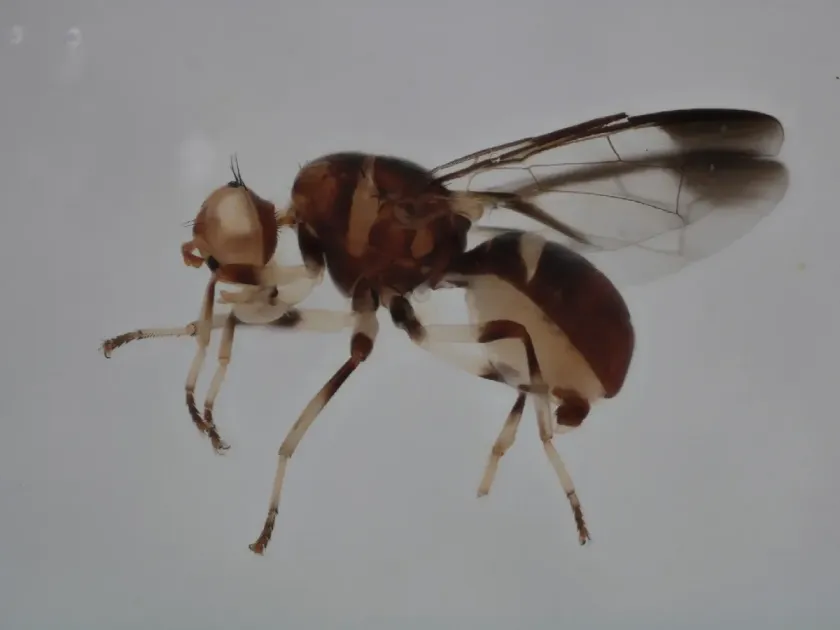
Description
How to identify
The fig fruit fly (scientific name Dacus ficicola) belongs to the Tephritidae family, which includes many significant agricultural pests. These flies are specially adapted to target the fruit of the fig tree.
Adult flies are relatively small, often featuring patterned wings and bodies that provide camouflage, allowing them to remain undetected while selecting suitable sites for egg-laying.
The larvae are typically legless and maggot-like, moving through the soft internal tissues of the fig as they feed. They are creamy-white in color and difficult to spot without dissecting the fruit.
The life cycle encompasses four distinct stages: egg, larva, pupa, and adult. The duration of each stage is highly dependent on ambient temperature and fruit maturity.
Pupation commonly occurs either inside the discarded, rotting fruit or within the soil directly beneath the tree, which is a critical point for management strategies.
What it damages
The primary host for Dacus ficicola is the common fig. Larval feeding destroys the interior of the fruit, making the harvest inedible and commercially worthless.
The damage is not limited to physical consumption; the puncture wounds created by the female flies serve as entry points for pathogens, leading to secondary fungal infections.
Severe infestations cause significant premature fruit drop, which reduces overall yields and complicates the harvesting process for farmers.
In high-density orchard environments, the fig fruit fly can spread rapidly, potentially damaging the majority of the crop if control measures are neglected.
Losses are particularly devastating for organic farmers, as the pest renders the interior of the fruit unsightly and unfit for both fresh consumption and drying.
Signs of infestation
The presence of Dacus ficicola is usually indicated by tiny puncture marks on the skin of the developing figs, sometimes accompanied by slight oozing of sap.
A tell-tale sign of infection is the premature yellowing or discoloration of the fruit while it is still on the branch, often accompanied by soft spots.
Dissecting a suspect fig will reveal internal tunnels and larvae, confirming an active infestation within the fruit tissues.
A foul, fermented smell coming from the tree indicates that the internal breakdown of the fruit by larvae has already progressed significantly.
Increased sightings of small, active flies hovering around the tree canopy during the early stages of fruit development are a warning sign of an impending infestation.
Control measures
Sanitation is the most vital step: all fallen fruits must be collected and buried or destroyed immediately to prevent larvae from completing their life cycle in the soil.
Using bait traps or sticky traps specifically designed for fruit flies can effectively reduce adult populations and provide monitoring data for growers.
Chemical control, if necessary, requires careful selection of insecticides that are safe for use on food crops and consistent with pre-harvest interval regulations.
Cultivating the soil beneath the trees can disrupt the pupae, reducing the local overwintering population and limiting the following year's infestation.
- Monitor fruit development closely during the season.
- Prune trees to allow better air circulation and light penetration.
- Employ biological control agents such as specific parasitoid wasps.
- Implement netting as a physical barrier for high-value fig trees.
Taxonomy
- Latin name
- Dacus ficicola
- Order
- Diptera (flies)
- Family
- Tephritidae
- EPPO code
- DACUFI
Discussion
No discussions yet — be the first.