
Dacus durbanensis
Dacus durbanensis
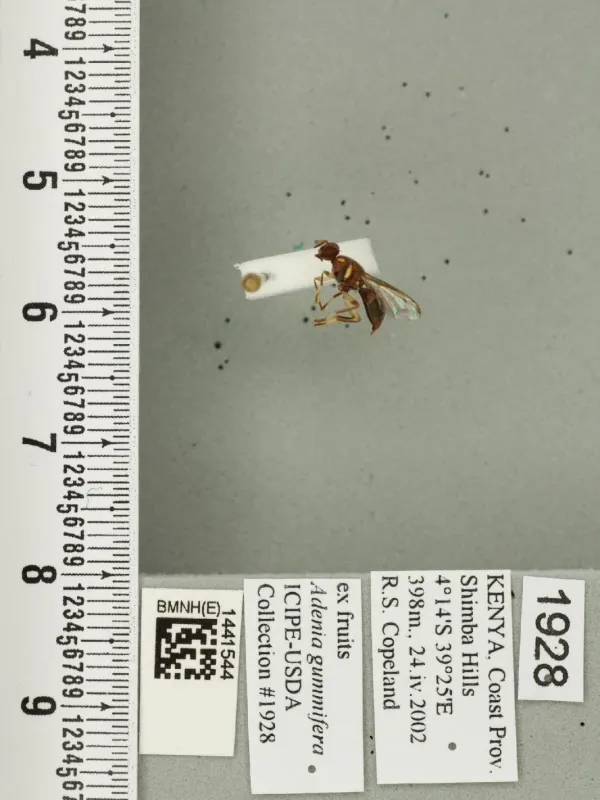
Description
How to identify
Dacus durbanensis is a species of fruit fly belonging to the Tephritidae family, within the order Diptera. This fly is recognized as a significant agricultural pest due to its destructive habits.
Adult flies are relatively small, typically measuring 6 to 8 mm in length, with a slender abdomen that gives them an appearance somewhat similar to small wasps.
They possess transparent wings with distinct vein patterns and a body color that ranges from yellowish-brown to dark brown, featuring dark markings on the thorax.
The larvae are typical fruit fly maggots: cylindrical, legless, and white or cream-colored, equipped with specialized mouth hooks for boring into fruit tissue.
Pupae are found either within the infested fruit or in the soil, appearing as brown, barrel-shaped structures with a hardened cuticle designed for survival.
What it damages
Dacus durbanensis primarily infests various horticultural crops, particularly those belonging to the Cucurbitaceae family and several tropical fruit species.
The damage is caused by the larvae feeding inside the fruit, which destroys the internal pulp and renders the crop completely unsuitable for human consumption.
Infestation levels can be extreme; without intervention, these flies are capable of causing massive crop losses, impacting yield efficiency and financial output.
Secondary infections occur because the entry points created by the female fly or larvae allow bacteria and fungi to invade the fruit, causing rapid rot.
The presence of this pest in commercial orchards often leads to strict quarantine regulations, preventing farmers from exporting their produce to international markets.
When it appears
The seasonal activity of Dacus durbanensis is heavily influenced by ambient temperature and relative humidity levels during the fruiting stages of host plants.
Adult flies emerge from overwintering pupae once average temperatures consistently reach 20 degrees Celsius, signaling the beginning of their life cycle.
Multiple generations can be completed within a single growing season, with population peaks generally coinciding with the ripening stages of the target fruit.
As colder weather approaches, the pest undergoes diapause in the soil, allowing the pupae to endure the winter months until conditions become favorable again.
Effective monitoring involves the use of pheromone-based traps to track adult flight activity, allowing for precise timing of integrated pest management interventions.
Signs of infestation
The first external sign of an infestation is the presence of tiny, pin-prick holes on the surface of the fruit, marking the site where eggs were deposited.
Darkened or sunken patches often develop around these puncture points as the fruit tissue begins to necrotize due to the feeding activity of the larvae inside.
Upon cutting open an infested fruit, one will typically find a network of tunnels through the flesh, accompanied by larval waste and signs of premature decay.
A distinctive sour or fermented odor often emanates from infested fruit, which is a clear indicator that internal decomposition is well underway.
- Small oviposition scars on the fruit skin.
- Premature ripening or fruit drop.
- Soft, spongy areas on the fruit exterior.
- Presence of maggots within the pulp.
- Discoloration and localized tissue collapse.
Control measures
Managing Dacus durbanensis requires a multifaceted approach, integrating cultural, chemical, and biological methods to minimize the damage to fruit crops.
Cultural practices, such as the immediate removal and deep burial of all fallen or infested fruit, are crucial to breaking the pest's reproductive cycle.
Mass trapping using food-based attractants or colored sticky traps can significantly reduce the adult population density in infested orchards and fields.
Chemical control should be applied judiciously, focusing on target-specific insecticides used during the fly's peak flight periods while respecting pre-harvest intervals.
Biological strategies, including the introduction of specific parasitoids or the application of entomopathogenic fungi, provide a sustainable alternative for long-term population control.
Taxonomy
- Latin name
- Dacus durbanensis
- Order
- Diptera (flies)
- Family
- Tephritidae
- EPPO code
- DACUDU
Discussion
No discussions yet — be the first.