
Fruit fly Dacus diastatus
Dacus diastatus
Description
How to identify
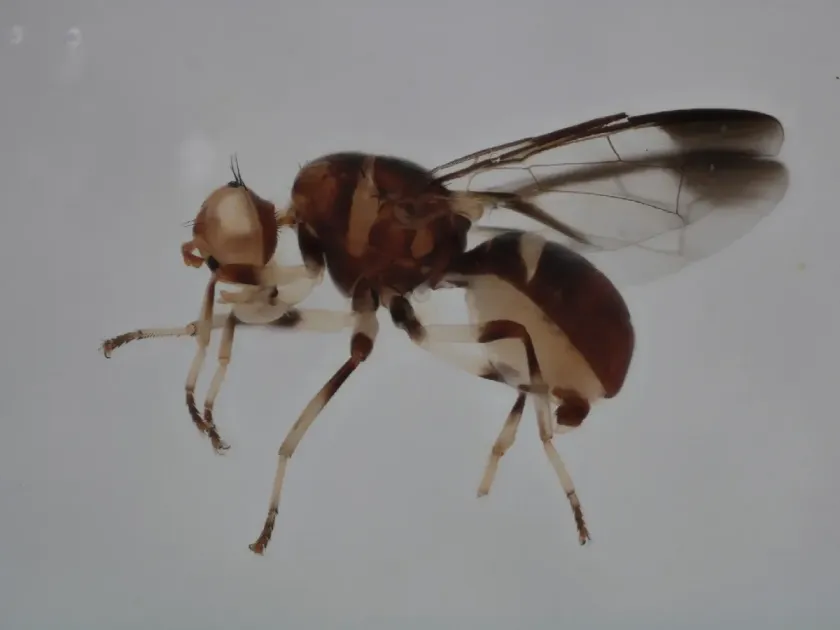
The fruit fly Dacus diastatus is a member of the Tephritidae family, belonging to the order Diptera. It is recognized as a significant pest within its specific geographical distribution.
Adult flies possess the distinct anatomical features characteristic of tephritids, including specific wing venation patterns that help in accurate taxonomic identification.
The larvae are typically whitish, legless maggots that develop within the fruit tissue, which provides them with both nutrition and protection from environmental stress.
The life cycle involves complete metamorphosis, moving through egg, larval, pupal, and adult stages, with pupation often occurring in the soil or within the fruit depending on conditions.
Understanding the biology of Dacus diastatus is essential for implementing precise management strategies in commercial orchards and smallholder farms.
What it damages
This species primarily attacks a variety of fruit crops, causing significant damage by creating entry points for secondary pathogens through oviposition and larval feeding.
Larvae consume the inner pulp of the fruit, creating internal tunnels that lead to rapid degradation of the fruit structure and overall quality.
Economic losses are severe, as damaged fruits become unmarketable due to discoloration, deformation, and the breakdown of fruit tissues caused by larval activity.
Secondary infections from bacteria and fungi commonly follow the initial damage, accelerating the rotting process and rendering the fruit completely inedible.
In high-density infestations, the entire crop can be compromised, leading to substantial yield reductions if integrated pest management practices are not strictly followed.
Signs of infestation
Initial signs of infestation appear as small, subtle punctures on the fruit surface, which are the sites where the female fly has deposited her eggs.
Premature ripening and fruit drop are common indicators that a fruit has been heavily infested by larvae, which have already started to consume the interior.
When the fruit is opened, the presence of galleries or tunnels filled with frass and decaying tissue clearly indicates the activity of Dacus diastatus larvae.
The external appearance often shows soft spots, sunken areas, or a discolored skin, indicating that the internal damage is already advanced.
- Stinging marks from the ovipositor.
- Premature yellowing or softening of fruits.
- Internal larval tunnels.
- Foul smell due to secondary rotting.
Control measures
Management of this pest relies heavily on monitoring using pheromone or protein-based traps to detect the onset of adult fly activity in the field.
Strict sanitation practices, such as the regular collection and disposal of fallen fruits, are critical to interrupt the larval development cycle and reduce future population density.
Targeted application of bait sprays containing insecticides can be used to manage adult populations while minimizing the impact on non-target beneficial insects.
Biological control agents, such as parasitoid wasps that prey on Dacus diastatus larvae, can serve as a long-term strategy for suppressing pest numbers.
Phytosanitary measures, including strict movement controls on potentially infested fruit, are vital to preventing the spread of this pest into unaffected geographical areas.
Taxonomy
- Latin name
- Dacus diastatus
- Order
- Diptera (flies)
- Family
- Tephritidae
- EPPO code
- DACUDS
Discussion
No discussions yet — be the first.