
Congo fruit fly
Dacus congoensis
Description
How to identify
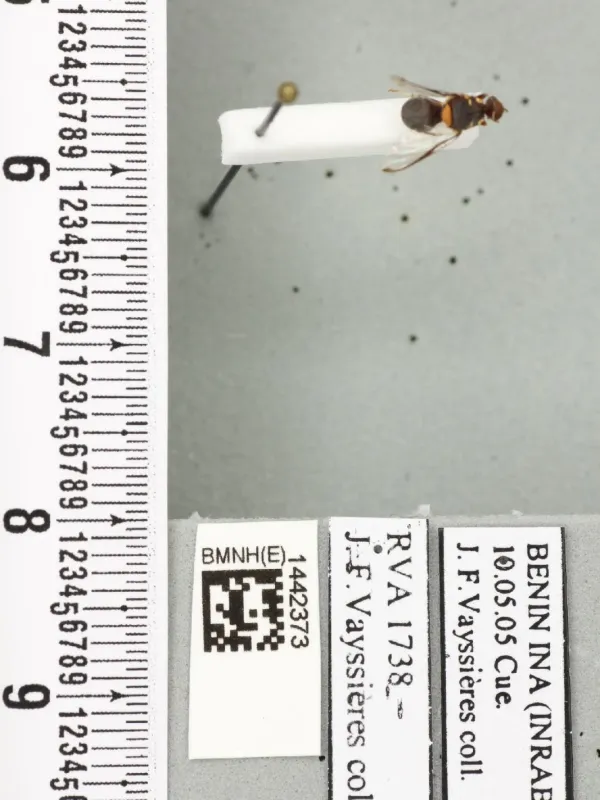
The Congo fruit fly (Dacus congoensis) belongs to the family Tephritidae, order Diptera. As a significant agricultural pest, it is characterized by distinct morphological features that allow it to adapt to various tropical and subtropical fruit-bearing plants.
Adult flies typically exhibit a brownish body with specific patterns on their wings and abdomen, which are diagnostic traits for this species. Females possess a sharp, sclerotized ovipositor used for piercing the fruit skin and depositing eggs into the pulp.
Larvae are legless maggots that undergo several instars while feeding inside the host fruit. Upon reaching maturity, they usually exit the fruit to pupate in the soil, transitioning into the next stage of their life cycle.
Identification is primarily carried out by entomologists through microscopic examination of adult features and pheromone trap monitoring. Understanding the specific fly population timing is essential for effective intervention.
The insect’s life cycle is highly sensitive to environmental factors like temperature and humidity, which dictate the speed of development from egg to adult and the number of generations per year.
What it damages
This pest mainly attacks members of the Cucurbitaceae family, including pumpkins, squashes, and melons. The damage is primarily caused by larvae that tunnel through the fruit, destroying its tissue and texture.
Secondary damage occurs when bacteria and fungi enter the fruit through the oviposition wounds created by the female, leading to rapid rot and degradation of the fruit quality.
Infestation signs include premature ripening, discolored spots on the fruit surface, and soft, mushy areas that reveal larvae inside when cut open. In severe cases, the entire fruit can be rendered unusable.
Economic losses can be devastating, especially in commercial farming, as the presence of even a single larva can lead to the rejection of produce for both local markets and international exports.
Because the larvae are protected inside the fruit, once the infestation is visible on the surface, it is often too late to save the affected crop, emphasizing the need for preventative management.
Control measures
Management programs rely on integrated pest management (IPM) strategies, starting with the prompt removal and destruction of fallen or infested fruit to break the life cycle of the fly.
The use of attractant-based traps is a cornerstone of monitoring and control, helping to reduce the adult population density within the orchard or field before egg-laying begins.
Insecticide applications are used in cases of high population pressure, targeting the adult stage. These treatments should be carefully timed based on trap monitoring to minimize impact on beneficial insects.
Cultural practices such as soil tillage after harvest help expose pupae in the ground to natural predators and environmental stressors, thereby reducing the population for the following season.
Maintaining strict quarantine and inspection procedures for transporting fruit from infested regions is crucial to prevent the accidental spread of the Congo fruit fly to new geographical areas.
Taxonomy
- Latin name
- Dacus congoensis
- Order
- Diptera (flies)
- Family
- Tephritidae
- EPPO code
- DACUCO
Discussion
No discussions yet — be the first.