
Fruit fly Dacus brevistriga
Dacus brevistriga
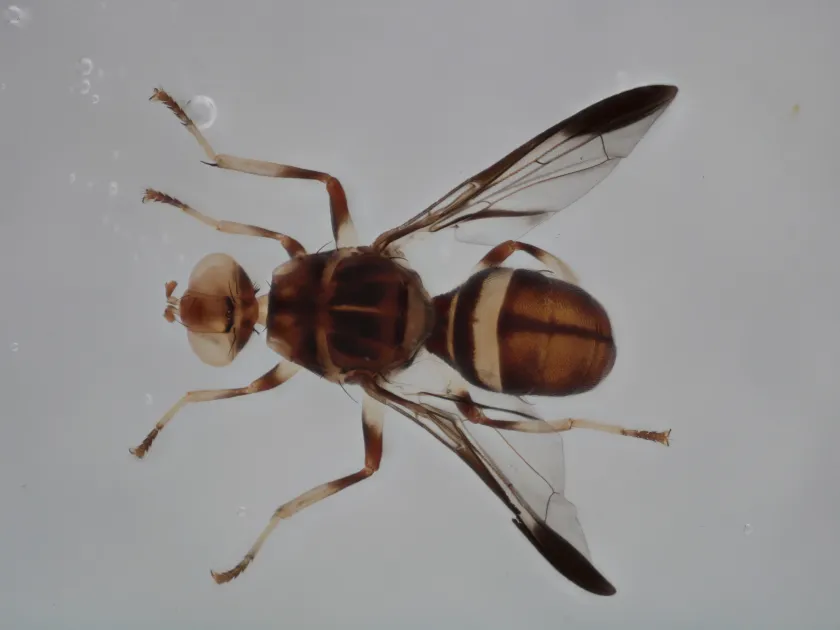
Description
How to identify
Dacus brevistriga is a species of fruit fly belonging to the family Tephritidae, order Diptera. These insects are known for their high level of host specificity and their ability to significantly affect the quality of fruit crops.
The adult fly possesses distinct morphological features, including specific wing venation patterns and body markings that aid in identification, although taxonomic confirmation often requires professional entomological expertise.
The life cycle involves four stages: egg, larva, pupa, and adult. The fly is adapted to environments where fruit is available for oviposition, and it can undergo several generations depending on the regional climate.
Females utilize a specialized ovipositor to penetrate the fruit skin, ensuring their eggs are placed in a location suitable for the subsequent larval development.
Pupation typically occurs in the soil beneath the host plant, where the pupae remain protected until the adult fly emerges, making the soil an important focus area for population suppression efforts.
What it damages
This pest primary targets various fruit-bearing plants, specifically those in the Cucurbitaceae family. The damage occurs when the female fly deposits eggs inside the developing fruit.
The punctures made by the female during oviposition cause immediate physical damage to the fruit surface and introduce opportunistic pathogens, leading to fungal and bacterial rot.
As the larvae hatch and begin feeding on the fruit pulp, they create internal tunnels, rendering the fruit soft, discolored, and ultimately unfit for human consumption or market distribution.
Severe infestations often result in premature fruit drop, which significantly reduces the harvestable yield and causes substantial economic losses for growers.
Beyond direct loss, the presence of these larvae inside the fruit complicates post-harvest management and may necessitate strict quarantine regulations in infested regions.
Control measures
An integrated pest management (IPM) approach is essential to control Dacus brevistriga. This includes cultural practices like systematic removal and destruction of fallen or infested fruits.
Monitoring using pheromone-based traps is a critical component for detecting the presence of adults and determining the optimal timing for intervention before extensive egg-laying occurs.
Soil management techniques, such as cultivation or covering the ground with plastic, can help kill the pupae present in the soil, effectively reducing the emergence of the next generation of flies.
Chemical control measures should be applied judiciously, targeting the adult stage of the fly to prevent mating and oviposition, while ensuring compliance with pre-harvest interval regulations.
Biological control, including the use of parasitoids or environmentally safe fungal pathogens, can provide long-term suppression of the pest population in managed agricultural landscapes.
Taxonomy
- Latin name
- Dacus brevistriga
- Order
- Diptera (flies)
- Family
- Tephritidae
- EPPO code
- DACUBV
Discussion
No discussions yet — be the first.