
Egyptian fruit fly
Dacus annulatus
Description
How to identify
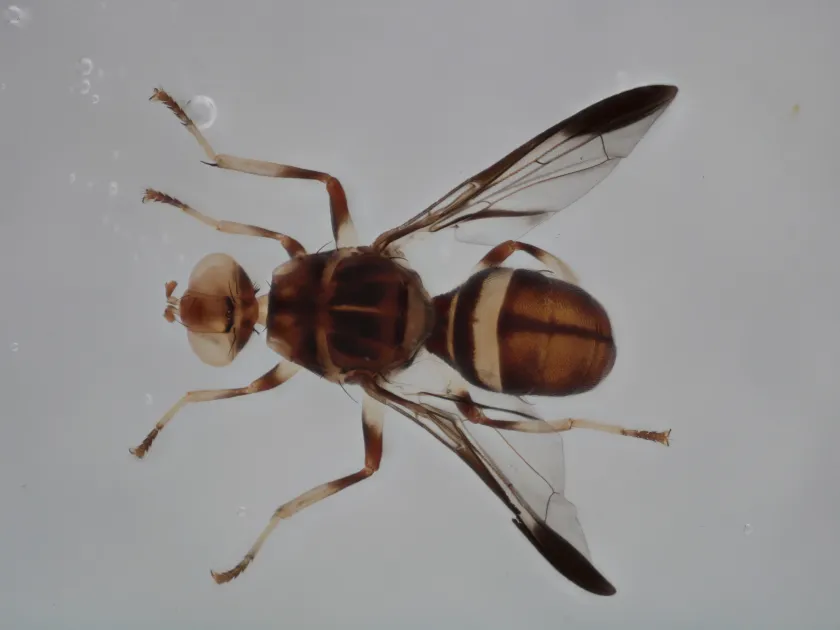
The Egyptian fruit fly (Dacus annulatus) is a member of the Tephritidae family, known as fruit flies. It is a small insect that resembles the common housefly but is easily distinguished by distinct dark markings on its wings and a yellowish-brown body.
Adults typically measure between 6 and 8 millimeters in length. The females possess a sharp ovipositor, which they use to penetrate the fruit skin and deposit eggs deep into the flesh, ensuring the survival of the offspring.
The life cycle encompasses four stages: egg, larva, pupa, and adult. The development rate is highly sensitive to ambient temperatures, with hotter weather significantly accelerating the progression from egg to adult.
The pest typically overwinters as a pupa within the soil beneath the host tree. In warmer climates, it can remain active as an adult in sheltered locations throughout the year.
This species is highly adaptable, allowing it to quickly infest new areas and recover rapidly from harsh environmental conditions, making it a significant threat to global horticulture.
What it damages
This pest is a major threat to various fruit-bearing crops. It primarily targets pome and stone fruits, including peaches, apricots, plums, and apples, causing severe economic losses.
In its native range, the fly also infests citrus, figs, and pomegranates. Its broad host range allows it to migrate between different fruit types as they ripen throughout the growing season.
Larvae feed exclusively on the succulent flesh inside the fruit, causing the tissue to break down. This destruction leads to premature fruit drop and renders the harvest completely unmarketable.
In addition to direct physical damage, the punctures made by the females serve as entry points for secondary bacterial and fungal pathogens, which cause the fruit to rot rapidly.
The economic impact can be devastating, with infestations potentially destroying nearly the entire crop if control measures are not implemented early in the season.
Signs of infestation
The first signs of infestation are small, dark punctures on the fruit surface, representing the oviposition sites. These spots often appear as slight depressions in the fruit skin.
Upon closer inspection, the interior of the fruit will show tunnels created by developing larvae. The flesh begins to soften and darken, often emitting a distinct fermented odor due to decay.
Premature ripening and dropping of fruit is a primary indicator of larval presence inside. Cutting open fallen fruit will typically reveal active larvae feeding on the pulp.
Adult flies can often be seen resting or feeding on ripening fruit. Growers commonly utilize yellow sticky traps to monitor and detect the arrival of the pest in the orchard.
Exudation of juice from the puncture wounds may occur, creating sticky spots on the fruit. These spots often attract other insects and promote the growth of sooty mold.
Control measures
Cultural control is essential, involving the regular collection and deep burial of fallen fruit to prevent larvae from completing their life cycle in the soil. Tilling the soil under trees also helps destroy pupae.
The use of pheromone traps and protein-based bait stations is an effective method for monitoring and reducing adult populations without heavy chemical interference.
Chemical control involves applying targeted insecticides during periods of peak adult activity. It is crucial to use authorized products and follow local regulations regarding application intervals.
Strict quarantine measures should be enforced when importing fruit products from areas where the fly is endemic to prevent further spread of this invasive species.
- Regular cleanup of fallen fruit.
- Deployment of yellow sticky traps.
- Application of bait sprays.
- Orchard hygiene and weed control.
Taxonomy
- Latin name
- Dacus annulatus
- Order
- Diptera (flies)
- Family
- Tephritidae
- EPPO code
- DACUAN
Discussion
No discussions yet — be the first.