
African melon fly
Dacus africanus
Description
How to identify
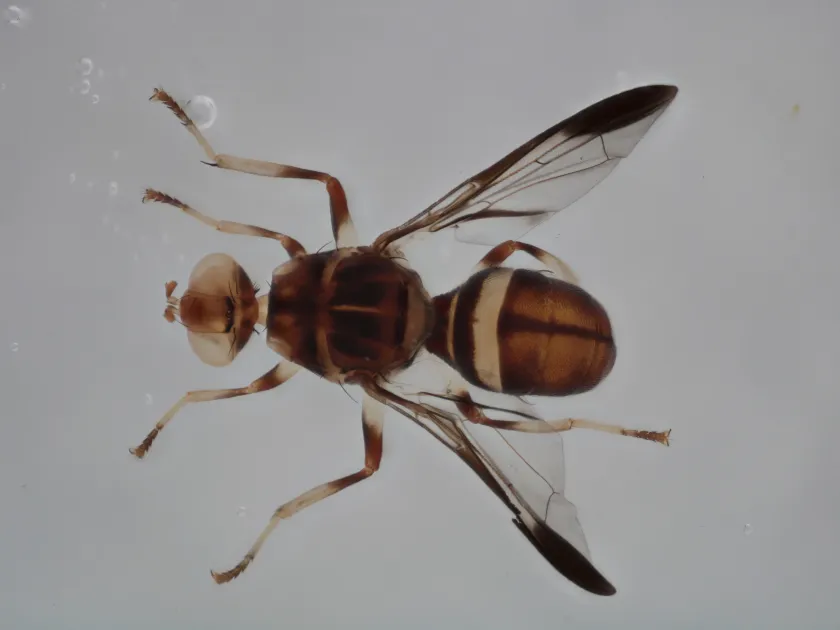
The African melon fly (Dacus africanus) is a significant pest belonging to the order Diptera and the family Tephritidae. It is widely recognized for the damage it inflicts on commercial fruit crops across its range.
Adult flies are visually distinct due to their coloration and patterned wings. Understanding their biology is essential for farmers, as they thrive in warm climates where cucurbits are commonly grown.
The lifecycle follows a standard pattern of egg, larva, pupa, and adult. The developmental speed is highly dependent on ambient temperature, which dictates the number of generations per season.
Monitoring using pheromone traps is the most reliable way to identify the presence of this pest in the field. These traps are highly sensitive and can capture early arrivals before they become a massive threat.
Proper identification at the species level is crucial for implementing targeted control programs, as this species often requires specific management tactics compared to other local tephritid flies.
What it damages
This pest primarily attacks plants within the Cucurbitaceae family. Preferred hosts include melons, watermelons, cucumbers, and pumpkins, which are vital components of many regional agricultural economies.
The larvae are responsible for the damage as they bore into the developing fruits. By feeding on the internal tissues, they liquefy the fruit pulp, rendering the produce completely unmarketable.
Secondary infections, such as bacterial soft rot and mold, often follow the initial larval damage. This causes a rapid deterioration of the fruit, making it unusable for consumption or industrial processing.
Economic losses can be substantial, often forcing growers to abandon entire plots. In severe cases, the fly's presence can trigger international trade barriers, impacting local export capabilities.
Furthermore, the persistent nature of the pest means that farmers must be vigilant throughout the entire growing season, as even minor infestations can quickly escalate into total crop failure.
Signs of infestation
The first external sign of an infestation is the presence of small puncture marks on the fruit skin. These are oviposition sites created by female flies when depositing eggs inside the fruit tissue.
Often, a small drop of sap or a slight discoloration around the puncture site indicates that the larvae have begun feeding inside. In some cases, the fruit skin may appear sunken or distorted.
Internally, the fruit shows signs of decay, including tunneling and the presence of larvae. If the infestation is well-advanced, the fruit will exhibit a foul odor and extreme softness.
Changes in the development of the fruit, such as premature fruit drop or abnormal shaping, are strong indicators that larvae are disrupting the internal physiological processes of the melon or cucumber.
Farmers should conduct regular visual inspections of their plots, specifically looking for these indicators on young and maturing fruits to assess the level of pressure from the pest population.
Control measures
Effective management requires an Integrated Pest Management (IPM) approach. This includes strict quarantine measures to prevent the spread of infested produce into new regions.
Cultural control strategies, such as deep plowing after harvest, are highly effective in disrupting the pupal stage of the fly that resides in the soil, effectively reducing the next generation's population.
Sanitation is critical; all infested or damaged fruit must be removed and destroyed immediately. Burying infected produce deep in the ground or using sealed composting techniques helps eliminate breeding sites.
The use of protein-based baits combined with insecticides can be used to target adult flies. This method is highly effective for reducing the population density before eggs are laid in the fruits.
Finally, maintaining healthy plants and following recommended agronomic practices can increase the plant's resilience, although direct chemical or biological intervention is usually necessary in high-pressure areas.
Taxonomy
- Latin name
- Dacus africanus
- Order
- Diptera (flies)
- Family
- Tephritidae
- EPPO code
- DACUAF
Discussion
No discussions yet — be the first.