
Olive fruit fly
Dacus
Description
How to identify
The olive fruit fly, scientifically known as Bactrocera oleae, is a member of the Tephritidae family. It is a small insect measuring approximately 4–5 mm in length, easily recognized by its distinctive appearance.
The adult fly features a honey-yellow to reddish-brown body with specific dark markings on the wings, particularly a dark spot at the tip of the wing, which is a key diagnostic feature.
The larvae are typically maggot-shaped, cream-colored, and grow up to 7 mm long. They spend their entire developmental cycle inside the olive fruit, hidden from view.
Pupation occurs in a puparium, which is hardened and varies from yellowish to dark brown in color. These puparia are often found inside the fruit or in the soil beneath the trees.
The female is equipped with a sharp ovipositor, which is used to penetrate the skin of the olive and deposit eggs into the pulp, making it a highly specialized agricultural pest.
What it damages
The primary and almost exclusive host of this pest is the olive tree (Olea europaea). The damage caused by the larvae makes it a major concern for global olive production.
Larvae feed on the olive pulp, creating winding tunnels that destroy the fruit's integrity. This activity leads to significant qualitative degradation of the olives.
Olive oil extracted from infested fruit has a high acidity level, poor flavor profile, and becomes prone to oxidation, rendering it unsuitable for high-quality commercial use.
Severe infestations result in premature fruit drop, where olives fall to the ground before they can be harvested, leading to substantial yield losses.
Openings created by the fly's oviposition or larval exit holes act as entry points for secondary bacterial and fungal infections, accelerating fruit decay.
When it appears
The life cycle of the olive fruit fly is synchronized with the phenological development of olive trees, with several generations occurring per year depending on the climate.
In Mediterranean regions, the fly can produce between three to five generations annually, with activity levels closely tied to ambient temperature and humidity.
Overwintering usually takes place in the pupal stage, buried in the soil or protected within fallen fruit, ensuring survival through colder periods.
Adult emergence typically begins in the spring when temperatures consistently exceed 16–18 degrees Celsius, coinciding with the fruit-set stage of the trees.
The final autumn generation is often the most damaging, as larvae infest maturing fruit, leading to large-scale losses just before the harvest season.
Signs of infestation
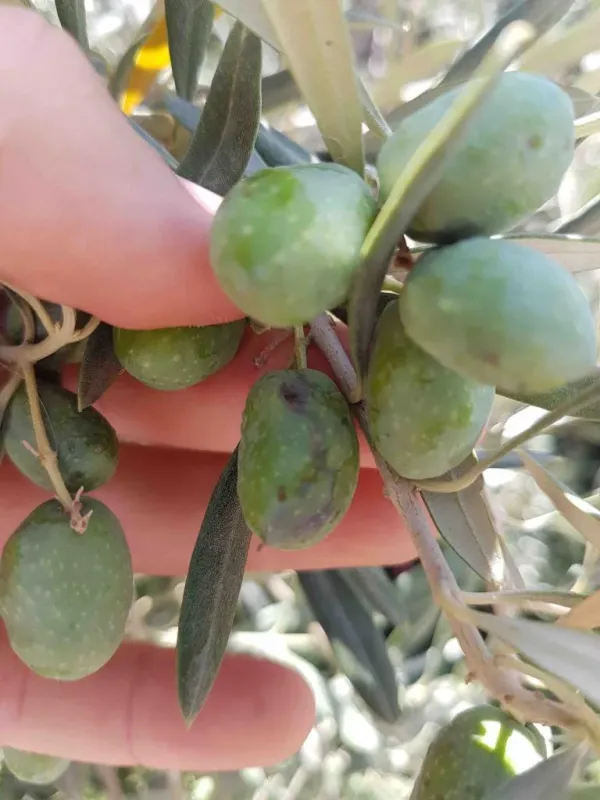
Early signs of infestation appear as small, dark spots on the surface of the olives, representing the site where the female inserted her ovipositor.
As the larva develops, a larger depression or irregular discoloration becomes visible on the fruit skin, indicating the internal consumption of the pulp.
If the fruit is opened, the presence of the larva or the visible winding tunnels filled with frass confirms the infestation.
A high rate of premature fruit drop under the tree canopy is a clear indicator that the pest population has reached a critical threshold in the orchard.
- Dark puncture marks on the fruit skin;
- Internal tunneling and pulp decay;
- Exit holes created by mature larvae;
- Premature fruit shedding across the orchard.
Control measures
Integrated Pest Management (IPM) is the standard approach, involving the use of pheromone traps to monitor adult activity and determine the timing for interventions.
Cultural control methods involve harvesting the crop as early as possible to minimize the time fruit is exposed to ovipositing females.
Biological control methods include the release of parasitic wasps or the application of entomopathogenic fungi like Beauveria bassiana to suppress population levels.
Bait sprays consisting of an attractant and an insecticide are often used to target adults, providing effective control while reducing the overall chemical footprint.
Chemical applications are restricted to specific windows in the growing season to ensure that residues do not end up in the final olive oil product.
Taxonomy
- Latin name
- Dacus
- Order
- Diptera (flies)
- Family
- Tephritidae
- EPPO code
- DACUSP
Discussion
No discussions yet — be the first.