
Dacne picta
Dacne picta
Description
How to identify
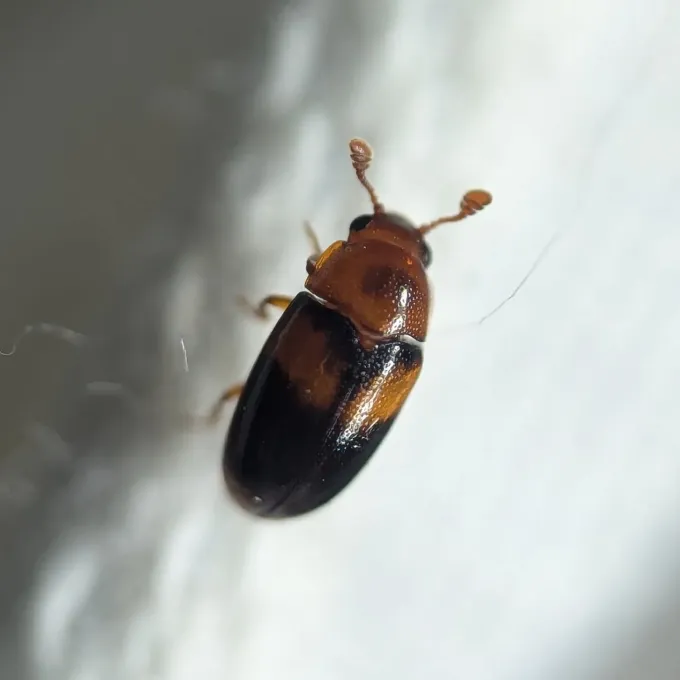
Dacne picta is a species of fungus-feeding beetle belonging to the family Erotylidae. These small insects, typically measuring 3-4 mm in length, are commonly found in association with various species of fungi.
The adult beetle has an elongated oval shape. Its elytra (wing covers) are smooth and shiny, usually featuring a distinctive mottled pattern of dark and yellow or orange spots, which serves as camouflage on fungal surfaces.
The larvae are typically slender and somewhat flattened, adapted for life within the tissues of the fungi. They are often hidden from view, spending their development cycle inside the fungal fruiting bodies.
These beetles are mobile and active, often observed on the surface of substrates or fruiting bodies. Due to their small size, they are easily overlooked until they reach significant population levels.
Their life cycle is strictly tied to the presence of mycelium and fungal tissue, which provides all the necessary nutrients for larval growth and adult survival, particularly in damp forest or cultivation environments.
What it damages
In mushroom cultivation, Dacne picta can cause significant economic losses. Both adults and larvae feed on the fruiting bodies, boring tunnels through the mushroom and making it unfit for commercial sale.
The feeding activity results in the deterioration of the mushroom's texture and appearance. Infested mushrooms often develop rot due to secondary bacterial or fungal infections that enter through the holes bored by the beetles.
Beyond direct consumption, the beetles can act as vectors for various pathogens, spreading contamination across the mushroom growing facility and exacerbating the decline of the crop.
Because the damage is often internal, it can be difficult to detect in the early stages. Often, the mushrooms appear healthy on the outside until the internal structure has been thoroughly consumed by the larvae.
Heavy infestations can lead to a total loss of the affected batch, necessitating the disposal of substrates and extensive cleaning protocols to prevent further spread of the pest.
When it appears
In controlled indoor environments, such as mushroom houses, this beetle can reproduce year-round, provided that temperatures remain within the optimal range for mushroom growth, typically between 18-25°C.
In natural habitats, their activity peaks during the warmer months, spanning from late spring through autumn. During the winter, adults enter a state of dormancy, hiding in bark crevices or decaying wood.
The developmental rate is strongly influenced by temperature and humidity. High humidity levels, essential for mushroom development, also create perfect conditions for the rapid multiplication of the beetle.
Multiple generations can occur within a single year if the environment is suitable. This high reproductive potential makes the pest capable of rapidly colonizing entire batches if not addressed immediately.
Adults emerge from their overwintering sites as temperatures rise, beginning the search for suitable fungal hosts to deposit eggs, which marks the start of the primary infestation season in the wild.
Signs of infestation
Small exit or entry holes on the surface of mushroom caps are the primary visual signs of infestation. These holes indicate that larvae are feeding or have completed their development inside.
Accumulated frass (larval waste) near the base of the mushroom or on the substrate surface is a clear indicator of active feeding within the fungal tissues.
Softening, discoloration, or darkening of the mushroom flesh, even in the absence of obvious holes on the cap, often suggests that the interior has been compromised by beetle larvae.
During night inspections, adults can often be found crawling on the surface of the growing blocks or on the undersides of the mushroom caps, where they are less exposed to light.
A reduction in total yield across specific growing blocks, accompanied by a decline in quality, should prompt an immediate investigation for the presence of this fungus beetle.
Control measures
Sanitation is the cornerstone of control. Removing all spent substrate and old mushrooms from the growing area is essential, as these leftovers serve as breeding grounds for the pest.
Heat treatment or pasteurization of the growing substrate is a critical preventative measure. This ensures the destruction of any eggs or larvae introduced during the preparation phase.
Physical barriers such as fine-mesh screens on ventilation intakes prevent adult beetles from entering the facility from the outside, which is especially important during warmer months.
Biological control agents, such as specialized fungal pathogens that target beetles without harming the edible mushrooms, are a preferred choice in modern sustainable mushroom farming.
- Maintain strict hygiene throughout the facility.
- Use pheromone or sticky traps to monitor for the presence of adults.
- Ensure rapid disposal of any contaminated or damaged materials.
Taxonomy
- Latin name
- Dacne picta
- Order
- Coleoptera (beetles)
- Family
- Erotylidae
- EPPO code
- DCNEPI
Discussion
No discussions yet — be the first.