
Cryptophilus
Cryptophilus propinquus
Description
How to identify
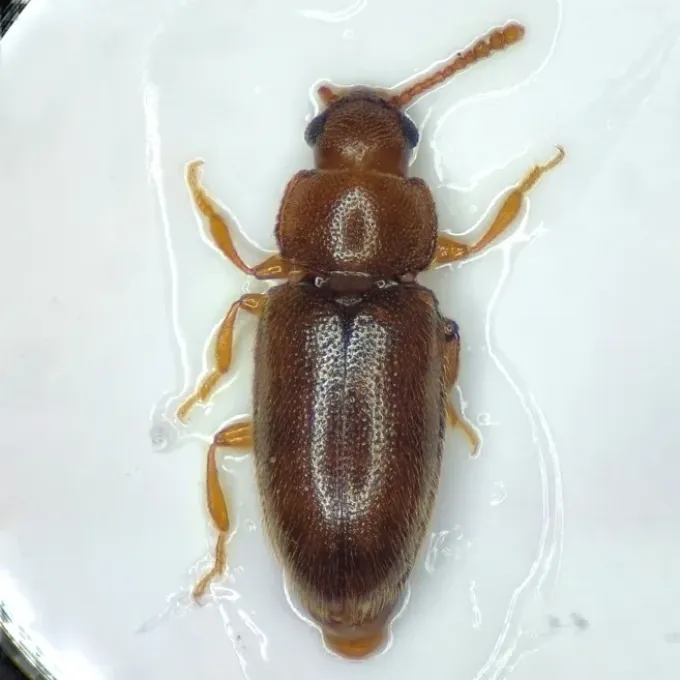
Cryptophilus propinquus belongs to the Nitidulidae family (sap beetles). These are small insects, typically ranging from 2 to 3 millimeters in body length.
The beetle has an oval-shaped body and a characteristic brown or reddish-brown color. Its body is covered with fine, sparse hairs, which is a hallmark feature of this family.
Adult beetles possess functional wings and are capable of active movement within storage facilities, which facilitates the rapid spread of the population throughout the premises.
The larvae are worm-like and develop in hidden, undisturbed areas, preferring damp and poorly ventilated spots within the stored product, making them difficult to detect early.
The life cycle of this insect is closely linked to the presence of organic debris and high humidity, making sticky traps and pheromone monitoring effective tools for their identification.
What it damages
The primary food source for Cryptophilus includes plant-based products in storage. The pest is most frequently encountered in storage facilities with improper humidity control.
This pest infests cereals, oilseeds, as well as dried fruits and vegetables. It poses a significant threat to produce that has already been affected by mold or fungal growth.
Cryptophilus often acts as a secondary pest, colonizing grain batches that have already been damaged by primary warehouse pests or those experiencing self-heating due to high moisture content.
As a result of their activity, the products become contaminated with excrement, larval skins, and organic debris, which significantly lowers the quality and market value of the raw materials.
Mass reproduction of Cryptophilus can lead to the spoilage of large volumes of goods, rendering them unsuitable for further processing or human consumption.
When it appears
The activity of Cryptophilus in indoor environments depends directly on the temperature and humidity levels within grain elevators and warehouse facilities.
In heated storage facilities, the pest is capable of year-round development, completing multiple generations within a single calendar year.
The most favorable period for intense reproduction is the late summer and autumn, when ambient humidity increases and temperatures within the grain mass become optimal for the beetles' metabolism.
When temperatures drop below 10 degrees Celsius, developmental processes slow down, although the insects can successfully overwinter in floor crevices, wall cracks, or leftover grain debris.
The presence of mold hotspots is a critical trigger for infestation, as these beetles frequently feed on the fungal mycelium associated with the decay of stored products.
Signs of infestation
The first sign of infestation is the presence of live adult beetles on the surface of the grain mass or inside product packaging.
Inspection often reveals powdery residues and partial destruction of seed coats, which is typical feeding behavior for both adults and larvae.
A specific indicator is a change in the odor of the stored produce: a characteristic musty smell indicates mold growth and active insect metabolism.
The detection of insect excrement and larval exuviae during sieve analysis of grain samples provides definitive evidence of a Cryptophilus propinquus population.
In areas of high infestation, one may observe localized heating and moisture in the grain mass, often leading to the formation of caked clumps of damaged grain.
Control measures
The primary control measure is maintaining strict humidity management in storage facilities; drying grain to safe moisture levels significantly reduces the risk of infestation.
Regular sanitation of storage areas is essential to remove grain residues, dust, and debris that act as reservoirs for Cryptophilus populations.
When contaminated batches are identified, fumigation of the facility using approved insecticides is recommended, strictly following dosage and safety regulations.
Active aeration of grain masses is an effective preventive method, as it helps maintain conditions unfavorable for insect development.
- Use of certified insecticides for disinfecting empty storage containers.
- Regular monitoring of warehouses using specialized traps.
- Ensuring the cleanliness of transport vehicles used for moving grain products.
- Quarantine and isolation of infested batches to prevent the spread of the pest.
Taxonomy
- Latin name
- Cryptophilus propinquus
- Order
- Coleoptera (beetles)
- Family
- Erotylidae
- EPPO code
- CRYFPR
Discussion
No discussions yet — be the first.