
Cyzenis albicans
Cyzenis albicans
Description
How to identify
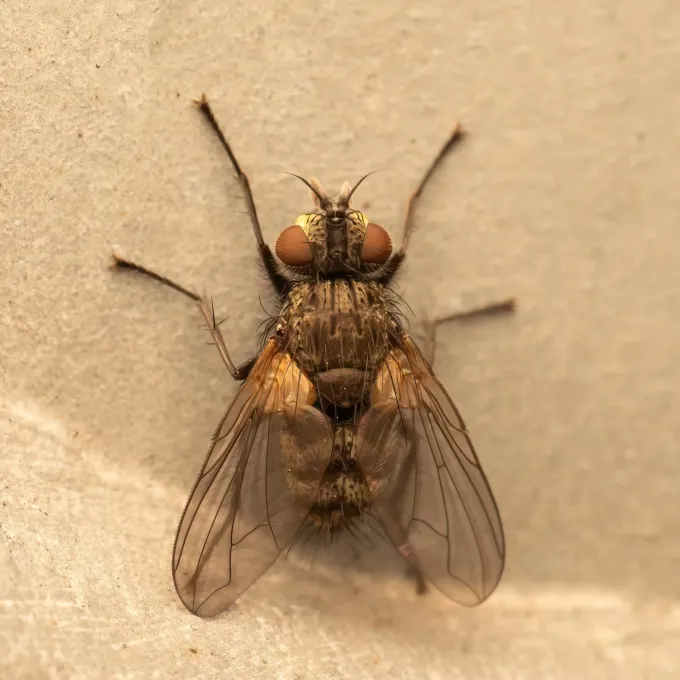
Cyzenis albicans is a species of tachinid fly belonging to the Tachinidae family. It is a medium-sized fly, typically measuring between 7 to 10 mm in length, known for its parasitic role in nature.
The adult fly has a dark appearance with a characteristic dusting of gray or silvery pubescence on its thorax and abdomen, which provides its name.
The insect possesses highly specialized sensory organs that allow it to locate its host, the winter moth larvae, with extreme precision in forest and orchard environments.
Unlike destructive pests, this fly is highly beneficial to the ecosystem, acting as a natural regulator of moth populations that can otherwise defoliate trees.
Identification is mostly restricted to entomologists or field technicians monitoring biological control agents within integrated pest management programs.
What it damages
Cyzenis albicans is not a plant pest; it does not consume crops or damage vegetation in any form. On the contrary, it provides essential ecological services.
The larvae of this fly parasitize the winter moth (Operophtera brumata), which is a significant defoliator of broadleaf trees and fruit orchards.
By infecting the larvae of the winter moth, the fly reduces the overall population of the pest, effectively preventing widespread defoliation of the host plants.
There is no economic damage associated with this insect; rather, it is considered a vital ally in sustainable agriculture and forestry management.
Field studies confirm that the presence of this tachinid fly leads to a significant decrease in the larval density of destructive moths.
When it appears
The life cycle of Cyzenis albicans is perfectly synchronized with the emergence of winter moth larvae during the early spring season.
Adult flies emerge in the spring, coinciding with the period when host caterpillars begin to feed on newly sprouted leaves.
The flies are active during the day, particularly in warm and humid conditions, which are ideal for their mating and host-seeking behaviors.
The species typically completes one generation per year, with the pupal stage spending the winter months in the soil or under tree bark.
Temperature patterns are the most significant factor influencing the survival and activity of the adult fly population from year to year.
Signs of infestation
Signs of its activity include a noticeable reduction in the number of healthy winter moth caterpillars on tree branches as the season progresses.
Dead or lethargic moth larvae, which often appear sickly before dying without reaching the pupal stage, are evidence of successful parasitism.
In some cases, physical inspection of the caterpillars might reveal the presence of larval stages or puparia within or near the host remains.
Monitoring traps placed for other pests may occasionally catch these flies, serving as a biological indicator of the species' presence in the area.
Field managers often observe less leaf damage in areas where this parasitoid is well-established, confirming its suppressive effect on pest density.
Control measures
No control measures are needed for Cyzenis albicans, as it is a beneficial insect that aids in the natural suppression of agricultural pests.
To support its population, it is highly recommended to avoid the use of broad-spectrum insecticides during the spring emergence period.
Implementing integrated pest management (IPM) practices, such as choosing selective pesticides, helps to protect this beneficial species.
Preserving natural habitats and minimizing environmental stress within orchards ensures that these flies can effectively perform their role as biocontrol agents.
Sustainable agricultural practices focus on conserving such parasitoids to reduce the reliance on external chemical inputs in orchard management.
Taxonomy
- Latin name
- Cyzenis albicans
- Order
- Diptera (flies)
- Family
- Tachinidae
- EPPO code
- CYZEAL
Discussion
No discussions yet — be the first.