
Bamboo weevil
Cyrtotrachelus longimanus
Description
How to identify
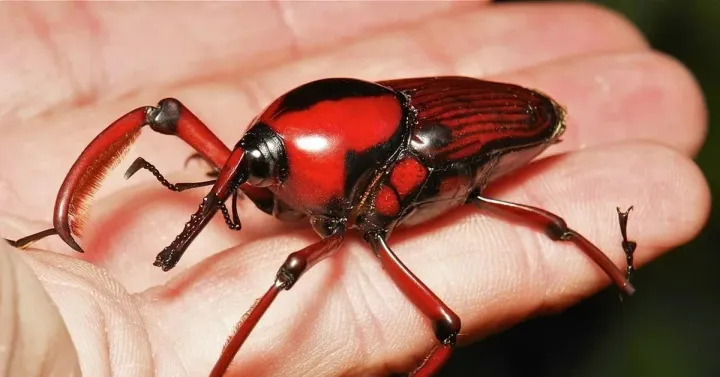
The bamboo weevil (Cyrtotrachelus longimanus) is a significant pest belonging to the family Curculionidae (true weevils) and the order Coleoptera. Adult weevils are large beetles, measuring up to 4 cm in length, characterized by their elongated snouts used for feeding and laying eggs.
Their body color ranges from reddish-brown to dark brown, providing excellent camouflage against bamboo stems. Sexual dimorphism is notable, with males often possessing significantly longer front legs, a trait that gave the species its scientific name.
The larvae are legless, fleshy, and white to yellowish in color, with a darker head capsule. Because they live and feed inside the bamboo culms, they remain hidden from view for most of their development cycle.
Adults are diurnal, showing peak activity during warmer parts of the day. They are quite skittish and will quickly drop from stems or hide in dense foliage if they detect vibrations or movement nearby.
The lifecycle includes complete metamorphosis: egg, larva, pupa, and adult. The lifecycle is tightly synchronized with the growth season of bamboo, ensuring that food is available for both adults and developing offspring.
What it damages
Bamboo weevils primarily target young bamboo shoots. During the peak growth season, the tender, succulent tissues of emerging shoots are the main food source for both the adults and the developing larvae.
The larvae cause the most significant damage by tunneling through the interior of the culm. By feeding on the internal tissues, they disrupt the structural integrity of the bamboo, leading to stunted growth, wilting, and often the death of the shoot.
Secondary damage occurs when the wounds created by the adults or the tunnels left by the larvae become entry points for various bacterial and fungal pathogens, leading to core rot and further weakening of the plant.
In commercial plantations or ornamental gardens, this pest can lead to the loss of entire bamboo crops. The damage affects both the visual aesthetics of the plants and their potential structural use due to deformation and rot.
High population densities can cause severe thinning of bamboo stands, reducing the overall productivity and resilience of the entire grove over several successive years if left unchecked.
When it appears
The seasonal emergence of the bamboo weevil is strictly tied to the bamboo's shooting season. As soon as young shoots begin to emerge from the ground, adult weevils leave their overwintering sites to feed and mate.
Spring and early summer are the periods of maximum activity. During this window, females drill small holes into the tender shoots to deposit eggs, which subsequently hatch into larvae that immediately burrow into the stem.
Larval development occurs throughout the summer months. During this phase, larvae feed intensively, growing in size as they hollow out the interior of the bamboo stem before moving toward the pupal stage.
As autumn approaches, the insects finish their development and move toward overwintering. Most individuals migrate into the soil or under deep leaf litter at the base of the bamboo to wait out the cold season.
Monitoring is crucial during the initial shooting phase, as early intervention can prevent the larvae from entering the culm, where they become shielded from many contact-based control methods.
Signs of infestation
One of the earliest signs of an infestation is the presence of small, puncture-like holes on the surface of young bamboo shoots. These are caused by the female weevil during the egg-laying process.
Deformed or bent shoots are a classic indicator of internal larval activity. Because the larvae have hollowed out the center, the stem loses its structural rigidity and may buckle or snap under wind pressure.
Wilting of the shoot tips or sudden yellowing of leaves is a sign that the plant's vascular system has been compromised by internal feeding. When the nutrient flow is blocked, the upper parts of the shoot begin to decline.
Signs of sawdust or fine woody debris (frass) at the base of the shoot or around the puncture holes indicate that the larvae are active inside and are clearing out their tunnels.
- Dark, necrotic patches surrounding the egg-laying sites.
- Loss of turgor pressure in newly emerging shoots.
- Adult beetles found clinging to the tips of young shoots in the early morning.
Control measures
Mechanical control involves the regular inspection of the bamboo grove and the prompt removal of all infested shoots. Destroying these shoots by burning or deep burial is essential to kill the larvae before they reach maturity.
Chemical control focuses on the use of systemic insecticides. These are most effective when applied during the period of adult emergence, before the larvae successfully penetrate deep into the culm tissues.
Cultural practices, such as maintaining soil cleanliness around the grove, are helpful. Removing dead foliage and turning the soil in the autumn can disturb overwintering pupae and larvae, reducing the overwintering success rate.
Maintaining healthy, vigorously growing bamboo through proper fertilization and watering can improve the plant's resilience, though it may not fully prevent infestation in areas with high weevil pressure.
Biological control methods, such as the use of entomopathogenic fungi, are being researched as a sustainable alternative to chemical sprays, offering a way to target the pest with minimal environmental impact in private gardens.
Taxonomy
- Latin name
- Cyrtotrachelus longimanus
- Order
- Coleoptera (beetles)
- Family
- Dryophthoridae
- EPPO code
- CYRRLO
Discussion
No discussions yet — be the first.