
Cyphonia clavata
Cyphonia clavata
Description
How to identify
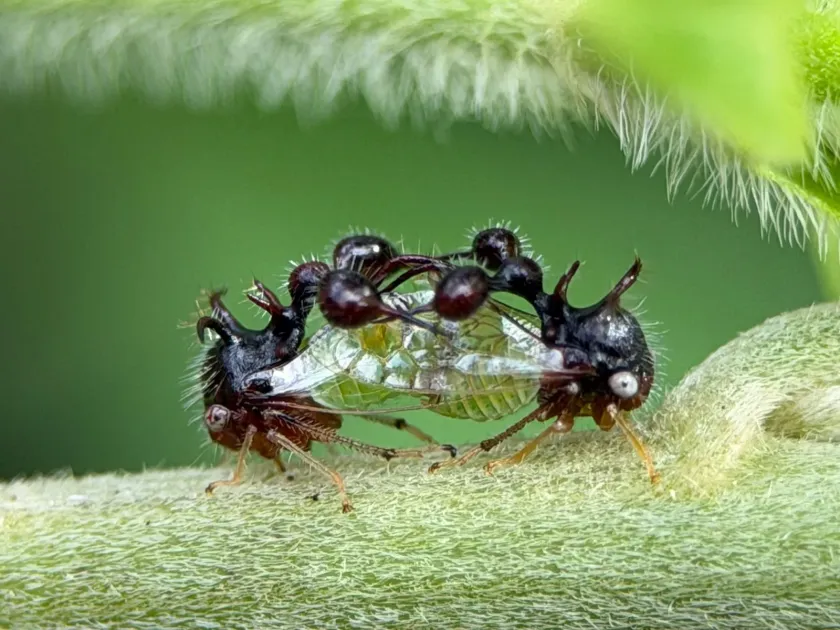
Cyphonia clavata belongs to the family Membracidae (treehoppers), part of the order Hemiptera. This insect has a very specific appearance, featuring elaborate pronotal outgrowths that mimic spines or thorns on its back.
The adult specimen possesses a chitinous projection on the pronotum shaped like a club or a branched appendage. This camouflage allows the insect to blend in with vegetation, making it nearly invisible to potential predators.
Adult sizes typically range from 6 to 10 millimeters. The body color varies from dark brown to almost black, which helps them resemble small twigs or fragments of tree bark.
Nymphs of Cyphonia clavata also have pronounced thorn-like structures for protection, although they lack fully developed wings and lead a less mobile lifestyle, clinging tightly to the stems of host plants.
The species is a typical representative of tropical and subtropical fauna, meaning its vital activity is directly dependent on the ambient temperature and climate conditions.
What it damages
Cyphonia clavata feeds primarily on plant sap, extracting it from young shoots, leaves, and petioles. The pest prefers plants from the Solanaceae and Fabaceae families, as well as several woody ornamental species.
The most significant damage occurs during periods of active sap flow, when the plant is highly vulnerable to nutrient loss. Large infestations lead to the suppression of photosynthetic processes.
Damage to young buds and apical shoots is particularly dangerous. It causes stem deformation, stunted growth, and in some cases, the total death of weakened young plants.
While feeding, the pest excretes honeydew—a sugary substance that becomes an ideal medium for sooty mold development, which further degrades the health of the host plant.
In addition to direct damage, Cyphonia clavata can act as a vector for viral and phytoplasmal diseases, which are transmitted to the plant during tissue piercing and saliva injection.
When it appears
The activity of Cyphonia clavata begins with the onset of stable warm temperatures in spring, when the first leaves appear to serve as a food source.
Population peaks usually occur during the summer months, characterized by intensive reproduction and the development of multiple generations of nymphs.
In autumn, as temperatures drop, insect activity decreases significantly, and they begin searching for overwintering sites in the root zones or under leaf litter.
Development cycles are closely linked to the phenology of host plants; provided there is sufficient moisture, the insect is capable of producing several generations within a single growing season.
Humidity is a critical factor in seasonal dynamics, as excessively dry periods can slow down nymph development, while heavy rainfall often washes them off the leaf surfaces.
Signs of infestation
The first sign of Cyphonia clavata presence is the deformation of young leaves, which begin to curl and lose turgor without any visible signs of fungal or bacterial disease.
The appearance of sticky honeydew on the underside of leaves indicates active feeding by a pest colony, which may be camouflaged and difficult to spot at first glance.
Visual inspection allows one to notice the individuals themselves, which often sit motionless, blending in with the stem outgrowths of the host plant.
The appearance of a black sooty coating on shoots indicates that the pest has been established for a long time and that secondary fungal infections have started to take hold.
Stunted fruit development or premature fruit drop, in the absence of other obvious pathogens, can also point to a significant infestation by this treehopper species.
Control measures
The primary control method involves regular crop monitoring and manual removal of adults if the pest population remains at a low density.
Systemic insecticides are highly effective during major outbreaks, as they penetrate plant tissues and target sap-sucking insects directly.
- Regular weeding to remove alternative host plants that serve as reservoirs.
- Timely removal and destruction of infested plant debris at the end of the season.
- Encouraging natural enemies such as predatory bugs, lady beetles, and lacewings.
Biological control agents based on entomopathogenic fungi have shown promising results in managing nymph stages within greenhouses or protected environments.
Implementing proper agricultural practices is essential; maintaining strong plant immunity through balanced fertilization makes plants less attractive to colonization.
Taxonomy
- Latin name
- Cyphonia clavata
- Order
- Hemiptera (bugs, aphids, leafhoppers)
- Family
- Membracidae
- EPPO code
- CYPACL
Discussion
No discussions yet — be the first.