
Cyphonia
Cyphonia
Description
How to identify
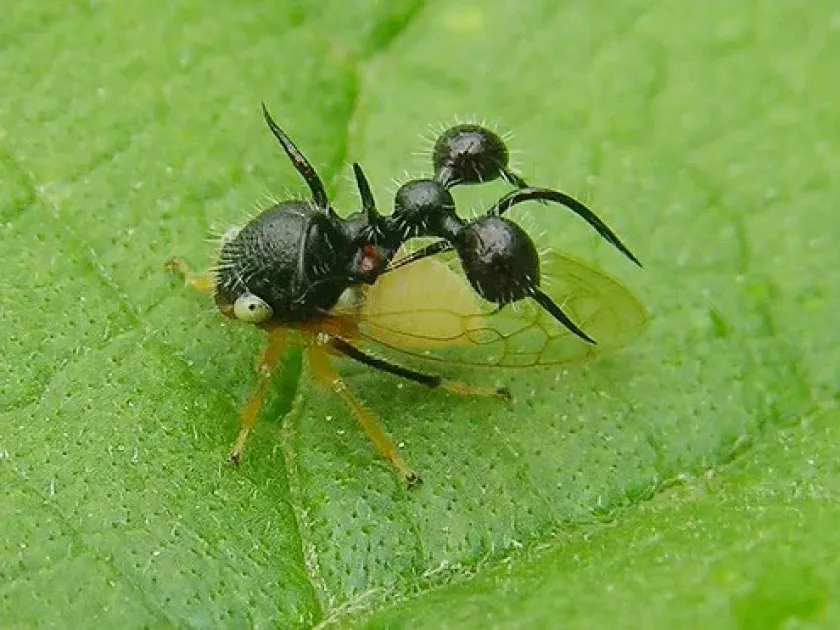
Cyphonia is a genus of insects belonging to the Membracidae family, commonly known as treehoppers. These insects are easily recognized by their peculiar pronotum, which often extends into elaborate spines or projections that mimic plant thorns.
Adults typically measure between 5 and 10 mm in length. Their most prominent feature is the hard chitinous projection, which serves both as a defensive mechanism and as an effective camouflage against branches and stems.
The coloration of most species ranges from dark brown to black, allowing them to blend seamlessly with tree bark. Adults are generally sedentary, often remaining motionless for long periods during the day.
Nymphs possess a flattened body and usually lack the pronounced projections seen in adults. They are covered in specialized bristles that may excrete protective fluids to deter predators.
The life cycle involves an egg stage, five nymphal instars, and the adult stage. In warmer regions, these insects can complete several generations within a single growing season.
What it damages
Cyphonia feed on the sap of a wide variety of plants, including fruit trees and certain legumes. Both adults and nymphs contribute to the damage by piercing plant tissues with their mouthparts.
Significant damage is typically observed on young shoots and leaves, where these insects tend to congregate in groups. Constant sap withdrawal weakens the plant and significantly retards its growth.
The puncture sites often lead to tissue deformation, discoloration of leaves, and premature fruit drop. This stress makes the plants more susceptible to environmental factors.
These pests also act as vectors for secondary infections, as pathogens like fungi and bacteria can enter the plant through the puncture wounds, leading to rot or necrosis.
They produce a sticky substance known as honeydew, which promotes the growth of sooty mold. This layer blocks photosynthesis, further stressing the host plant.
When it appears
Activity begins in spring as temperatures consistently rise above +15°C. Population densities typically peak during the summer months when foliage is most abundant.
As autumn approaches, the insects prepare for diapause. Overwintering occurs primarily in the egg stage, with eggs deposited in the bark of young twigs or near buds for protection.
Signs of infestation
The most reliable sign of Cyphonia infestation is the direct observation of the insects clinging to stems or the undersides of leaves, often remaining stationary.
- Sticky honeydew deposits on leaves, stems, or under the plant canopy.
- Growth of black sooty mold on surfaces covered with sticky honeydew.
- Deformation and curling of young leaves and shoots.
- Premature yellowing and leaf fall that cannot be attributed to drought or nutrient deficiency.
Control measures
Effective control starts with proper cultural practices, such as regular sanitary pruning to remove infested branches and weed management to eliminate alternative host plants.
For home gardens, manual removal in the early morning when insects are sluggish due to lower temperatures can be a viable non-chemical intervention.
In commercial orchards, systemic or contact insecticides registered for sucking pests are often required to manage larger populations effectively.
Timing of chemical applications is crucial; treatments are most effective during the early nymphal stages before the insects develop their protective chitinous armor.
Biological control, including the encouragement of natural predators like lady beetles and parasitic wasps, can help maintain lower pest populations over the long term.
Taxonomy
- Latin name
- Cyphonia
- Order
- Hemiptera (bugs, aphids, leafhoppers)
- Family
- Membracidae
- EPPO code
- CYPASP
Discussion
No discussions yet — be the first.