
Biting midge Culicoides paraensis
Culicoides paraensis
Description
How to identify
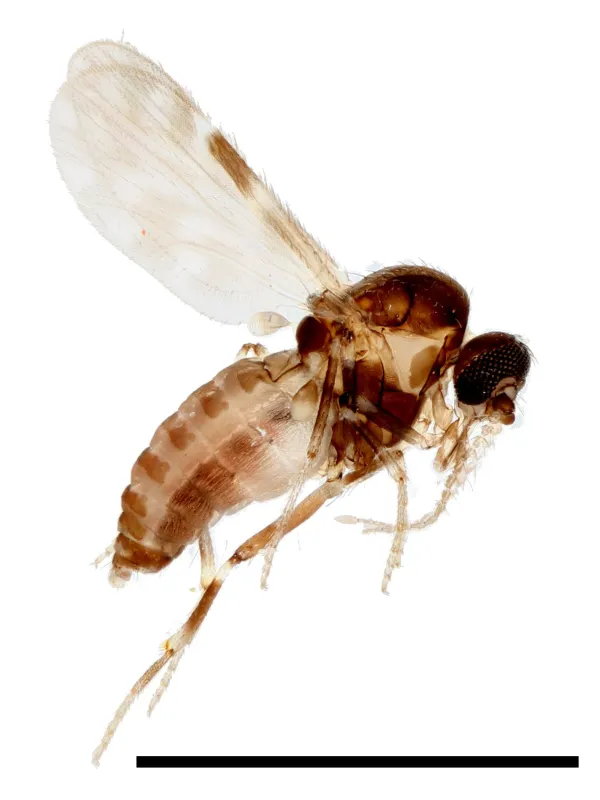
Culicoides paraensis is a tiny dipteran insect belonging to the family Ceratopogonidae. Adults measure only 1–3 mm in length and possess distinctively patterned wings, which serve as a primary diagnostic feature for identification.
The body is covered in fine hairs and ranges in color from dark gray to brown. They have specialized piercing-sucking mouthparts, which are highly efficient for feeding on the blood of vertebrate hosts.
The larvae are worm-like and translucent, possessing a well-defined head capsule. They thrive in moist environments where organic debris accumulates, making them difficult to detect in soil or water.
Species-level identification usually requires expert analysis of wing vein patterns and genitalia morphology, as many Culicoides species appear nearly identical to the naked eye.
These midges exhibit erratic flight patterns, often hovering in dense swarms. While they are small, their presence is easily detected by the intense irritation they cause to livestock and humans.
What it damages
While Culicoides paraensis is not a direct threat to crops, it is a significant pest in the livestock industry. It acts as a primary vector for several debilitating animal diseases.
Major hosts include cattle, sheep, horses, and poultry. The biting action causes severe allergic reactions, dermatitis, and significant physical distress, which undermines the general health of the animals.
They are known vectors for the Bluetongue virus and the Oropouche virus. Infestations lead to large-scale outbreaks, reducing herd productivity, causing weight loss, and in severe cases, death among vulnerable animals.
Economic losses in agriculture occur due to decreased milk production, skin damage from constant scratching, and the high cost of medical intervention for affected livestock.
Additionally, the constant harassment by these midges forces animals to spend energy on defensive behaviors rather than feeding, which significantly impacts the growth rates of young livestock.
When it appears
The activity of Culicoides paraensis is strictly dependent on climatic factors, primarily temperature and relative humidity. They prefer stable temperatures above 15°C.
In tropical and subtropical regions, these midges can remain active throughout the year. In temperate climates, they undergo a dormant phase during the winter to survive cold conditions.
The peak activity occurs during crepuscular hours, specifically at dawn and dusk. However, on overcast, windless days, they can continue to bite throughout the entire day.
Water and moist substrates are essential for their life cycle. Periods of high rainfall typically create new breeding sites, leading to sudden population explosions and increased biting pressure.
The life cycle, from egg to adult, can be completed in as little as 3 to 5 weeks under favorable conditions, allowing the species to produce multiple generations within a single season.
Signs of infestation
The primary sign of a Culicoides paraensis infestation is observed changes in animal behavior. Livestock often show signs of agitation, constant tail-flicking, and rubbing against structures.
Physical inspections of the animals reveal papules, swelling, and redness, particularly on sensitive areas such as the ears, abdomen, and udder. Secondary bacterial infections often occur at the site of multiple bites.
The presence of breeding sites, such as boggy fields, stagnant water, or decaying organic matter like manure heaps, indicates a high risk of localized midge populations.
Unexpected drops in herd productivity or the sudden onset of viral disease symptoms are strong indicators that the area has become infested with these disease-carrying midges.
Using light traps equipped with UV bulbs is the most reliable method for confirming the presence and density of Culicoides paraensis within a farm environment.
Control measures
Managing Culicoides paraensis requires an integrated pest management strategy that focuses on both environment modification and the protection of livestock.
- Draining standing water and clearing boggy areas around livestock shelters.
- Regular removal and proper disposal of manure and decomposing organic waste.
- Applying residual insecticides to shelter walls and resting areas to reduce adult populations.
- Using veterinary-approved repellents on animals during periods of high activity.
- Installing fine-mesh screens on livestock barns to prevent midges from entering indoor housing.
Proactive monitoring of animal health and vaccination programs are essential components to mitigate the economic impact of the diseases vectored by these midges.
Taxonomy
- Latin name
- Culicoides paraensis
- Order
- Diptera (flies)
- Family
- Ceratopogonidae
- EPPO code
- CULIPR
Discussion
No discussions yet — be the first.