
Midge
Culicoides furens
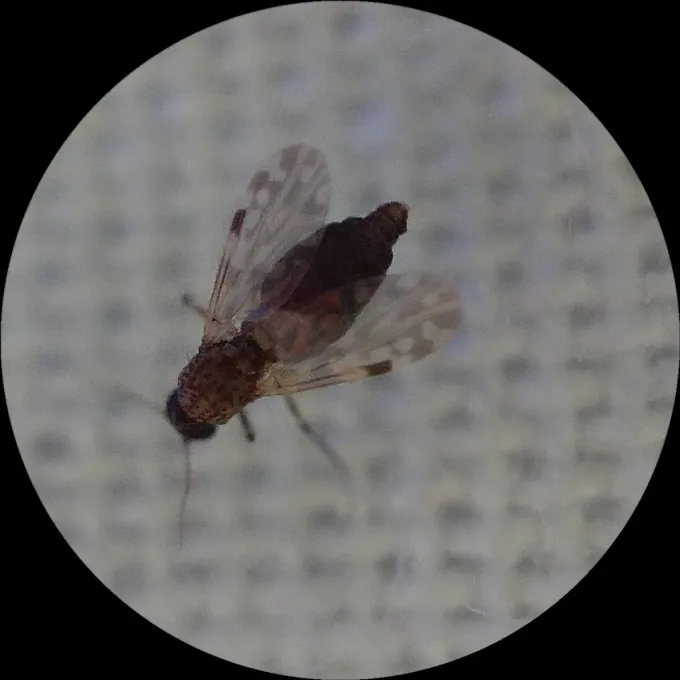
Description
How to identify
The biting midge Culicoides furens is a small insect belonging to the family Ceratopogonidae within the order Diptera. These midges are typically very small, measuring between 1 and 3 millimeters, making them difficult to detect with the naked eye.
Adults exhibit characteristic mottled wing patterns and fold their wings horizontally over their backs when at rest. Only the females are blood-feeders, as they require a blood meal to provide the necessary proteins for egg maturation and development.
The life cycle of this insect consists of four distinct stages: egg, larva, pupa, and adult. Each stage of development is highly dependent on environmental moisture, necessitating specific habitats for successful reproduction.
The larvae are semi-aquatic, commonly found in muddy areas, decaying organic matter, or saturated soil near water bodies. They are highly resilient and capable of surviving in various temperature ranges, provided moisture is available.
Adults are most active during dawn, dusk, and calm weather conditions. They utilize heat and carbon dioxide emissions from hosts to locate animals for feeding, often traveling significant distances in search of a blood meal.
What it damages
While Culicoides furens is not a primary agricultural crop pest, it poses a severe threat to the livestock and poultry industries. Its role as an aggressive parasite leads to significant economic and animal welfare issues.
Massive infestations of biting midges cause intense itching, allergic dermatitis, and secondary skin infections in livestock. The constant irritation and pain result in substantial losses in meat production, milk yields, and overall weight gain.
Critically, these midges serve as biological vectors for devastating viral diseases, including bluetongue virus, African horse sickness, and epizootic hemorrhagic disease in deer.
The presence of Culicoides furens often necessitates strict movement restrictions on livestock and can force farmers to alter grazing schedules, leading to increased operational costs and reduced efficiency.
The persistent attacks from these midges significantly stress the animals, making them more susceptible to other infections and weakening their immune systems, which compounds the financial burden on agricultural producers.
When it appears
The seasonal activity of Culicoides furens is primarily driven by temperature and precipitation levels. Typically, activity begins when average temperatures consistently rise above 15°C.
Peak population densities occur during summer months, especially following heavy rainfall events which create or expand the wet habitats required for larval development. Warm, humid conditions accelerate their reproductive cycle.
The daily activity pattern is dominated by crepuscular behavior, with peak biting activity occurring at sunrise and sunset. During the heat of the day, adults seek shelter in dense, shaded vegetation to avoid dehydration.
In regions with stable climates, multiple generations can emerge throughout the growing season. As autumn approaches, cooler temperatures and shorter day lengths inhibit their development and reduce overall population numbers.
Overwintering occurs primarily in the larval stage, where they survive in protected, moist microhabitats, ready to emerge as adults once favorable environmental conditions return in the following spring.
Control measures
Effective management of Culicoides furens requires an integrated approach that focuses on both habitat modification and direct livestock protection to minimize the impact of these biting midges.
Environmental management involves draining stagnant water, clearing ditches, and removing accumulated manure or decaying plant matter, which serve as primary breeding sites for the larvae near farm buildings.
Livestock protection is achieved through the application of topical repellents and long-lasting insecticides, such as ear tags or pour-on treatments, which help deter midges from feeding on the animals.
- Screening livestock barns with fine-mesh netting to exclude midges.
- Utilizing light traps or insecticidal devices in indoor holding areas.
- Implementing regular sanitation protocols to eliminate larval habitats.
By combining these methods, farmers can significantly reduce midge pressure, minimize animal stress, and lower the risk of viral disease transmission within their herds and flocks.
Taxonomy
- Latin name
- Culicoides furens
- Order
- Diptera (flies)
- Family
- Ceratopogonidae
- EPPO code
- CULIFU
Discussion
No discussions yet — be the first.