
Bamboo leaf folder
Crypsiptya coclesalis
Description
How to identify
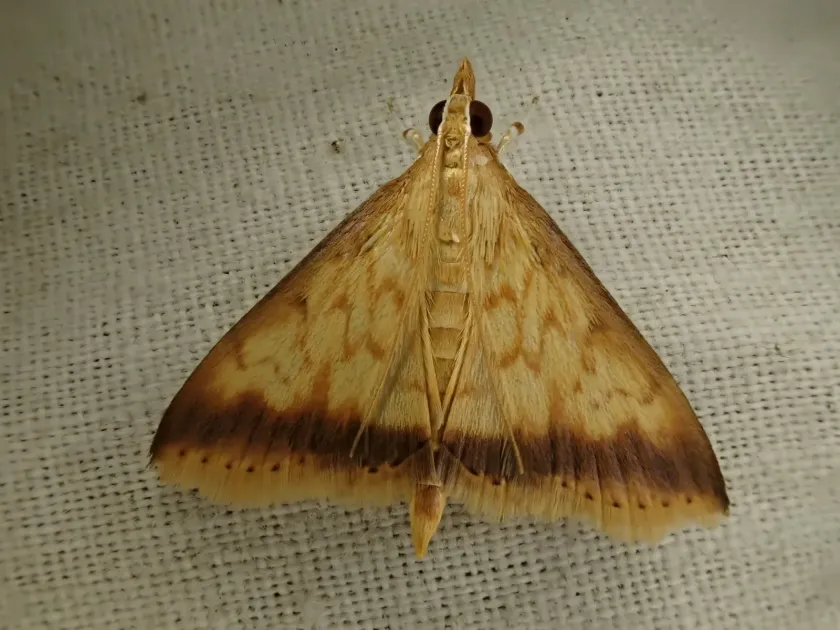
The bamboo leaf folder (Crypsiptya coclesalis) is a moth belonging to the family Crambidae. The adult moth typically has a wingspan of 25–30 mm and features yellowish-brown wings marked with distinct dark patterns.
The larvae, or caterpillars, undergo several developmental stages, starting as pale green and maturing into a darker brown color. They are characterized by a dark longitudinal band and a noticeable head capsule.
This species is highly prolific in warm and humid environments. In many tropical regions, it can produce multiple generations per year, creating overlapping lifecycles that pose a constant challenge to farmers.
Female moths lay their eggs primarily on the abaxial (lower) surface of bamboo leaves. This strategy provides essential protection from direct sunlight and desiccation during the embryonic phase.
The pupal stage occurs within a leaf shelter constructed by the caterpillar. By folding the leaf and securing it with silk threads, the insect creates a protected micro-environment for metamorphosis.
What it damages
The bamboo leaf folder is a specialized pest targeting members of the subfamily Bambusoideae. It infests both ornamental garden bamboo and large-scale industrial plantations, causing widespread damage.
Larval feeding on the leaf epidermis results in significant defoliation. This reduction in leaf area decreases the photosynthetic capacity of the plant, leading to stunted growth and reduced culm quality.
One of the most severe forms of damage occurs when larvae bore into the tender meristematic tissue of young bamboo shoots. This causes terminal wilting, crooked growth, and often the death of the shoot.
The accumulation of waste material and the destruction of leaf tissues create entry points for opportunistic pathogens. Consequently, heavy infestations are frequently followed by secondary fungal and bacterial rot.
Economic losses are driven by the need for expensive chemical interventions and the degradation of bamboo timber quality, which makes the harvested material unsuitable for commercial purposes.
Signs of infestation
The most diagnostic sign of infestation is the presence of folded or rolled leaves. Caterpillars use silk to bind leaf edges, creating shelters where they reside and feed away from predators.
Visual evidence includes irregular-shaped feeding patches, often described as «windowing», where the green chlorophyll-containing tissue is removed, leaving only the transparent epidermis and veins.
The presence of fine, dark granular frass (excrement) scattered on the leaves or accumulated at the base of the bamboo stalks is a clear indicator of active caterpillar feeding in the canopy.
Heavy infestations are noticeable from a distance due to the pale, withered appearance of the bamboo canopy, as the damaged foliage loses its vibrant green color and eventually falls off.
- Rolled-up leaves fastened with white silk.
- Skeletonized leaf patches and holes.
- Visible piles of granular insect droppings on the ground.
Control measures
Integrated Pest Management (IPM) is essential for controlling this pest. Biological control, including the use of entomopathogenic fungi like Beauveria bassiana, offers a sustainable alternative to chemical sprays.
Cultural practices such as regular pruning and removal of infested shoots are highly effective. By manually clearing away the shelters containing larvae, growers can significantly reduce the local population.
Chemical control should be implemented judiciously. Systemic insecticides applied during the early larval stages are most effective, as they target the insect while it is still feeding on the foliage.
Monitoring using light traps is critical for detecting the initial flight of adults. This allows for precise timing of interventions, which is vital to prevent the larvae from reaching a size that causes irreversible damage.
Maintaining high plant vigor through proper irrigation and nutrition helps bamboo stands withstand pest pressure. Healthy plants possess better regenerative capabilities and can recover faster from periodic infestations.
Taxonomy
- Latin name
- Crypsiptya coclesalis
- Order
- Lepidoptera (butterflies)
- Family
- Crambidae
- EPPO code
- PYRUCO
Discussion
No discussions yet — be the first.