
Crypsiptya
Crypsiptya
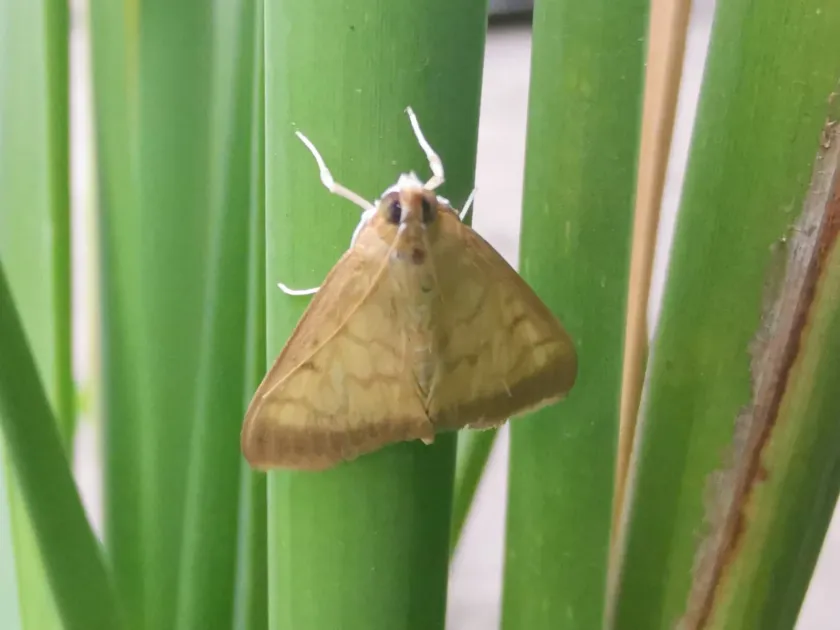
Description
How to identify
Crypsiptya is a genus of moths belonging to the Crambidae family, commonly known as grass moths. These insects have evolved specific physiological traits that allow them to thrive as pests in agricultural environments.
The life cycle of this moth includes four stages: egg, larva, pupa, and adult. The duration of each stage is highly dependent on ambient temperature and humidity levels in the field.
The larvae are the primary damaging stage. They exhibit a cylindrical body shape and possess strong mouthparts capable of consuming significant amounts of plant biomass during their development.
Adult moths are generally nocturnal and are characterized by specific wing patterns that help them hide against substrates during the day, making visual monitoring challenging for farmers.
The pupation usually takes place in protected areas such as rolled leaves, soil debris, or within the plant canopy, which provides them with a layer of defense against predators and harsh environmental conditions.
What it damages
Crypsiptya larvae are known to infest a variety of crops, primarily targeting the foliage and reproductive structures of host plants. This leads to a reduction in both yield and the market quality of the produce.
The larvae feed on the leaf parenchyma, often leaving behind skeletonized leaves or translucent patches. In severe cases, this leaf destruction impairs the photosynthetic capacity of the plant.
Beyond foliar damage, the larvae can tunnel into stems or penetrate fruit, causing internal tissue destruction. This often leads to structural weakness and promotes the entry of secondary pathogens like fungi.
Crop losses are particularly high when the infestation occurs during the early growth stages of the plant, potentially leading to total crop failure if intervention is not timely.
The cumulative effect of larval feeding results in stunted growth, reduced fruit production, and overall plant decline, which significantly impacts the economic returns of the farming operation.
Signs of infestation
A classic sign of a Crypsiptya infestation is the presence of leaves that have been rolled, folded, or webbed together by silk produced by the larvae to create a protective environment.
Accumulation of larval frass, appearing as small, dark pellets on the leaves or the ground beneath the plants, is a strong indicator of an active population of larvae feeding nearby.
Wilting of terminal shoots or the sudden drop of flower buds and young fruit often suggests that larvae have bored into the stems or peduncles, disrupting the nutrient transport system.
Visual inspection often reveals the presence of small, flat egg masses on the underside of leaves, which are typically translucent or slightly yellow in color before hatching.
Early-stage feeding manifests as small holes or window-paning on the leaf surface, which serves as an early warning for farmers to initiate scouting and potential control measures.
Control measures
Effective management begins with cultural practices, such as proper crop rotation and the destruction of post-harvest crop residues, which are crucial for disrupting the moth's life cycle.
Implementing deep plowing helps to bury and kill pupae overwintering in the soil, effectively reducing the emergence of the next generation in the following growing season.
Chemical control should be timed to coincide with the hatching of the larvae, before they enter their protective silk nests, ensuring the maximum effectiveness of the insecticides used.
Biological control using natural enemies, such as egg parasitoids like Trichogramma, is a highly sustainable and effective method for keeping population levels below the economic threshold.
Regular field scouting using pheromone traps allows for precise monitoring of moth populations, ensuring that control measures are applied only when necessary, thus reducing overall input costs.
Taxonomy
- Latin name
- Crypsiptya
- Order
- Lepidoptera (butterflies)
- Family
- Crambidae
- EPPO code
- CRPISP
Discussion
No discussions yet — be the first.