
Cabbage cluster caterpillar
Crocidolomia binotalis
Description
How to identify
The Cabbage cluster caterpillar (Crocidolomia binotalis) is a moth species belonging to the family Crambidae. It is a significant agricultural pest in tropical and subtropical regions worldwide.
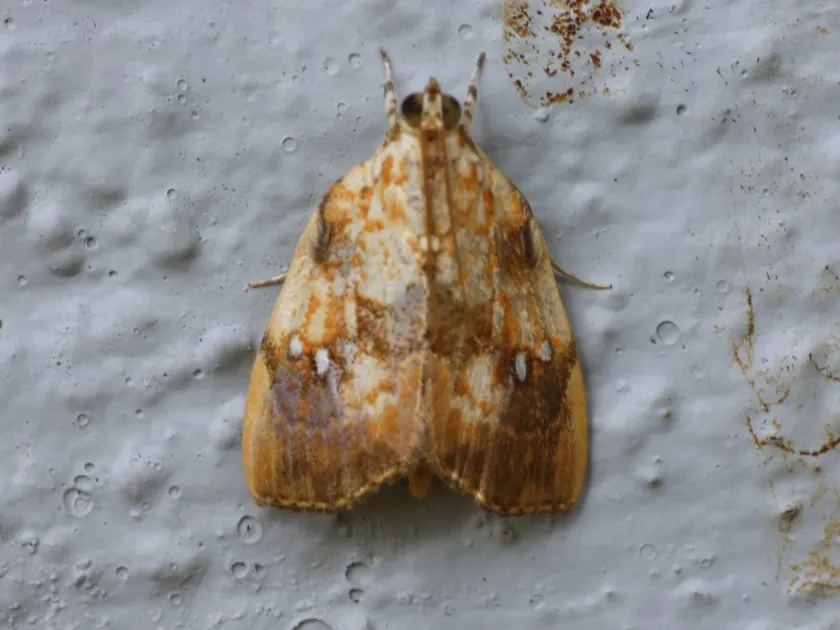
The adult moth is characterized by a wingspan of approximately 20–25 mm. The forewings are typically grayish-brown with two distinct darker spots, while the hindwings are pale with a darker margin.
Larvae develop through several instars, initially appearing pale green and becoming darker as they mature. The fully grown caterpillars exhibit longitudinal stripes on their body and sparse, fine hairs.
Pupation occurs in the soil or within silk-lined cocoons hidden amongst debris or leaves. The entire life cycle is temperature-dependent and is completed within approximately 4 to 7 weeks.
Females lay eggs in clusters on the underside of host leaves, typically covered with a protective layer. A single female can produce several hundred eggs during her lifespan.
What it damages
Crocidolomia binotalis primarily infests plants in the Brassicaceae family, including various cabbages, broccoli, cauliflower, Brussels sprouts, and radish.
The damage is caused by the larval stage, which feeds on the foliage. Young larvae often feed in groups, which is why the pest is commonly referred to as the "cluster caterpillar."
They prefer the tender leaves and the terminal bud (the "heart" of the plant). Infestation of the terminal bud often leads to stunted growth and the failure of head formation in cabbages.
In severe cases, larvae can completely consume the leaf surface, leaving only the main veins. This process causes significant yield reduction and makes the produce unmarketable.
Secondary infections by pathogens frequently occur in the feeding wounds. This exacerbates the damage, leading to rot and complete loss of the affected plants under humid conditions.
Signs of infestation
Initial signs of infestation include small translucent spots or "windows" on the leaves where the epidermis remains intact. These are created by early-instar larvae feeding on one side of the leaf.
As the larvae grow, they begin to skeletonize the leaves. You will notice large, irregular holes appearing throughout the leaf canopy, rapidly leading to heavy defoliation.
Webbing between leaves is a classic sign of this pest's presence. Caterpillars spin silk strands to pull leaves together, creating a protected micro-environment for feeding and resting.
Accumulation of larval excrement (frass) on the leaves or the soil surface is a clear indicator of a high population density and active feeding activity within the plant structure.
Discolored or wilting center leaves are signs of internal damage to the plant's growing point. Checking these areas is essential for early detection during scouting.
Control measures
Cultural control practices involve the removal and destruction of cruciferous crop residues immediately after harvest to disrupt the pest's reproductive cycle.
Deep plowing of fields helps to expose pupae in the soil to predators and adverse weather conditions, significantly reducing the overwintering population.
Biological control using microbial insecticides, such as formulations of Bacillus thuringiensis, is highly recommended for effectively managing larvae while preserving beneficial insects.
Chemical control is required during high-pressure periods. It is vital to use insecticides with systemic or translaminar activity to reach larvae hidden inside the cabbage heads.
Implementing regular monitoring using pheromone traps allows for the early detection of moth flight peaks. This enables farmers to time insecticide applications precisely, improving efficiency.
Taxonomy
- Latin name
- Crocidolomia binotalis
- Order
- Lepidoptera (butterflies)
- Family
- Crambidae
- EPPO code
- CROCBI
Discussion
No discussions yet — be the first.