
Cosmosoma
Cosmosoma
Description
How to identify
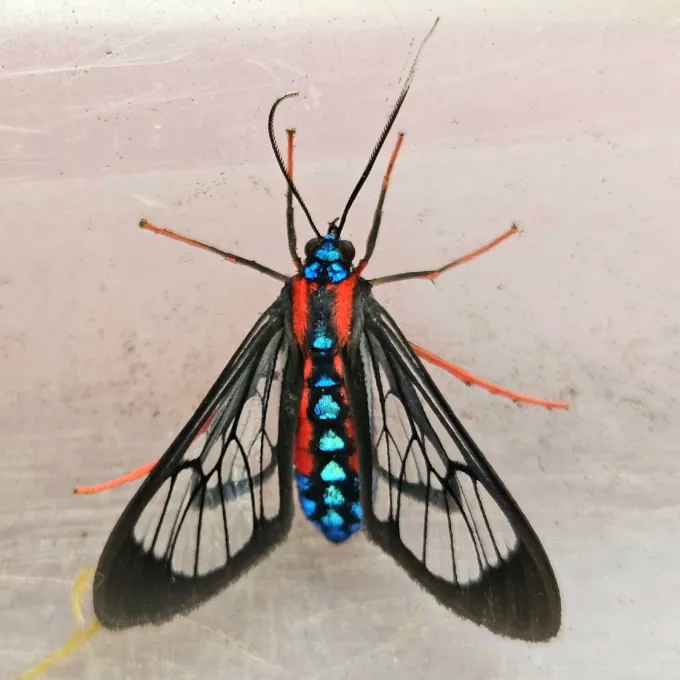
The genus Cosmosoma belongs to the Erebidae family, specifically the Arctiinae subfamily (tiger moths). These are small moths that often employ mimicry, resembling Hymenoptera insects like wasps or bees.
The wings of these insects are partially transparent due to the lack of scales in specific areas, which is a key diagnostic feature of the genus. The body often exhibits vivid coloration, typically a mix of black, orange, or red, which acts as a warning signal to predators.
The head and thorax are covered with dense hairs typical of tiger moths. The wingspan is generally small, making them difficult to spot in dense vegetation if not for their distinct warning colors.
The life cycle includes egg, larval, pupal, and adult stages. The larvae are characterized by their dense hair cover, which may cause skin irritation in humans and animals upon contact.
The systematics of this genus is complex, as many species inhabit tropical regions of the Americas, and accurate species-level identification often requires a detailed analysis of adult genitalia.
What it damages
Cosmosoma larvae are specialized phytophages. Depending on the species, they can damage a wide range of herbaceous plants, ornamental crops, and certain agricultural plantings.
The caterpillars pose a particular threat to young shoots and leaves. They actively skeletonize leaf blades, leaving only the coarse veins, which significantly reduces the plant's photosynthetic capacity.
During mass outbreaks, the pest can quickly defoliate shrubs, leading to a weakened plant immune system and increased susceptibility to secondary infections.
The greatest damage occurs in nurseries, where young seedlings lack sufficient biomass to compensate for the loss of their leaf surface area.
Some Cosmosoma species may also damage generative organs such as buds and flowers, resulting in the total loss of the yield for ornamental species.
Signs of infestation
The primary sign of infestation is the presence of hairy caterpillars on the underside of leaves.
Infested areas exhibit patches of skeletonized foliage, where only a network of veins remains, eventually turning yellow and dying off.
Larval excrement found on the leaf surfaces or beneath the plant is a clear indicator of active feeding activity in that specific zone.
During evening and nighttime hours, adult moths may be identified near the plants as they are attracted to artificial light sources.
Stunted growth of apical shoots and premature leaf curling are also secondary signs of a colony establishment.
Control measures
Manual collection and destruction of caterpillars are effective for small areas if the pest population remains manageable and easily visible.
Biological treatments based on Bacillus thuringiensis have shown high efficacy against tiger moth larvae while remaining harmless to beneficial insects.
In commercial plantings, the use of systemic or contact insecticides registered for controlling Lepidoptera species is recommended.
- Regular monitoring of plantings during the growing season.
- Timely removal of weeds that may serve as alternative hosts for the pest.
- Encouraging natural predators such as insectivorous birds and predatory insects.
The use of pheromone traps helps monitor adult flight activity, allowing for the precise timing of insecticide applications.
Taxonomy
- Latin name
- Cosmosoma
- Order
- Lepidoptera (butterflies)
- Family
- Erebidae
- EPPO code
- CSMSSP
Discussion
No discussions yet — be the first.