
Corticaria pubescens
Corticaria pubescens
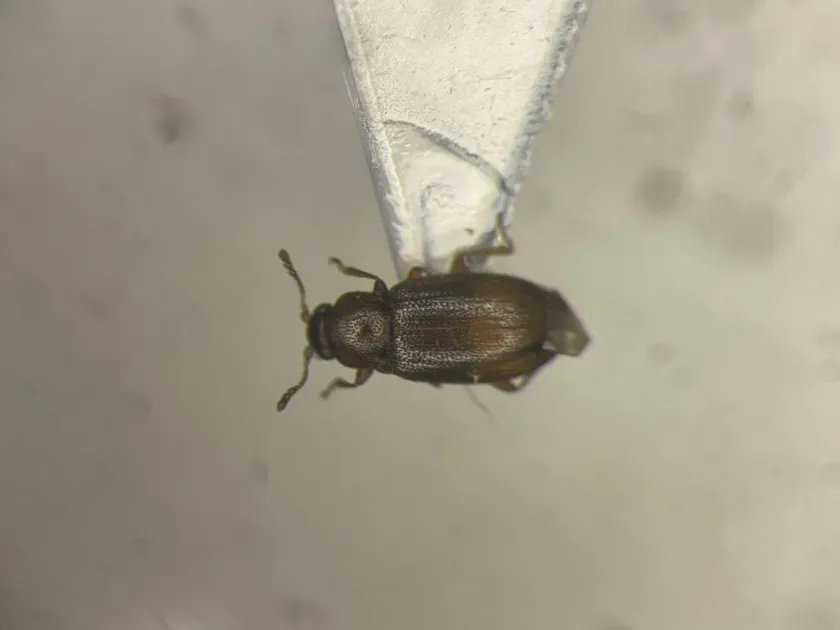
Description
How to identify
Corticaria pubescens is a small beetle belonging to the Latridiidae family, often referred to as minute brown scavenger beetles or fungus beetles.
These insects are typically 1.5 to 2 mm long and have an elongated, oval-shaped body, usually brown or reddish-brown in color, covered with fine, dense setae (hairs).
They possess clubbed antennae, which is a key diagnostic feature used by entomologists to distinguish this species from other similar warehouse beetles.
The larvae are tiny, pale, and worm-like. Due to their small size and tendency to stay within food sources, they are often overlooked during routine warehouse inspections.
Adult beetles are capable of flight, which allows them to infest various parts of a storage facility quickly and seek out areas with optimal conditions for their reproduction.
What it damages
This beetle is primarily a mycophagous pest, meaning its diet consists mainly of molds and fungal spores that develop on damp or improperly stored plant products.
While the beetle itself does not typically consume healthy grain, its presence signifies that the storage environment is compromised, leading to fungal colonization which destroys the quality of the product.
Direct damage occurs when beetles contaminate stored grains, flour, and processed products with their excreta, shed larval skins, and body fragments, rendering the goods unmarketable.
In cases of heavy infestation, the combination of fungal decay and insect activity can lead to significant loss of grain mass and structural integrity of the seeds.
The economic impact is primarily related to the loss of product grade and the necessity for costly remediation or disposal of the infested material.
When it appears
Corticaria pubescens can remain active throughout the year in climate-controlled storage facilities where temperatures remain favorable for both beetles and fungi.
Peak activity generally coincides with periods of higher humidity, which facilitate the rapid growth of molds on grain surfaces, providing an abundant food supply for the beetle population.
During the warmer months, migration between different sections of a warehouse or from outdoor sources can lead to sudden spikes in beetle numbers.
Winter activity is typically suppressed in unheated facilities, although localized hotspots within grain bulks—caused by self-heating—may allow the species to continue its life cycle.
Fluctuations in storage conditions often dictate the life cycle speed, with high moisture levels significantly shortening the development time from egg to adult.
Signs of infestation
The most reliable sign of an infestation is a noticeable musty, moldy odor in the warehouse, which often precedes the visual observation of the beetles themselves.
Visual inspection often reveals clumps of grain or seeds that are matted together with mycelium, where adult beetles can be found hiding or feeding.
Dusty surfaces on equipment or near grain piles, combined with the presence of tiny, active brown insects, are classic indicators of a Corticaria pubescens presence.
Using standard sampling and sieving methods during quality control inspections will often reveal the presence of both adults and larvae within the product samples.
Visible changes to the appearance of grain, such as surface discoloration or evidence of moisture damage, are strong warnings that this pest may be present.
Control measures
The most critical control measure is the rigorous management of grain moisture levels; keeping moisture content below 13% prevents mold growth, effectively starving the beetles.
Sanitation is essential; cleaning floors, walls, and equipment to remove dust and spilled grain eliminates the micro-habitats where these beetles breed and feed.
Proper aeration and temperature control within grain bulks are necessary to prevent hot spots, which are the primary centers for fungal and insect outbreaks.
Fumigation may be employed as a last resort in cases of severe infestation, but it must be followed by drying and cleaning to address the root cause of the problem.
Continuous monitoring using traps or periodic grain analysis is recommended to detect early signs of infestation before it spreads throughout the entire storage area.
Taxonomy
- Latin name
- Corticaria pubescens
- Order
- Coleoptera (beetles)
- Family
- Latridiidae
- EPPO code
- COTCPU
Discussion
No discussions yet — be the first.