
Corizus hyoscyami
Corizus hyoscyami
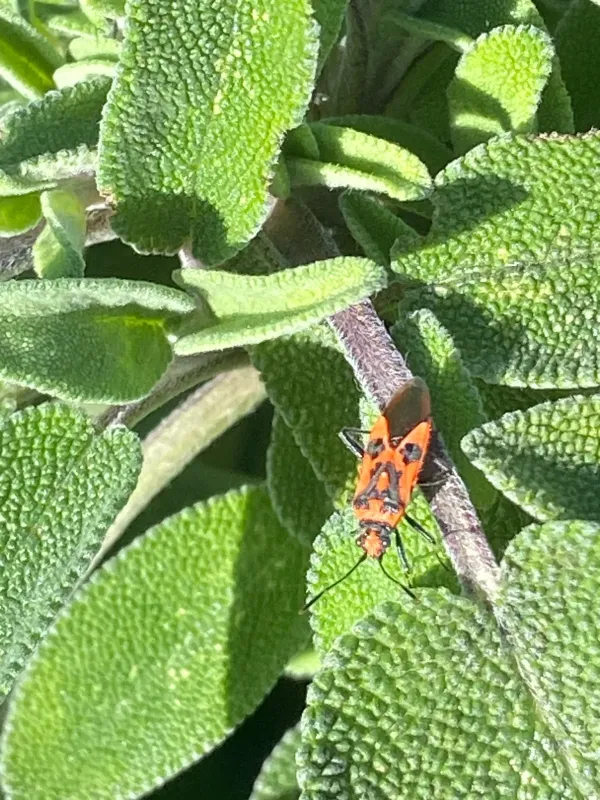
Description
How to identify
Corizus hyoscyami, commonly known as a type of scentless plant bug, belongs to the order Hemiptera and the family Rhopalidae. It is characterized by a bright, distinctive red and black pattern on its body, reaching 9–11 mm in length, and is easily recognized by the club-like thickenings at the ends of its antennae.
The pest possesses piercing-sucking mouthparts, which allow it to penetrate plant tissues and feed on sap. The pronotum and wings show a distinct pitted texture, which is a key morphological feature for entomologists identifying the species in the field.
The life cycle consists of the egg stage, five nymphal instars, and the adult phase. They overwinter as adults in dry leaf litter, grass, or plant debris, emerging in spring when temperatures rise to levels suitable for activity.
Reproduction takes place throughout the spring and summer months. Females deposit eggs on the leaves of host plants, and nymphs emerge shortly after, resembling smaller, wingless versions of the adults.
This species thrives in warm, open environments and is often found on field margins, gardens, and meadows, where it actively migrates to find suitable host plants for feeding and breeding throughout the growing season.
What it damages
This pest causes damage to a wide range of cultivated and wild plants. Significant losses are observed in seed-producing fields of vegetable, industrial, and ornamental crops, which provide essential nourishment for the bug's population.
Primary hosts include various species from the Amaranthaceae, Solanaceae, and Asteraceae families. The bugs extract sap from young shoots, leaves, and particularly from reproductive structures such as buds, flowers, and developing seeds.
In intensive agricultural systems, Corizus hyoscyami can multiply rapidly within beet crops, affecting not only the leaf rosettes but also impairing the overall growth and health of the plant during its critical early development phases.
Damage to seed crops often leads to reduced germination rates and lower quality of the planting material. The saliva injected by the bugs during feeding causes physiological disturbances that can weaken the plant and impede normal development.
Furthermore, this bug can act as a vector for various phytoplasma infections, which significantly decrease crop yield and may cause total loss of plant vigor in heavily infested areas.
Signs of infestation
The first indicator of an infestation is the presence of small, pale spots on the leaves—the result of punctures made by the insects. Over time, these spots can coalesce, leading to yellowing and deformation of the foliage.
When buds and flowers are attacked, premature dropping or the development of malformed, non-viable seeds is frequently observed. Plants affected at a young stage typically exhibit stunted growth and general weakness.
A visual sign of infestation is the presence of adult bugs on stems and leaves, especially during sunny weather when they are most active and highly visible due to their contrasting coloration.
Aggregations of nymphs can often be found on the undersides of leaves, where they feed alongside adults, exacerbating the stress on the host plant and further compromising its health.
Specific insect excrement found on the foliage can also serve as an indirect sign of infestation, often creating favorable conditions for the development of secondary fungal pathogens on the damaged plant tissues.
Control measures
Effective pest management begins with sound agricultural practices, particularly the rigorous control of weeds that serve as reservoirs for the bugs during the off-season and at the start of the growth cycle.
Implementing crop rotation and maintaining spatial isolation from weed-infested areas are effective strategies to significantly lower the risk of massive colonization by Corizus hyoscyami.
When infestation levels exceed the economic threshold, the use of registered systemic or contact-action insecticides is recommended to protect the crops and prevent substantial yield losses.
Biological control methods involve promoting natural predators, such as parasitic wasps and predatory insects, which can help regulate bug populations in sustainable farming systems with reduced chemical inputs.
- Monitor fields regularly during the flowering phase.
- Remove and destroy plant debris after harvest to reduce overwintering sites.
- Apply targeted insecticides only when population thresholds are exceeded.
Taxonomy
- Latin name
- Corizus hyoscyami
- Order
- Hemiptera (bugs, aphids, leafhoppers)
- Family
- Coreidae
- EPPO code
- CORZHY
Discussion
No discussions yet — be the first.