
Coriomeris denticulatus
Coriomeris denticulatus
Description
How to identify
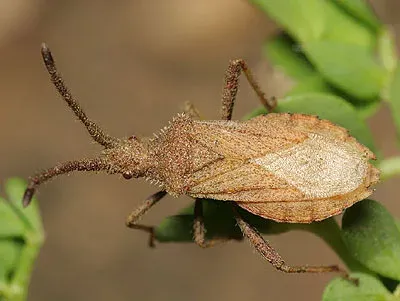
Coriomeris denticulatus is a true bug belonging to the family Coreidae, commonly known as leaf-footed bugs or squash bugs. These insects are characterized by their elongated, oval-shaped bodies typically ranging from 8 to 11 mm in length.
The defining feature of this species is the presence of distinct small teeth along the lateral margins of the pronotum, which makes it easily distinguishable from other related insects in the same family.
The body is covered in short, dense hairs that give the insect a dull, matte appearance, often in shades of brown, yellowish-brown, or reddish-brown, providing effective camouflage.
Nymphs resemble smaller versions of the adults but lack fully developed wings. They undergo incomplete metamorphosis (hemimetabolism) through several developmental stages before becoming winged adults.
Like other members of the Coreidae family, they possess a piercing-sucking mouthpart (proboscis) designed to penetrate plant tissues and extract vital sap for nourishment.
What it damages
This pest primarily targets leguminous plants (Fabaceae family), including clover, alfalfa, peas, vetch, and sainfoin, which are its preferred natural hosts.
During periods of high population density or when primary host plants are scarce, Coriomeris denticulatus may migrate to cereal crops, causing damage to young shoots and developing grain heads.
The species is polyphagous, meaning it feeds on a wide variety of weeds and wild plants, allowing the population to thrive in field borders, wastelands, and hedgerows throughout the season.
Both adults and nymphs feed by inserting their proboscis into the plant tissues, which disrupts the transport of water and nutrients throughout the host plant.
Severe infestations can lead to stunted plant growth, reduced grain filling, and significant losses in yield and quality, especially in forage and pulse crops.
When it appears
Coriomeris denticulatus overwinter as adults, finding shelter in plant debris, leaf litter, or the upper layers of soil in protected areas like field margins and woodlands.
Emergence from hibernation occurs in the spring when temperatures consistently rise above the threshold required for metabolic activity, typically coinciding with early plant growth.
The breeding season is prolonged, with mating and egg-laying occurring from late spring through early summer, ensuring the colonization of available host crops.
Nymphs develop throughout the summer months, with the duration of each developmental stage being heavily influenced by ambient temperature and local humidity levels.
As autumn approaches and temperatures drop, the bugs seek out suitable overwintering sites again to enter a state of diapause until the following spring.
Signs of infestation
The first sign of an infestation is the presence of adult bugs on the stems or reproductive parts of the plants during routine field inspections or scouting.
Feeding marks appear as tiny, pale, or yellow spots on leaves and stems at the sites where the proboscis was inserted, often followed by localized necrosis.
Damage to terminal buds often results in the distortion or curling of young leaves and the cessation of growth in the central shoot, leading to an irregular plant stand.
Infested reproductive organs may show premature dropping of flowers and buds, as well as the development of malformed, shriveled pods that produce little to no viable seed.
Large colonies can cause the entire crop to look chlorotic and weak, significantly lagging behind in development compared to unaffected fields.
Control measures
Integrated pest management (IPM) for this species begins with cultural practices, such as the effective removal of weeds that serve as alternative host plants and overwintering reservoirs.
Maintaining proper spatial isolation between legume fields and known hibernation sites can significantly reduce the initial pressure of the pest population on the crops.
Chemical control involving insecticides is warranted only when population density exceeds the economic injury level, utilizing products registered for use on specific crops.
Border treatments are often highly effective because the bugs typically invade fields from the periphery, allowing for targeted application rather than whole-field spraying.
Regular monitoring using sweep nets allows agronomists to track the arrival of the bugs and make informed decisions on the necessity and timing of pest control measures.
Taxonomy
- Latin name
- Coriomeris denticulatus
- Order
- Hemiptera (bugs, aphids, leafhoppers)
- Family
- Coreidae
- EPPO code
- CRMIDE
Discussion
No discussions yet — be the first.