
Downy Emerald
Cordulia aenea
Description
How to identify
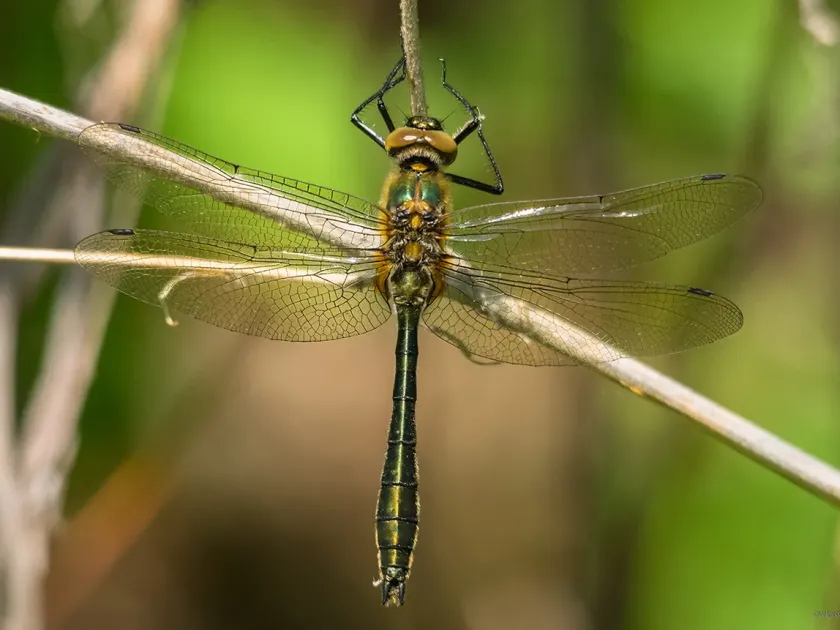
The Downy Emerald (Cordulia aenea) is a member of the dragonfly family Corduliidae. These insects are known for their striking metallic bronze-green bodies that catch the sunlight effectively.
The eyes of the adult are a vivid emerald-green, serving as a primary identification feature. They have a wingspan of approximately 7 to 8 centimeters with transparent wings that feature distinct venation.
Larvae are aquatic and possess a robust, brownish body often covered with fine hairs and silt, providing excellent camouflage while hunting at the bottom of stagnant or slow-moving water bodies.
The life cycle encompasses an egg stage, a long-term nymph stage lasting up to three years, and the final adult stage. They are obligate inhabitants of ponds and lakes.
In agronomy, it is critical to categorize this insect as a beneficial predator rather than a plant pest, as it plays a significant role in maintaining ecosystem balance.
What it damages
The Downy Emerald does not damage agricultural crops. Adult dragonflies feed exclusively on flying insects, such as midges and gnats, and have no interest in plant tissues or sap.
There is no evidence of Cordulia aenea causing harm to leaves, roots, fruits, or stems. They do not consume plant material at any stage of their development.
Confusing this beneficial insect with a garden pest is a common misunderstanding. They are purely carnivorous and target other insects in the environment.
Aquatic larvae feed on various small invertebrates and mosquito larvae found in the water. They do not damage aquatic vegetation or interfere with water-based agricultural systems.
Their presence in an agricultural landscape indicates a healthy, unpolluted environment which is beneficial for the overall stability of the farm's biodiversity.
When it appears
The flight period for the Downy Emerald typically occurs from late spring through mid-summer, specifically peaking between May and July.
During these months, adults are most active on sunny days, patrolling the margins of ponds and streams to capture prey and locate mates.
Nymphs spend their entire development cycle in the water, which can last between two and three years depending on climate and the availability of nutritional resources.
The emergence of adults is synchronized with the warmer months when food sources for the dragonflies are at their most abundant in the surrounding areas.
During the winter months, the larvae remain in the bottom sediments, where they continue to develop slowly until the water temperature rises in the spring.
Control measures
No pest control measures are required for the Downy Emerald. On the contrary, their presence should be encouraged as they act as natural controllers of mosquito populations.
The use of broad-spectrum insecticides in or near water bodies should be avoided to prevent accidental harm to these beneficial predators and maintain a healthy ecosystem.
Maintaining a natural, vegetated shoreline around ponds helps to provide essential habitats for both the larvae and the emerging adults of the species.
Farmers should prioritize the protection of dragonflies as they serve as natural biological control agents, reducing the reliance on chemical pest management strategies.
In conclusion, the Downy Emerald is an ecological asset. Any effort to eradicate them would be counter-productive to sustainable agricultural practices.
Taxonomy
- Latin name
- Cordulia aenea
- Family
- Corduliidae
- EPPO code
- CRDUAE
Discussion
No discussions yet — be the first.