
Yellow-spotted shield bug
Coptosoma xanthogramma
Description
How to identify
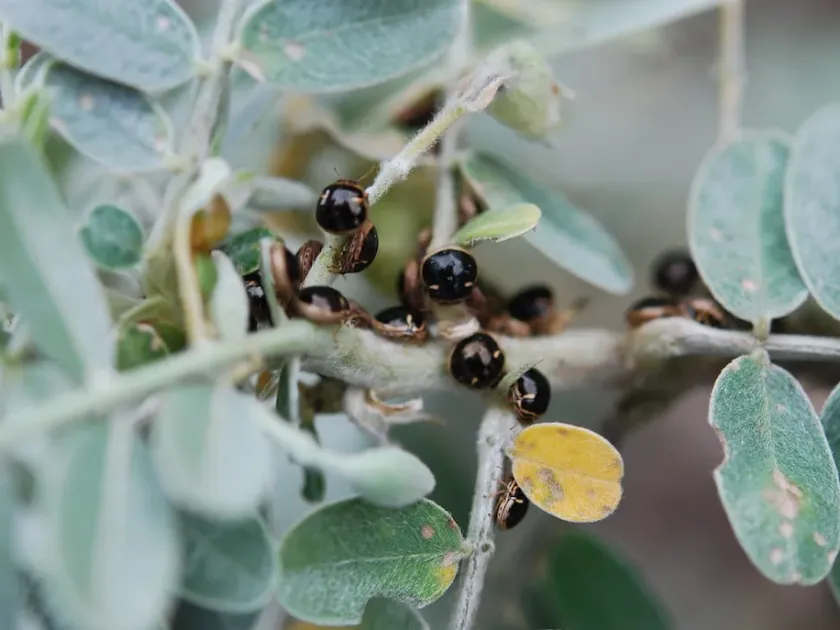
The Yellow-spotted shield bug (Coptosoma xanthogramma) is a member of the Hemiptera order and the Plataspidae family. It is a small, highly convex insect with a rounded shape, resembling a miniature turtle.
The adult insect features a dark, sclerotized body decorated with distinct yellow or greenish spots. Typically, these bugs measure about 4 to 5 millimeters in length, making them easy to overlook when they hide in leaf axils.
Nymphs are similar in shape to adults but are smaller and often lighter in color, appearing yellowish-brown. Their life cycle involves incomplete metamorphosis, moving through egg, nymph, and adult stages.
Like many stink bugs, this species emits a pungent odor when disturbed, which serves as a defensive mechanism against potential predators in the field environment.
The species thrives in warm climates and can multiply rapidly under favorable agricultural conditions, potentially causing significant economic losses for farmers.
What it damages
This bug primarily targets leguminous plants (Fabaceae). Their preferred host crops include soybeans, beans, cowpeas, and peanuts, where they find abundant nutrition.
Both adults and nymphs possess piercing-sucking mouthparts. They feed by inserting their stylets into plant tissues to extract sap, which disrupts the normal development of the plant.
Feeding results in general plant weakness. Initial signs include discoloration at the puncture sites, and severe infestations often lead to the premature wilting of terminal shoots.
The most critical damage occurs when the bugs feed on reproductive organs, such as flower buds and young pods. This causes flower drop, pod deformation, and the development of shriveled, low-quality seeds.
Furthermore, the puncture wounds provide entry points for secondary infections by pathogens, such as fungi and bacteria, which can lead to extensive tissue necrosis and yield loss.
When it appears
Activity typically begins in the spring once daily temperatures consistently rise above 15–18 degrees Celsius. Adults overwinter in plant debris, soil, or sheltered areas near fields.
The bug can complete several generations throughout the growing season, depending heavily on temperature and the availability of suitable host plants in the vicinity.
Population peaks usually coincide with the flowering and pod-filling stages of legume crops, as these stages offer the most nutrient-rich feeding sites for the insects.
As autumn approaches and temperatures drop, adults begin seeking overwintering sites, often migrating toward edges of fields or bushy areas to survive the winter months.
Effective monitoring requires regular inspections of the stems and leaf axils, ideally performed in the early morning or evening when insects are less prone to flying away.
Signs of infestation
The most visible sign of an infestation is the presence of rounded, dark insects clustered on plant stems. They are quite shy and will drop to the ground or fly away when disturbed.
Close inspection of the pods often reveals microscopic dark spots, which are the puncture marks made by the bugs, usually surrounded by faint chlorotic halos.
Withered young leaves, pod deformities, and irregular plant growth patterns are reliable indicators that the population has reached an economically damaging level.
The presence of molted exuviae (cast-off skins) on the underside of leaves or stems confirms that the bug is actively breeding and completing its development within the field.
A high density of adults on the lower parts of the plant canopy is a warning sign that immediate scouting and management actions are required to protect the yield.
Control measures
Successful management of the Yellow-spotted shield bug relies on an integrated approach to reduce population levels before they cause major economic impact.
- Implement crop rotation to disrupt the life cycle of the pest and reduce overwintering populations.
- Control leguminous weeds in and around fields to remove alternative food sources and breeding grounds.
- Apply registered systemic or contact insecticides during the most vulnerable life stages if thresholds are exceeded.
- Use light or pheromone-based traps for early detection and timing of chemical applications.
- Promote the presence of natural enemies, such as parasitoid wasps and generalist predators, to provide biological control within the agroecosystem.
Taxonomy
- Latin name
- Coptosoma xanthogramma
- Order
- Hemiptera (bugs, aphids, leafhoppers)
- Family
- Plataspidae
- EPPO code
- COPSXA
Discussion
No discussions yet — be the first.