
Coptosoma atomarium
Coptosoma atomarium
Description
How to identify
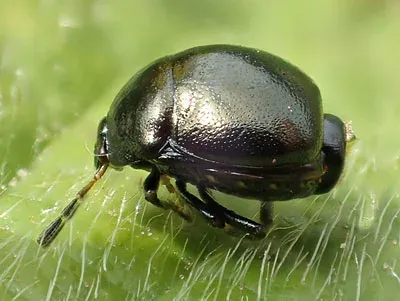
Coptosoma atomarium is a member of the Plataspidae family within the order Hemiptera. Unlike common shield bugs that target cereals, this species is characterized by a distinctive, almost globular body shape.
Adult insects typically measure between 4 to 5 millimeters in length. Their coloration ranges from brownish-olive to dark black, featuring a subtle spotted pattern on the scutellum, which fully covers the abdomen.
The nymphs go through several developmental stages, resembling the adults but smaller in size and lacking fully developed wings. They tend to hide in secluded areas, particularly in leaf axils or under flower bracts.
Like many members of the suborder, this bug releases a pungent defensive odor from specialized scent glands when disturbed or threatened by predators or during field operations.
This species thrives in warm climates and is most prevalent in southern regions, preferring areas with moderate humidity and dense foliage that provides shelter from intense direct sunlight.
What it damages
The bug primarily targets plants belonging to the Fabaceae (legume) family. It poses a significant economic threat to crops such as soybeans, alfalfa, clover, and various wild vetch species.
Both adults and nymphs cause damage by piercing plant tissues and extracting sap. They prefer to feed on young stems, leaf petioles, and developing legume pods, which directly impacts the plant's vigor.
In cases of high infestation, the pest can lead to severe crop losses. The feeding activity often causes premature abscission of flowers and buds, preventing the formation of healthy pods.
Feeding sites frequently show yellowing, deformation, or necrosis due to the injection of digestive enzymes during the feeding process. This also creates entry points for secondary infections like fungal and bacterial pathogens.
Damage to seeds during the grain-filling stage is particularly critical. It leads to shriveled seeds, reduced protein content, lowered oil concentration, and overall poor germination rates, rendering the yield unmarketable.
When it appears
Adults overwinter in leaf litter, soil debris, or along field margins and forest edges. As temperatures rise consistently above 15 degrees Celsius, they emerge from diapause to begin their active season.
The first wave of adults usually congregates on fields during the budding stage of legumes. They initially infest the edges of the fields, gradually spreading deeper into the crop canopy as the population grows.
The life cycle consists of one or two generations per year, depending on regional weather patterns. Eggs are laid in clusters on the undersides of leaves, making them difficult to detect during standard field scouting.
Nymph development to the adult stage takes approximately one month. This period often coincides with the flowering and pod-filling phases, making it the window of peak economic damage for the farmer.
In autumn, as day length decreases and temperatures drop, the bugs migrate back to their overwintering sites, marking the end of their activity cycle in the agricultural ecosystem for the year.
Signs of infestation
The most visible indicator of an infestation is the appearance of small, chlorotic spots or points on leaves caused by the insect's feeding punctures and the subsequent reaction of plant tissues.
- Yellowing of leaf margins and localized necrotic tissue.
- Unexplained mass shedding of flowers and young pods.
- Curling or twisting of tender stems and petioles.
- Accumulation of small, dark fecal spots on the foliage.
- General stunting of plant growth across the infested plot.
Nymph clusters can often be found deep within the plant structure. A quick shake of the plant canopy or an inspection of the leaf axils will reveal these insects scurrying to hide on the opposite side of the stem.
Field monitoring should focus on the perimeter, as the population density is usually highest near the field edges. Using an insect sweep net is an efficient way to quantify the pest density per square meter.
Wilting of the terminal parts of plants during the peak flowering stage may suggest a localized high concentration of these bugs, as they focus their energy on nutrient-rich areas of the plant.
Control measures
The integrated management strategy begins with cultural practices, such as rigorous crop rotation and deep autumn plowing to eliminate overwintering sites in the soil and crop residues.
Removing leguminous weeds along field borders is essential, as these plants often serve as early-season reservoirs that allow the population to establish before moving onto the main crop.
Chemical control is advised when population levels exceed the economic injury threshold defined for the region. Systemic or contact-acting insecticides are typically employed during the critical growth stages.
Biological control options, such as the release or conservation of natural egg parasitoids like Telenomus species, can help manage population growth without the need for intensive pesticide use.
Regular scouting using pheromone traps is highly recommended to determine the optimal timing for intervention, thereby ensuring effective pest suppression while minimizing the overall chemical impact on the farm.
Taxonomy
- Latin name
- Coptosoma atomarium
- Order
- Hemiptera (bugs, aphids, leafhoppers)
- Family
- Plataspidae
- EPPO code
- COPSAT
Discussion
No discussions yet — be the first.