
Cooperia oncophora
Cooperia oncophora
Description
How to identify
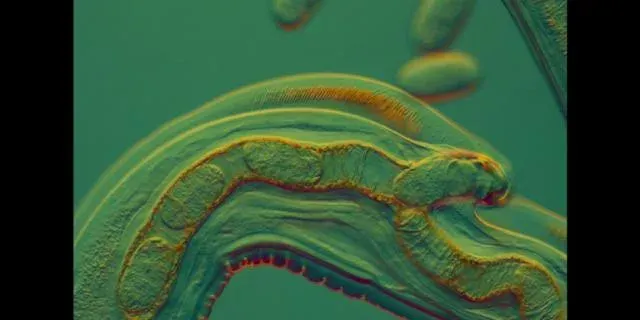
Cooperia oncophora is a parasitic nematode belonging to the family Trichostrongylidae, commonly found in the small intestine of ruminants, particularly cattle.
Adult worms are slender and thread-like, usually measuring between 5 to 9 mm in length, and are often reddish-brown in appearance.
A diagnostic characteristic is the presence of a distinct cuticular inflation at the anterior (head) end of the worm, visible under microscopic examination.
The males possess a complex copulatory bursa with characteristic short and thick rays, which is essential for taxonomic identification.
The life cycle is direct; infective larvae develop in the environment (pasture) and are ingested by hosts along with forage or water.
What it damages
The primary hosts of Cooperia oncophora are cattle, although it can also affect sheep and goats, causing significant production losses in livestock farming.
Infection occurs through the ingestion of L3 stage larvae from contaminated pasture, which is a common occurrence during grazing.
Once inside the host, the larvae burrow into the mucosa of the small intestine, leading to physical damage and interference with nutrient absorption.
Young animals, particularly calves under one year of age, are highly susceptible and often suffer the most severe clinical signs.
Adult cattle may develop partial immunity but remain carriers, contributing to the persistent contamination of the grazing environment.
When it appears
The development of larvae in the environment is highly dependent on climate, with peak activity occurring during warm and humid weather.
In temperate regions, contamination of pastures with infective larvae is highest during late spring and summer months.
While cold temperatures can inhibit the development of larvae, they may survive in the soil for significant periods until the onset of frost.
Indoors or under intensive housing conditions, the life cycle can continue year-round if proper sanitation is not maintained.
The prepatent period, which is the time between ingestion and the presence of eggs in feces, usually ranges from 18 to 25 days.
Signs of infestation
The most common clinical sign is persistent diarrhea, which can lead to significant dehydration and weight loss in infected livestock.
Affected calves often show poor growth rates, failure to thrive, and general weakness, significantly reducing the economic value of the animal.
Inappetence or a decrease in appetite is often observed, which, combined with impaired absorption, leads to severe emaciation.
Anemia may develop in heavy infections due to damage caused to the intestinal lining and the metabolic demand of the parasite load.
Diagnosis is confirmed through fecal egg counts (FEC) or post-mortem identification of the adult worms within the lumen of the small intestine.
Control measures
Regular deworming programs using anthelmintics such as macrocyclic lactones or benzimidazoles are essential for effective management.
Implementing rotational grazing strategies helps reduce the concentration of infective larvae on pastures and breaks the parasite's life cycle.
Proper manure management is critical, as stored manure should undergo fermentation or heat treatment to ensure the destruction of parasite eggs.
Segregating calves from adult cattle helps protect the most vulnerable animals from high levels of environmental contamination.
Providing clean water sources and maintaining hygienic feeding areas are effective preventative measures to reduce the intake of infective larvae.
Taxonomy
- Latin name
- Cooperia oncophora
- Order
- Nematodes
- Family
- Trichostrongylidae
- EPPO code
- COOPON
Discussion
No discussions yet — be the first.