
Compsilura
Compsilura
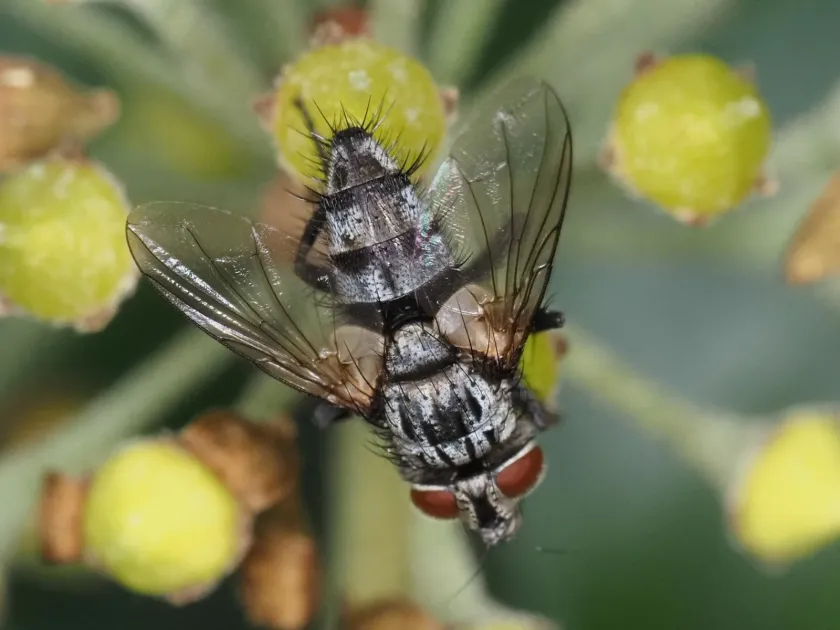
Description
How to identify
Compsilura (Compsilura concinnata) is a fly species belonging to the family Tachinidae. These flies are often called tachinid flies and are characterized by their sturdy build and prominent bristles on their bodies.
Adult flies look similar to houseflies but generally possess a more slender body shape. Their coloration is usually gray or black with distinctive patterns on the abdomen and well-developed, clear wings.
In the field of entomology, Compsilura is recognized for its role as a parasitoid. Its biology is complex, as it relies on various lepidopteran caterpillars to complete its life cycle.
The larvae develop inside the host's body, feeding on its tissues. This internal parasitic habit makes them highly efficient at killing their hosts, which can be detrimental if the host is a beneficial species.
Identification of this specific species requires detailed examination of morphological traits, as many tachinids look visually similar to the untrained eye.
What it damages
The primary concern regarding Compsilura in agriculture is its impact on beneficial insect populations. As a generalist parasitoid, it does not discriminate between harmful pests and helpful insects.
By infecting non-target beneficial caterpillars, Compsilura can disrupt integrated pest management programs, often leading to unintended negative consequences for crop health.
The fly does not cause direct damage to plant tissues or fruits; however, the ecological damage caused by reducing the natural enemies of other pests is significant.
This species is highly mobile and can spread quickly, making it a difficult factor to manage in large-scale agricultural settings where biodiversity is being cultivated for natural pest control.
Ultimately, it is considered a pest in contexts where the goal is to maintain and protect populations of beneficial lepidopterans that serve as primary pest controllers.
When it appears
Adult Compsilura flies emerge in early spring, synchronized with the warming temperatures that signal the start of the growing season and the emergence of their host species.
They are capable of producing multiple generations throughout the year, meaning they remain active and pose a risk to beneficial insects from spring until late autumn.
Peak activity is typically observed during mid-summer, when the abundance of various caterpillar species provides ample opportunities for the female flies to lay their eggs.
As winter approaches, the flies enter a dormant state, usually overwintering as pupae in the soil or protected areas within plant debris, awaiting the next season.
Monitoring for adult flight periods is essential for agronomists who aim to understand the parasite pressure on specific local ecosystems throughout the vegetative cycle.
Signs of infestation
The most noticeable sign of Compsilura presence is the premature death of caterpillars before they can pupate into adult moths or butterflies.
Careful inspection of the hosts may reveal tiny entry holes in the caterpillar's skin, indicating where the parasitic larva has either entered or exited the body.
Affected caterpillars often exhibit lethargic behavior and reduced feeding patterns as the parasite consumes their internal organs, eventually causing the host's collapse.
Dissection of dead or dying caterpillars often reveals the presence of white or yellowish tachinid larvae or puparia inside the carcass, confirming the cause of mortality.
A sudden decline in the local population of specific caterpillar species, without a clear environmental reason, is a strong indicator of tachinid activity.
Control measures
Controlling Compsilura is rarely a straightforward task, as it is often considered a natural component of the environment rather than a target for eradication.
Integrated management usually focuses on preserving the balance of the ecosystem, including avoiding broad-spectrum insecticides that could harm non-target beneficial species.
Cultural practices, such as removing crop residues or plowing soil, can help reduce the number of overwintering pupae if their population density reaches damaging levels.
Maintaining high levels of plant diversity can help prevent the fly from concentrating its parasitism on a single, vital population of beneficial insects.
In high-value crops where protection of beneficial insects is critical, physical barriers such as netting can be used to prevent the flies from reaching their hosts.
Taxonomy
- Latin name
- Compsilura
- Order
- Diptera (flies)
- Family
- Tachinidae
- EPPO code
- COMISP
Discussion
No discussions yet — be the first.