
Thuja leaf miner
Coleotechnites thujaella
Description
How to identify
The Thuja leaf miner (Coleotechnites thujaella) is a small moth belonging to the family Gelechiidae, known for its specific impact on Thuja and related conifers.
The adult moth is quite small, with a wingspan of approximately 7–9 mm, featuring grayish-brown patterns that provide excellent camouflage against tree bark.
The larvae are light-colored with dark heads, growing up to 5 mm in length. They spend almost their entire developmental period inside the host plant's foliage.
The life cycle is univoltine, meaning there is only one generation produced per year, which is a critical factor when timing preventative applications.
As a member of the Gelechiidae family, this pest is a specialist, meaning it has evolved to bypass the chemical defenses of its specific host trees.
What it damages
The primary hosts for this pest include trees in the Thuja genus, although it occasionally infests junipers and other members of the Cupressaceae family.
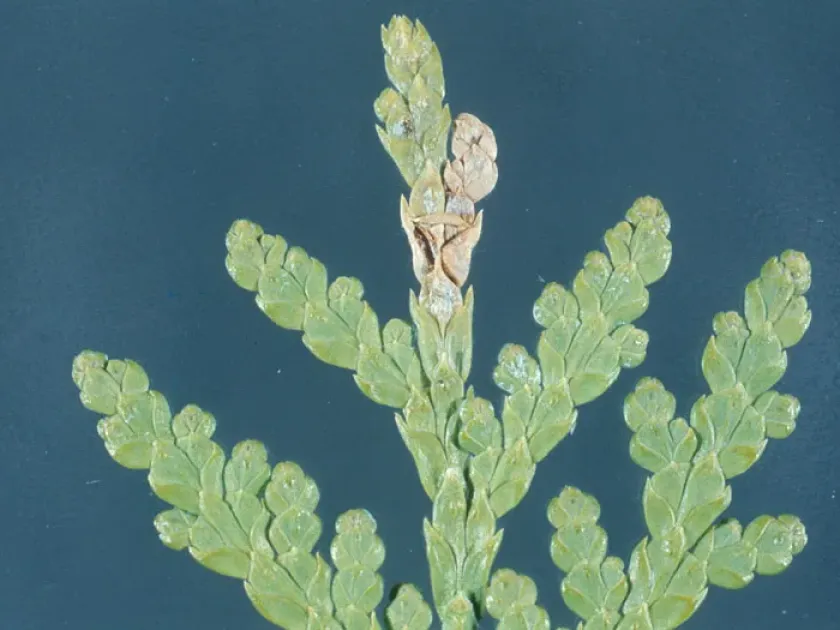
Larvae feed internally on the scale-like leaves, mining out the mesophyll and leaving behind hollowed-out, transparent-looking needles.
Initial damage leads to the browning and eventual death of the tips of the foliage, which significantly impacts the aesthetic quality of ornamental plants.
Heavy infestations can lead to severe stress for the tree, resulting in stunted annual growth and increased susceptibility to secondary diseases.
Young nursery stock is particularly at risk, as larval feeding can destroy a significant portion of the tree's foliage, rendering it unsellable.
When it appears
Adult moths typically emerge in early summer, peaking in June, when they seek out foliage for mating and egg-laying.
Eggs are laid on the surface of the scales, and the newly hatched larvae immediately begin boring into the inner tissues of the leaves.
Feeding continues throughout the summer and autumn months as the larvae grow and excavate larger tunnels within the host plant.
Winter is spent in the larval stage, protected inside the mined foliage, which shields them from cold temperatures and predators.
In the following spring, larvae complete their growth, pupate within the mines, and emerge as adults to restart the annual cycle.
Signs of infestation
The first sign of an infestation is the premature yellowing or browning of individual scale leaves during the mid-to-late summer season.
Close inspection reveals small, translucent tunnels or 'mines' inside the foliage, often with tiny exit holes where larvae have vacated or pupated.
- Small dark granules of frass (excrement) visible inside the mined leaves.
- Brittle foliage that feels dry and easily breaks apart when touched.
- General lack of vigor or stunted growth compared to healthy plants.
- Premature leaf drop in patches throughout the canopy of the tree.
- Empty pupal cases projecting from the foliage during spring and early summer.
Distinguishing leaf miner damage from physiological browning (caused by drought or salt) is possible by looking for these distinct internal hollows.
Control measures
Systemic insecticides are the most effective method of control, as they are absorbed by the plant and kill the larvae residing inside the leaves.
Timing is crucial; applications should coincide with adult moth activity or egg-hatch, usually in early June, to prevent larvae from entering the foliage.
Pruning and destroying heavily infested tips during the dormant season can help reduce the localized population of the pest.
Maintaining optimal tree health through proper irrigation and mulching helps the tree tolerate and recover from moderate levels of infestation.
Monitoring using pheromone traps can assist in determining the exact arrival of the adult moths, allowing for precise and effective treatment windows.
Taxonomy
- Latin name
- Coleotechnites thujaella
- Order
- Lepidoptera (butterflies)
- Family
- Gelechiidae
- EPPO code
- RECUTH
Discussion
No discussions yet — be the first.