
Spruce needle miner
Coleotechnites piceaella
Description
How to identify
The spruce needle miner, scientifically known as Coleotechnites piceaella, is a moth species belonging to the Gelechiidae family. The adult moth is small, with a wingspan of approximately 10–12 mm, featuring mottled brown and gray wings that provide excellent camouflage on tree bark.
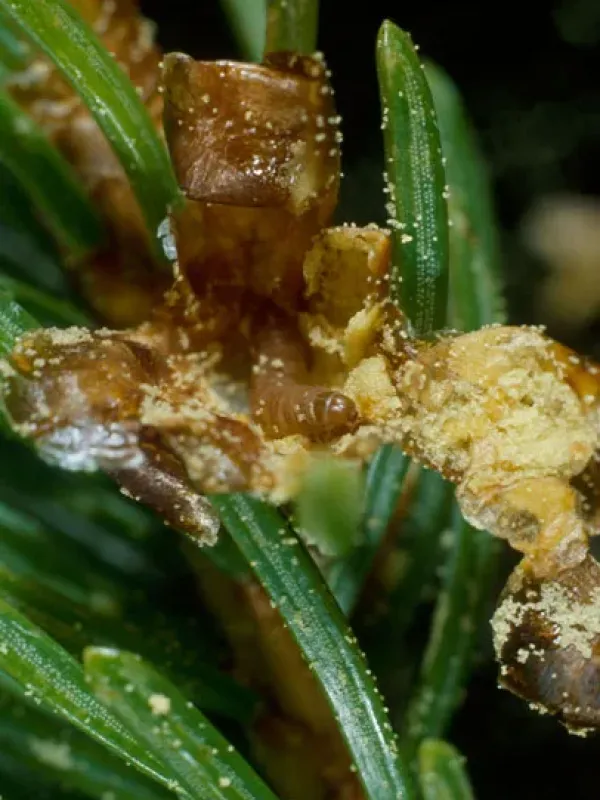
The larval stage is the primary cause of damage. Upon hatching, the larvae are tiny and light-colored, but they grow to reach about 8–10 mm in length, often displaying a reddish or brownish hue that matches the color of infested needles.
The life cycle of this insect involves complete metamorphosis. Overwintering typically occurs in the larval stage, either inside hollowed-out needles or in crevices near the buds, allowing them to emerge as soon as spring temperatures rise.
Adult moths emerge in early to mid-summer. Due to their nocturnal behavior and camouflaged wings, they are rarely seen by arborists unless specifically monitored using light traps or pheromone attractants.
Taxonomically, this species is closely linked to spruce trees, and its development is strictly synchronized with the phenology of the host, making it a specialized pest within the conifer ecosystem.
What it damages
The larvae are specialized miners. They enter the needles by boring a tiny hole near the base, then proceed to consume the internal tissues, effectively hollowing out the needle while leaving the epidermis intact.
A single larva can destroy multiple needles during its growth cycle. As it depletes the contents of one needle, it moves to the next, often spinning silk webbing to bind several needles together for protection against predators and environmental factors.
Visible damage includes the browning and eventual shedding of needles, which gives the tree a sparse, unhealthy appearance. Severe infestations can cause significant defoliation, particularly on the lower branches of the tree.
The loss of foliage weakens the tree, making it more susceptible to opportunistic secondary pests like bark beetles or wood borers, which can eventually lead to branch dieback or tree mortality.
In ornamental and nursery settings, the cosmetic damage caused by the spruce needle miner is a major concern, as it ruins the aesthetic value of the trees and reduces their commercial viability.
When it appears
The activity begins in early spring when larvae emerge from their overwintering sites. They resume feeding on the previous year's needles, which are often the first to show signs of browning.
The most active feeding period is from late spring to early summer. During this time, the characteristic «burnt» appearance of the foliage becomes increasingly noticeable, accompanied by fine webbing on the branches.
Adult moths are active during the summer months, typically peaking in June and July. This is when mating and egg-laying occur, setting the stage for the next generation to appear in the fall.
As autumn approaches, the newly hatched larvae begin their preparation for winter. They start mining needles to secure a safe place to hibernate throughout the cold months.
Monitoring should be conducted throughout the growing season, with special attention paid to late spring and early autumn when larval activity is at its highest for different generations.
Signs of infestation
The most reliable sign of an infestation is the presence of brown, hollowed-out needles that remain attached to the branch for some time due to silk webbing.
When inspecting the branches, look for small, circular entry holes at the base of the needles. These holes are clear indicators that a larva has been inside.
- Browning or reddish-brown foliage on specific branches.
- Silk webbing binding together groups of needles.
- Small entry or exit holes at the base of the needles.
- Dropping of needles when the branch is shaken or disturbed.
- Presence of frass (larval waste) inside the hollowed-out needles.
Control measures
Chemical control is most effective when applied during the larval emergence period. Systemic insecticides are preferred, as they are absorbed by the plant tissues and reach the larvae inside the needles.
Timing is critical. Treatments should be applied twice during the season—early spring to target overwintering larvae and mid-summer to target the new generation—to ensure maximum impact.
Cultural practices include the removal of heavily infested branches and the disposal of fallen needles. This reduces the reservoir of pests available to re-infest the tree in the following season.
Maintaining tree vigor through proper irrigation and balanced fertilization helps the tree withstand minor infestations and recover more quickly from foliage loss.
Biological control methods, such as the use of predatory mites or encouraging native beneficial insects, can also play a role in integrated pest management programs to keep populations below economic thresholds.
Taxonomy
- Latin name
- Coleotechnites piceaella
- Order
- Lepidoptera (butterflies)
- Family
- Gelechiidae
- EPPO code
- RECUPC
Discussion
No discussions yet — be the first.