
Citricola scale
Coccus pseudomagnoliarum
Description
How to identify
The Citricola scale (Coccus pseudomagnoliarum) is a member of the Coccidae family. It is a soft scale insect that lacks a separate, waxy shield, unlike armored scale species.
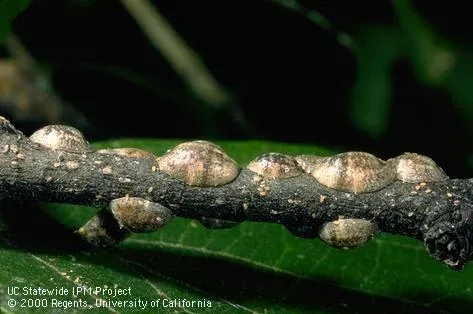
Adult females are convex and oval in shape, typically reaching 3 to 5 millimeters in length. Their coloration ranges from light brown to a darker, grayish-brown hue depending on maturity.
The first-instar nymphs, known as crawlers, are very small, flat, and highly mobile. This is the only stage in their lifecycle when they can actively travel across the foliage.
Once settled, females remain immobile for the duration of their adult life, feeding on plant phloem sap through a specialized piercing-sucking mouthpart.
These insects are primarily associated with citrus trees, but they can occasionally infest other woody hosts, making them a significant agricultural pest in warm climates.
What it damages
Citricola scales cause extensive damage to citrus trees, including oranges, lemons, and mandarins. Heavy infestations can significantly hinder tree vigor and fruit development.
By extracting large quantities of sap, the insects cause leaf yellowing, stunting of new growth, and sometimes total defoliation in severe, untreated cases.
A primary byproduct of their feeding is honeydew. This sticky substance promotes the growth of sooty mold, which blocks sunlight from leaves and reduces the photosynthetic efficiency of the tree.
Economic damage is twofold: the reduction of yield due to tree stress and the decrease in fruit marketability caused by the accumulation of sooty mold and insect residues.
Trees stressed by scale infestations become more susceptible to environmental factors, such as drought, and secondary opportunistic pathogens.
When it appears
This pest typically completes one generation per year. Development is closely tied to seasonal temperature changes and the phenology of the citrus host.
Nymphs overwinter on the twigs and the underside of leaves. They remain relatively inactive during the cooler winter months, resuming development as spring temperatures rise.
In early summer, adults reach maturity, and the crawlers begin to emerge. This period is the most active phase of the lifecycle and is critical for management.
Throughout the summer, the crawlers establish themselves on leaves and young shoots, feeding and gradually increasing in size until they prepare for the next winter cycle.
Monitoring seasonal patterns is essential for growers to time their pest management actions accurately, especially when targeting the mobile crawler stage.
Signs of infestation
The most visible sign of infestation is the presence of honeydew, which makes the leaves feel sticky. Over time, this honeydew turns into black sooty mold.
Observing small, brown, raised bumps along the midribs of leaves or on twigs confirms the presence of settled adult female scales.
Yellowing of leaves in localized patches or across the canopy indicates that the scale population is actively draining the tree's resources.
Increased ant activity on the branches is a strong indicator of scale infestation, as ants are attracted to the honeydew and often defend the scales from predators.
Stunted development of new shoots and small, poorly colored fruit are chronic signs of a long-term infestation that has significantly depleted the tree's health.
Control measures
Chemical control focuses on applying systemic insecticides precisely when the crawler population is most active, as they are not protected by the adult's hardened cuticle.
Integrated pest management should include pruning infested branches to reduce the initial population and improve spray coverage within the canopy.
Biological control agents, including various species of parasitic wasps and predatory beetles, can help keep scale populations in check in stable ecosystems.
Regular monitoring using sticky traps or manual inspections allows for early detection, preventing the need for heavy pesticide applications later in the season.
Managing ant populations in the orchard is a vital cultural practice, as it removes the protective barrier for the scales and allows natural predators to reach them more effectively.
Taxonomy
- Latin name
- Coccus pseudomagnoliarum
- Order
- Hemiptera (bugs, aphids, leafhoppers)
- Family
- Coccidae
- EPPO code
- COCCPS
Discussion
No discussions yet — be the first.