
Coccobius fulvus
Coccobius fulvus
Description
How to identify
Coccobius fulvus is a tiny parasitoid wasp belonging to the family Aphelinidae, within the order Hymenoptera. It is a highly specialized endoparasite that targets various scale insect species.
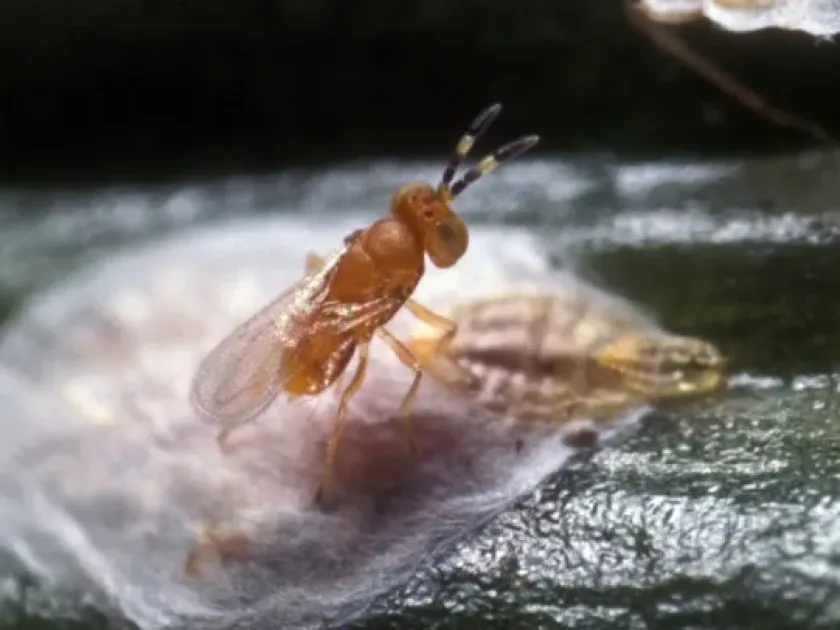
The adult insect is typically yellow or ochre in color. Its size is extremely small, which allows it to access the area beneath the protective scale covers of its hosts to oviposit eggs.
The larval stage develops internally within the host, consuming its tissues from the inside out. This process effectively kills the scale insect, preventing it from reproducing or further damaging the host plant.
Unlike harmful pests, this species is considered a valuable biological control agent in citrus orchards and other ornamental tree systems.
Its life cycle is perfectly synchronized with its hosts, making it a highly efficient natural regulator of pest populations in agricultural ecosystems.
What it damages
Coccobius fulvus does not cause any damage to plants. It is not a phytophagous insect and does not feed on plant foliage, stems, or fruits.
It is predominantly associated with citrus plantations where it keeps scale insect populations below economic injury levels.
By parasitizing scale insects, it protects plants from the sap-sucking activity of these pests, which often leads to reduced plant vigor and crop loss.
The primary concern regarding this insect is not the damage it causes, but rather its sensitivity to synthetic pesticides which can disrupt its presence in the field.
Ecologically, the presence of Coccobius fulvus is a positive indicator, signifying a stable and naturally regulated environment where integrated pest management is functioning.
Control measures
Conservation is the primary management strategy for Coccobius fulvus. As a beneficial insect, its protection is vital for sustainable agricultural practices.
The use of broad-spectrum insecticides should be minimized or completely replaced by more selective, target-specific chemicals to protect parasitoid wasps.
Establishing native plant strips or field margins can provide necessary refugia for the wasps during periods when pesticide applications are unavoidable.
Regular monitoring of natural enemy populations should be a standard component of scouting programs to determine if chemical control is truly necessary.
Integrated Pest Management (IPM) strategies that prioritize biological controls help maintain healthy populations of Coccobius fulvus, ensuring long-term pest suppression.
Taxonomy
- Latin name
- Coccobius fulvus
- Order
- Hymenoptera
- Family
- Aphelinidae
- EPPO code
- CCCBFU
Discussion
No discussions yet — be the first.