
Clinotaenia
Clinotaenia
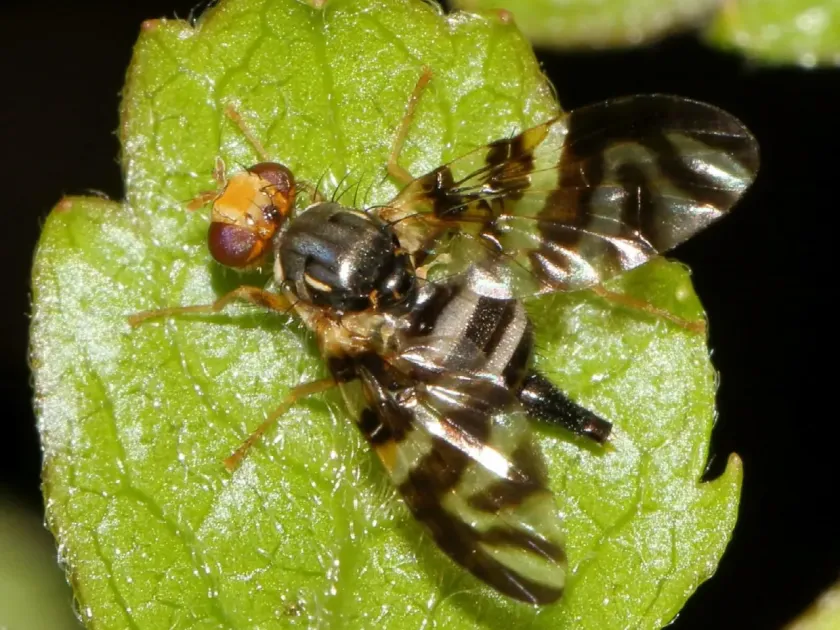
Description
How to identify
Clinotaenia is a genus of insects belonging to the leaf beetle family, Chrysomelidae, within the order Coleoptera. These beetles are characterized by their specific adaptation to living on host plants and consuming their foliage.
The morphology of adult beetles includes a robust body designed for survival in varied environments. Their appearance often incorporates protective coloration, which acts as camouflage against the leaves they inhabit.
The life cycle of this pest involves complete metamorphosis, consisting of egg, larva, pupa, and adult stages. Each developmental phase is highly synchronized with the host plant's phenology.
Larvae possess a mandibulate mouthpart specialized for chewing plant tissues. Throughout their growth, they progress through several instars, significantly increasing their impact on the host plant as they mature.
Pupation typically occurs in protected sites, such as the soil or within curled leaves, providing the insect with safety and stability during the critical transition to the adult stage.
What it damages
Clinotaenia poses a risk to various plant species, particularly during their active growth phases. Both adults and larvae contribute to the overall damage, though the severity varies depending on population density.
Adults typically feed on the foliage, creating irregular holes or notches. This reduction in leaf area decreases the plant's photosynthetic capacity, leading to weakened overall vigor.
Larval feeding is generally more destructive. They often skeletonize the leaves, consuming all tissue except for the veins, which can cause total defoliation in severe infestations.
Besides direct tissue loss, feeding damage creates entry points for secondary pathogens like fungi and bacteria, which can lead to further plant decay and loss of crop quality.
In cases of heavy infestation, the plant's ability to produce flowers or fruit is severely compromised, resulting in significant yield losses and lower marketable standards for the agricultural product.
When it appears
The appearance of Clinotaenia in agricultural fields is highly dependent on climate and the phenological development of host plants. Activity usually begins in late spring.
Overwintered adults emerge once temperatures reach a specific threshold. This early-season activity is critical, as the beetles feed to gain energy for egg-laying.
The summer months are characterized by the highest larval activity. During this time, the pest population grows rapidly, making it the most critical period for field monitoring and intervention.
As autumn approaches and day length decreases, adults begin to seek shelter for overwintering. They usually hibernate in the soil or protected debris within or around the field.
Environmental factors like abnormal temperature fluctuations or excessive rainfall can shift the emergence patterns of the pest, requiring farmers to adapt their monitoring schedules accordingly.
Signs of infestation
Early identification of Clinotaenia relies on recognizing characteristic foliage damage, such as small, circular holes in the leaves, which expand as feeding continues.
Observing leaf discoloration or yellowing can indicate a significant infestation level. The foliage may also appear deformed or wilted due to the destruction of internal transport tissues.
The presence of frass (insect excrement) on the leaf surface is a reliable indicator that the pest is actively feeding nearby. Regularly inspecting the undersides of leaves is crucial for early detection.
A decline in plant growth rate compared to healthy areas is often a late-stage sign of infestation. When such symptoms are noted, it usually indicates that the population has already caused extensive damage.
Flower bud loss or stunted shoot development are critical warning signs. If these parts are attacked, the potential for high-quality yield diminishes immediately.
Control measures
An integrated pest management approach is the most effective way to control Clinotaenia and minimize damage to agricultural crops.
- Deep plowing in autumn to disturb and eliminate overwintering sites.
- Strategic crop rotation to disrupt the lifecycle of the beetle.
- Removal of host weeds from field perimeters to eliminate refuges for the pest.
- Encouraging natural predators and parasitoids that help maintain population balance.
- Application of targeted insecticides based on regular monitoring and economic injury thresholds.
Taxonomy
- Latin name
- Clinotaenia
- Order
- Diptera (flies)
- Family
- Tephritidae
- EPPO code
- CLNOSP
Discussion
No discussions yet — be the first.