
Cletus trigonus
Cletus trigonus
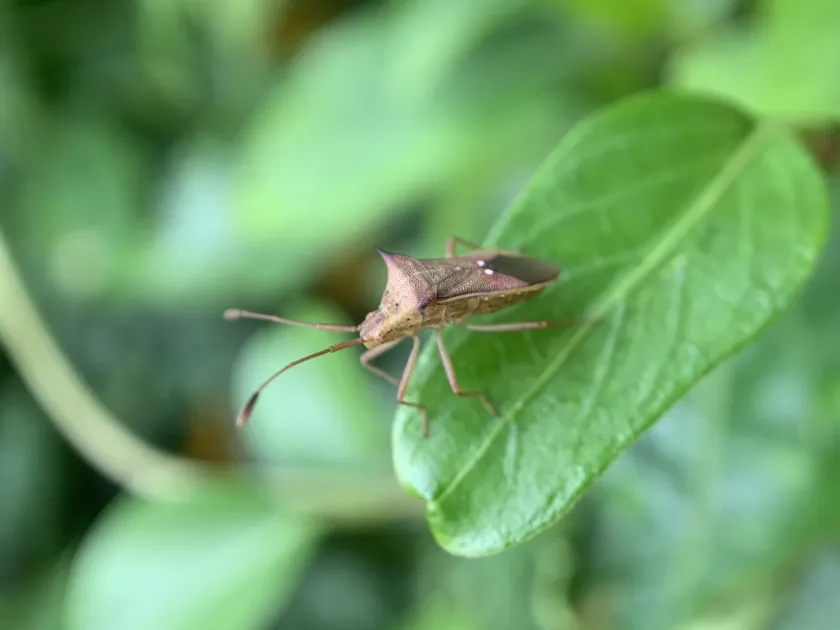
Description
How to identify
Cletus trigonus is a bug species belonging to the family Coreidae (leaf-footed bugs) and the order Hemiptera. Adults are characterized by an elongated body shape that widens towards the posterior end, making them distinct from other bug species.
The coloration of the adult typically ranges from yellowish-brown to dark brown, providing excellent camouflage against dry vegetation and soil debris. They are equipped with a piercing-sucking mouthpart designed for feeding on plant sap.
The pronotum features sharp, spine-like protrusions, which are a primary diagnostic feature of this species. On average, adult insects measure between 8 and 12 millimeters in length, making them visible to the naked eye during field inspections.
Nymphs resemble smaller versions of the adults, though they lack fully developed wings. They undergo several nymphal stages of development, gradually increasing in size and complexity before reaching the adult stage.
The insect develops via incomplete metamorphosis, meaning there is no pupal stage. Eggs are usually laid directly on plant surfaces, and newly hatched nymphs immediately begin searching for food.
What it damages
The primary hosts for this pest include legumes such as soybeans, beans, and cowpeas, as well as several cereal crops. This insect is particularly destructive in warm climates where multiple generations can occur within a single season.
These bugs feed on the sap of developing seeds and young shoots using their proboscis. This feeding behavior causes significant loss of seed weight, reduced germination rates, and a decline in overall crop marketability.
Punctured pods become susceptible to secondary infections, as the feeding sites provide entry points for pathogenic fungi and bacteria. This often results in rot or mold growth within the pods, further damaging the seeds.
In cereal crops, the pest feeds on the developing grain heads, leading to shriveled and underdeveloped kernels. This causes severe yield losses and reduces the quality standards of the harvested grain.
During periods of high population density, Cletus trigonus can cause premature shedding of flowers and pods. This results in significant reductions in overall field yield, especially during the grain filling phase.
When it appears
Activity of Cletus trigonus begins when temperatures remain consistently warm, allowing the insects to emerge from their overwintering sites. They are most active during the crop flowering and seed-filling stages.
Summer is the peak reproductive period, as high temperatures accelerate metabolic processes and shorten the duration of the insect's life cycle. During this time, they migrate actively between fields in search of host plants.
In autumn, adults prepare for dormancy, moving into protected areas such as forest edges, plant debris, or under tree bark. During this period, their physiological activity decreases significantly to survive the winter.
The number of generations per year is dependent on the local climate and temperature sum. In tropical and subtropical regions, the species can produce multiple generations, necessitating continuous field monitoring.
Monitoring should be performed throughout the growing season, with particular attention paid to the edges of the fields. Visual inspection and sweep netting are standard methods for assessing population levels.
Signs of infestation
The main sign of infestation is the presence of adult bugs or nymphs on the foliage and pods of the host plants. Feeding sites often appear as small dark or light spots on the surface of stems and bean pods.
Leaves on infected plants may show signs of chlorosis, curling, or premature yellowing due to the loss of nutrients. This weakens the plant and stunts its growth compared to healthy vegetation.
Opening affected pods often reveals deformed or shriveled seeds with visible puncture marks. In some cases, white or gray mold growth is visible on the seeds due to the introduction of pathogens.
Severely infested fields often exhibit patches of stunted growth and high levels of pod abortion. Plants may show signs of overall collapse or lack of vigor during the critical grain filling stage.
A distinctive sign is the pungent odor released by the bugs when disturbed. Farmers can often detect the presence of these insects by this smell when walking through the affected crop rows.
Control measures
Cultural control is the most effective approach, including the thorough removal and destruction of crop residues after harvest. Deep plowing is highly recommended to bury and kill overwintering populations.
Crop rotation and maintaining spatial isolation between legume fields help limit the pest's access to preferred food sources. Furthermore, controlling weeds along field edges reduces alternative hosts for the bugs.
Chemical control involving insecticides with contact-stomach action is advised if population thresholds are exceeded. Applications are most effective when timed to coincide with the presence of young-stage nymphs.
Biological control methods involve the protection and encouragement of natural predators and parasitoids. Using eco-friendly fungal-based bio-insecticides can also help suppress populations without harming beneficial insects.
- Crop rotation strategies;
- Destruction of host weeds;
- Post-harvest deep tillage;
- Targeted insecticide applications;
- Pheromone monitoring traps.
Taxonomy
- Latin name
- Cletus trigonus
- Order
- Hemiptera (bugs, aphids, leafhoppers)
- Family
- Coreidae
- EPPO code
- CLESTR
Discussion
No discussions yet — be the first.