
Cletus
Cletus
Description
How to identify
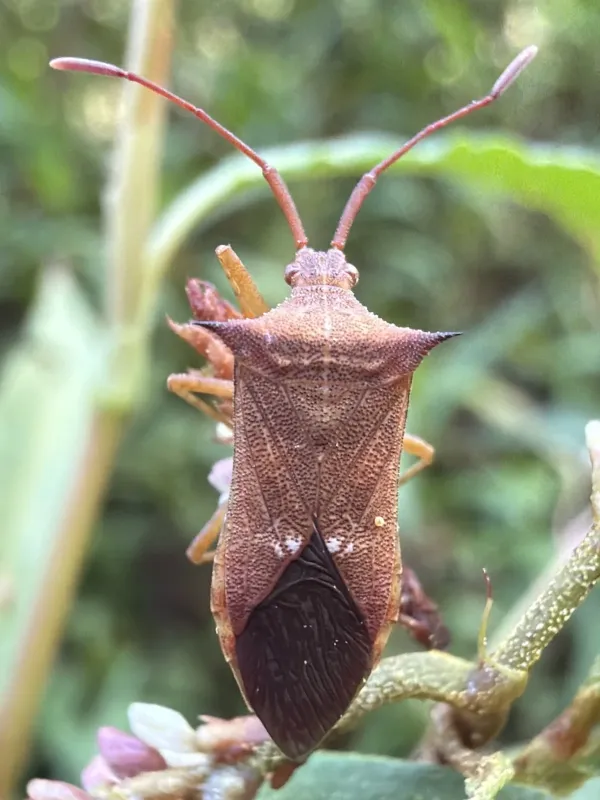
Cletus is a genus of insects belonging to the family Coreidae, commonly known as leaf-footed bugs or coreid bugs within the order Hemiptera. These insects are characterized by their elongated bodies and ochre or brownish coloration, which provides excellent camouflage among plant debris.
They possess well-developed sensory organs and a specialized proboscis, adapted for piercing plant tissues and extracting sap. Adult specimens typically feature hardened forewings, providing structural protection against environmental stressors.
The taxonomy of this genus encompasses numerous species distributed primarily in warm and temperate climates, where environmental conditions support sustained reproduction throughout the growing season.
Morphologically, they are distinguished by expanded margins on the pronotum, serving as a primary diagnostic feature. Their development follows hemimetabolous metamorphosis, consisting of egg, nymph, and adult stages.
Populations exhibit high survivability due to their capacity for rapid dispersal across agricultural landscapes, seeking both abundant food sources and suitable overwintering sites.
What it damages
The primary crops susceptible to Cletus infestations include legumes, cereals, and various vegetable crops. These bugs feed on the sap of developing seeds and young shoots, resulting in direct yield loss and reduced plant vigor.
Damage manifests as stunted plant growth, premature abscission of pods or flowers, and deformation of fruit. During outbreaks, the pest can consume a significant portion of the harvest by draining vital nutrients from reproductive organs.
Young crops are particularly sensitive during flowering and seed set stages. Infested seeds often exhibit poor germination rates and diminished commercial quality, rendering the produce unsuitable for high-grade market requirements.
Beyond physical damage, the feeding process involves the injection of saliva containing enzymes that cause localized necrosis and can facilitate the secondary entry of pathogenic fungi.
In large-scale farming, the pest often migrates from wild weeds to cultivated fields, progressively expanding the area of infestation as the season advances.
When it appears
The appearance of Cletus in fields generally coincides with the onset of sustained warm weather. Population peaks typically occur in mid-summer when most agricultural crops are in their active development and maturation phases.
Adults enter diapause for overwintering, seeking refuge in plant residues, under tree bark, or within the top layer of soil. As spring temperatures rise, they emerge from hibernation to forage and locate hosts for oviposition.
Multiple generations may occur per season depending on the specific climate, necessitating rigorous field monitoring throughout the entire vegetative period.
In autumn, adults migrate to hibernation sites, leading to increased concentrations near forest edges, fence rows, or uncultivated fields where protective shelter is abundant.
Temperature is a critical driver for population dynamics: while hot, dry summers promote rapid proliferation, extended periods of heavy rain can significantly impede reproductive success.
Signs of infestation
The primary method of detection is visual inspection of the underside of leaves and inflorescences to locate nymphs or adults. Feeding sites typically show tiny punctures surrounded by yellow or brown necrotic spots.
- Wilting of terminal shoots in areas of intense feeding.
- Deformation of pods, grains, and fruit due to sap depletion.
- Presence of frass (insect excrement) on plant stems and foliage.
- Premature yellowing and dropping of flower buds and immature pods.
It is essential to monitor not only the crop but also adjacent weed patches, which frequently act as a primary reservoir for infestation before the insects transition to the main crop.
Infested seeds often appear shriveled or discolored, a trait easily observed during harvesting or subsequent lab analysis of grain samples.
A distinct, pungent odor (typical of many coreid bugs) near high-density infestations serves as an additional diagnostic indicator of significant pest pressure.
Control measures
Management strategies rely on cultural practices, such as deep autumn plowing to destroy overwintering sites and rigorous weed management both within and around the fields.
Biological control focuses on preserving natural enemies, including predatory insects and parasitic wasps. Reducing the indiscriminate use of broad-spectrum insecticides helps maintain these beneficial populations.
Chemical control should be implemented only when infestation levels exceed the established economic threshold. Systemic or contact insecticides, applied according to strict safety guidelines and pre-harvest intervals, are the standard approach.
Rotating chemical classes is critical to preventing the development of insecticide resistance, ensuring long-term efficacy of control measures.
Utilizing pheromone traps for routine monitoring allows farmers to pinpoint the optimal timing for intervention, thereby maximizing protection while minimizing environmental impact.
Taxonomy
- Latin name
- Cletus
- Order
- Hemiptera (bugs, aphids, leafhoppers)
- Family
- Coreidae
- EPPO code
- CLESSP
Discussion
No discussions yet — be the first.