
Clemensia albata
Clemensia albata
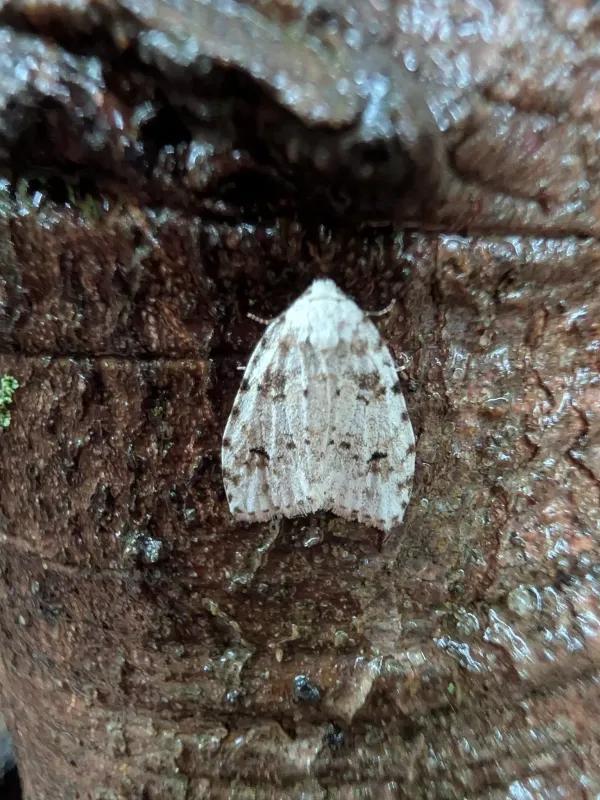
Description
How to identify
Clemensia albata is a species of moth within the family Erebidae. Adults are characterized by their whitish or creamy wings, which provide excellent camouflage against lichen-covered tree trunks.
The wingspan typically ranges between 20 and 25 millimeters. The body is covered in dense hairs, a common morphological feature for members of the Arctiinae subfamily.
Caterpillars of this species are specialized lichen feeders. They possess cryptic coloration, allowing them to remain virtually invisible while grazing on tree surfaces.
Taxonomically, this species belongs to the order Lepidoptera. Differentiating it from related species often requires close examination of wing patterns and morphological traits.
Accurate identification is essential for monitoring purposes, as adults are nocturnal and often go unnoticed during the day due to their effective mimicry.
What it damages
The primary damage caused by Clemensia albata is the consumption of lichens growing on the bark of fruit and ornamental trees.
While the direct feeding does not harm the wood, the removal of the lichen cover alters the bark's microenvironment, potentially impacting the health of the tree's cambium layer.
Older, unmanaged orchards with high humidity are the most susceptible to colonization. In such environments, the density of caterpillars can become quite significant.
Though rarely considered a primary agricultural pest, high populations can contribute to the overall physiological decline of trees by stripping away the protective lichen layer.
Damage is mostly cosmetic and ecological, as the larvae do not bore into the trunk or consume the woody tissue of the plant.
When it appears
The life cycle of Clemensia albata is highly dependent on regional climate. Adults are typically active during the summer months, with peak flight times occurring in mid-summer.
Larvae overwinter in protected crevices within the tree bark, demonstrating high resilience to cold temperatures and changing weather conditions.
Feeding activity resumes in the spring, synchronized with the resumption of tree sap flow and the renewed growth of lichen colonies.
Depending on the latitude, the species may complete one or more generations per year, with warmer regions supporting faster life cycles.
Pupation occurs in silken cocoons camouflaged with lichen fragments, which protect the developing insect from predators and environmental stressors.
Signs of infestation
Signs of infestation include clean, lichen-free patches on the bark, which indicate that larvae have been grazing on the surface.
Close inspection of the trunk during the daytime may reveal the presence of stationary larvae that perfectly blend in with their background.
Silken webbing and cocoons attached to the bark or within cracks serve as clear indicators of the population's activity in the area.
Attraction to artificial light sources during the night provides a reliable way for growers to monitor the presence and population density of the moths.
Accumulation of frass (larval waste) at the base of the tree is another indicator of significant caterpillar activity in the canopy or on the trunk.
Control measures
Mechanical removal of lichens via brushing or scraping is the most effective preventative measure to deprive larvae of their food source.
Whitewashing tree trunks with lime-based solutions inhibits new lichen growth and helps eliminate overwintering larvae residing in bark fissures.
Biological control using microbial insecticides, such as those containing Bacillus thuringiensis, can be applied if populations reach a damaging threshold.
Pruning trees to improve air circulation reduces humidity levels, making the tree less suitable for both lichen growth and caterpillar development.
- Manual lichen scraping and brushing.
- Applying lime wash to tree trunks.
- Maintaining proper tree crown density.
- Biological control treatments if necessary.
Taxonomy
- Latin name
- Clemensia albata
- Order
- Lepidoptera (butterflies)
- Family
- Erebidae
- EPPO code
- CLMSAL
Discussion
No discussions yet — be the first.